

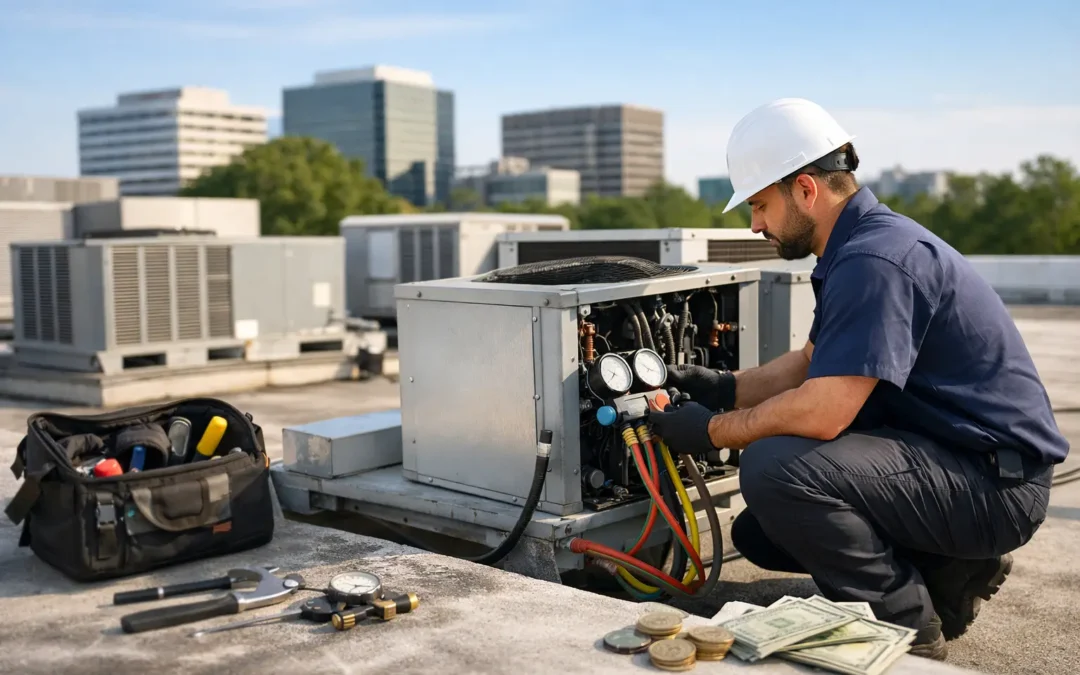
A failed rooftop unit at 2 p.m. on a July weekday does more than make a building uncomfortable. It can disrupt employee productivity, frustrate customers, strain equipment, and force a business into an expensive emergency decision. Commercial HVAC maintenance services are designed to prevent that moment by finding small issues before they become operational problems.
For Northern Virginia property managers and business owners, maintenance is not simply a seasonal checklist. It is a practical way to protect comfort, control operating costs, and plan for repairs or replacement on your schedule rather than during a breakdown.
What Commercial HVAC Maintenance Actually Covers
Commercial HVAC systems work harder and often operate longer than residential equipment. A retail space may need steady cooling during business hours, an office may have uneven temperatures across multiple zones, and a restaurant or medical facility may have ventilation requirements that directly affect the experience of customers, patients, and staff.
A professional maintenance visit starts with the full system, not just the thermostat setting. Technicians inspect equipment condition, confirm safe operation, look for performance changes, and address developing concerns. The exact scope depends on your equipment, building use, maintenance history, and whether the system is heating or cooling at the time of service.
Common maintenance tasks include cleaning or replacing filters, checking refrigerant levels and electrical connections, inspecting belts and motors, clearing condensate drains, testing thermostats and controls, and verifying airflow. Technicians also inspect heating components, safety controls, and ventilation equipment as needed.
That work may sound routine, but details matter. A clogged drain can cause water damage. A loose electrical connection can create a safety issue or lead to a sudden system failure. Restricted airflow can force a unit to run longer, reducing comfort while raising utility costs.
Why Preventive Service Makes Financial Sense
The most visible benefit of maintenance is fewer surprise breakdowns. However, the value extends beyond avoiding a service call. Equipment that is clean, properly adjusted, and moving air as intended generally operates more efficiently than equipment struggling with dirty coils, worn parts, or neglected filters.
Maintenance also gives business owners better information. When a technician identifies an aging blower motor, compressor concern, or recurring drainage issue early, you can evaluate repair options before the problem becomes urgent. That allows for better budgeting and less pressure to make a major decision during extreme weather.
There is a trade-off: routine maintenance has an upfront cost, and it cannot guarantee that every component will last indefinitely. Mechanical parts wear out, and older equipment may still need repair. What preventive service does provide is a clearer picture of system health and a better chance to address issues when they are smaller, more manageable, and less disruptive.
Protecting Comfort Across the Building
Comfort complaints are often early warnings. One office that stays too warm, a conference room with weak airflow, or a lobby that feels humid can indicate a filter issue, thermostat problem, blocked vent, failing component, or imbalance in the system.
Ignoring those complaints can turn a localized issue into a larger one. Regular service helps identify why temperatures vary and whether a practical adjustment, repair, or equipment upgrade is the right solution. In commercial spaces, consistent comfort supports employees, customers, tenants, and the day-to-day reputation of the business.
Reducing Unplanned Downtime
Emergency HVAC repairs are sometimes unavoidable, especially after severe weather or an unexpected component failure. But many urgent calls begin with warning signs: unusual noises, longer run times, water around equipment, inconsistent temperatures, rising utility bills, or frequent thermostat adjustments.
Scheduled maintenance creates a reliable opportunity to investigate those signs. It is especially valuable before Northern Virginia’s hot, humid summers and cold winter periods place greater demand on heating and cooling equipment.
How Often Should a Commercial System Be Serviced?
For most commercial properties, twice-yearly maintenance is a sensible starting point: once before the cooling season and once before the heating season. This schedule prepares the system for its heaviest use and gives technicians a chance to inspect season-specific components.
Some buildings need more frequent attention. Restaurants, gyms, salons, manufacturing spaces, medical offices, and properties with high occupancy or extended operating hours may put greater strain on HVAC equipment and air filtration. Construction nearby, indoor air quality concerns, and heavy dust can also call for more frequent filter changes and inspections.
The right schedule depends on the building and its systems. A small office with standard operating hours has different needs than a multi-tenant property with rooftop units, zoning controls, and varying occupancy. A qualified HVAC partner should recommend a plan based on actual conditions rather than a one-size-fits-all promise.
What to Expect From a Strong Maintenance Plan
A useful maintenance plan should make ownership easier, not add confusion. You should know when service is scheduled, what work was completed, what the technician found, and whether any repairs need attention soon.
Clear communication matters when recommendations are made. Not every observation requires immediate repair. A dependable provider explains the concern, its likely impact, the urgency, and the available options. This helps property managers and owners prioritize spending without guessing.
For many commercial clients, the strongest plans also provide a consistent service record. That documentation can help with budgeting, equipment planning, tenant communication, and warranty-related questions. When multiple systems serve a property, a detailed history is far more useful than relying on memory after each service visit.
Signs Your Building Is Due for Service
Even with a maintenance schedule, pay attention to changes in how the building feels and how the equipment performs. Call for service if you notice persistent hot or cold spots, louder-than-normal operation, musty odors, visible leaks, weak airflow, or systems that cycle on and off repeatedly.
Higher utility costs deserve attention as well. Energy prices can change, but a noticeable increase without a clear reason may indicate that equipment is running inefficiently. A maintenance visit can help determine whether the cause is a dirty component, airflow restriction, controls issue, or a repair need.
Do not wait for a complete shutdown if the system is signaling trouble. Early evaluation can often protect the equipment and reduce the risk of an after-hours disruption.
Choosing a Commercial HVAC Partner
Commercial service requires more than a quick repair mindset. Your provider should understand how equipment performance affects your operations and communicate in straightforward terms. Look for certified and insured technicians, transparent pricing, responsive scheduling, and the ability to support both routine care and urgent needs.
It is also helpful to choose a company that can address related comfort issues. HVAC performance is connected to ventilation, filtration, humidity control, and indoor air quality. If a space feels stuffy, humid, or unevenly conditioned, the answer may involve more than replacing a single part.
Aircon HVAC Solutions provides commercial heating, cooling, maintenance, repair, and indoor air quality support for businesses throughout Northern Virginia. The goal is simple: provide prompt, professional service that helps you maintain a comfortable building and make informed decisions about your equipment.
A well-maintained HVAC system rarely gets much attention, and that is exactly the point. When your building stays comfortable, your team can focus on work, your customers can focus on their experience, and your equipment has the care it needs to keep showing up when it matters.
