

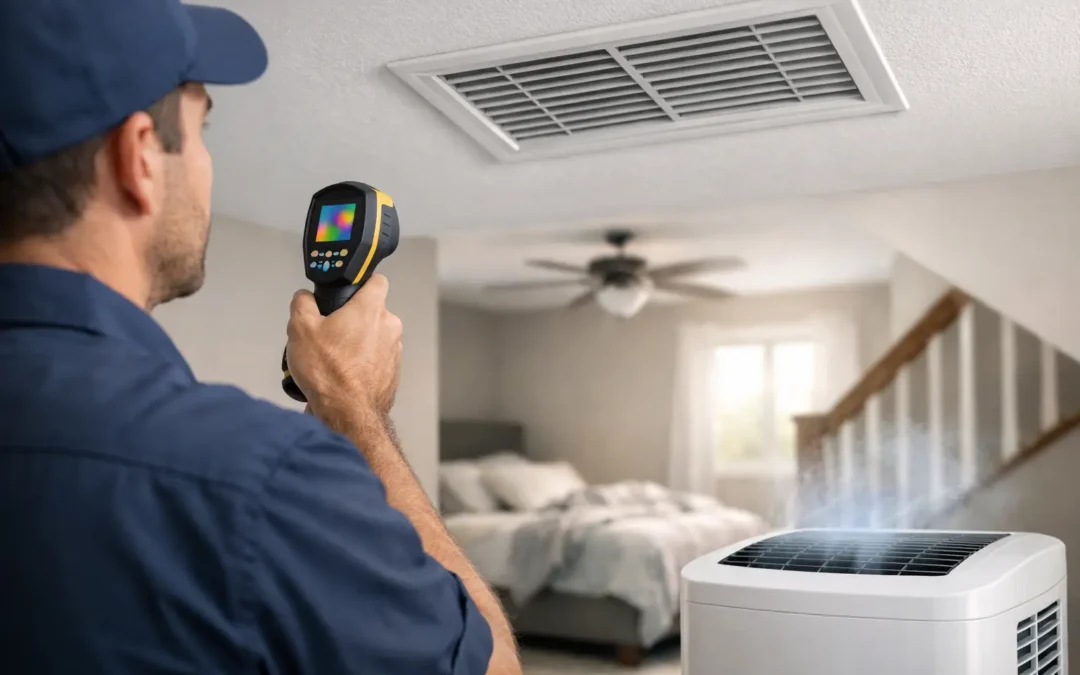
The downstairs thermostat says the system is working, yet the bedrooms upstairs are warm, muggy, and uncomfortable by midafternoon. If your AC not cooling upstairs is a recurring problem, the issue is rarely just that the second floor gets more sun. Heat rises, but a properly designed and maintained system should still keep temperatures reasonably consistent throughout your home.
A difference of a few degrees between floors can be normal during a Northern Virginia summer. A 10-degree difference, hot rooms that never recover after sunset, or weak airflow from upstairs vents deserves a closer look. The right repair depends on the cause, and guessing can lead to unnecessary expense.
Why an AC may not be cooling upstairs
Second floors naturally gain more heat. They are closer to a hot attic, often have more roof exposure, and may receive direct afternoon sun. That added heat load can expose small problems in airflow, ductwork, insulation, or cooling capacity that are less noticeable downstairs.
In many homes, several factors are working together. For example, a dirty filter can restrict airflow while a poorly insulated attic adds heat to the rooms below it. Treating only one issue may improve comfort slightly without solving the real problem.
Restricted airflow is often the first place to look
Your air conditioner can only cool the rooms it can reach. A clogged air filter, closed supply registers, blocked return vents, or a blower issue can reduce the amount of conditioned air reaching the upper floor.
Start with the basics. Replace a visibly dirty filter with the correct size and type for your system. Make sure supply vents upstairs are open and not covered by furniture, rugs, or curtains. Return grilles need clear space around them as well. Closing too many vents downstairs to force air upstairs is not a reliable fix. It can raise duct pressure, strain equipment, and create new comfort problems elsewhere.
If upstairs vents barely move air while downstairs vents are strong, the issue may be inside the duct system. Disconnected ducts, crushed flex duct, leaking joints, poor balancing, or undersized runs can all limit airflow where you need it most.
Thermostat settings and placement can mislead the system
A single thermostat located downstairs measures the temperature in that part of the home. Once it reaches the set temperature, it tells the AC to shut off, even if the upstairs remains several degrees warmer.
Check that the thermostat is set to cool and that the fan setting is on Auto. Running the fan continuously may help mix air between floors in some homes, but it will not correct major airflow or sizing issues. It can also circulate warmer air between cooling cycles.
Smart thermostat sensors can help when the problem is primarily uneven temperature readings. A sensor placed in an upstairs bedroom gives the system a better picture of where comfort is needed. Still, sensors are not a cure for duct leaks, inadequate insulation, or equipment that cannot meet the home’s cooling load.
Attic heat and insulation affect upstairs comfort
An attic can become extremely hot in summer, and that heat transfers downward through ceilings, ductwork, recessed lighting openings, and unsealed gaps. Inadequate attic insulation is one of the most common reasons upper-level rooms struggle on hot days.
Ducts running through an unconditioned attic are especially vulnerable. If their insulation is damaged or connections leak, cold air may be lost before it ever reaches the bedrooms. Sealing and insulating ductwork can make a meaningful difference, particularly in older homes or homes with recent additions.
Windows also matter. Large west-facing windows, worn weatherstripping, and thin or damaged shades can increase solar heat gain upstairs. Window treatments may reduce the load, but they should be viewed as part of a larger comfort plan rather than the only answer.
Your system may need maintenance or repair
A system that is low on refrigerant, has a dirty evaporator coil, or is dealing with a failing blower motor may still cool the lower level while falling behind upstairs. These conditions reduce overall capacity and often become most obvious during the hottest part of the day.
Watch for warning signs such as warm air from several vents, ice on the refrigerant line, unusual noises, water around the indoor unit, frequent cycling, or a system that runs for hours without reaching the set temperature. Refrigerant concerns should always be handled by a qualified technician. Refrigerant is not used up under normal operation, so low levels usually indicate a leak that needs to be found and repaired.
Safe checks before you call for AC service
A few simple checks can provide useful information and sometimes restore comfort quickly. Confirm the thermostat setting, replace the air filter if needed, clear every supply and return vent, and check that the outdoor unit has open space around it. Leaves, grass clippings, and stored items can interfere with airflow through the outdoor coil.
Then compare rooms. Is every upstairs room warm, or only one? Is airflow weak from all upper vents, or just a single vent? Does the problem happen only late in the day, or all the time? Those details help identify whether the issue is related to solar heat, air distribution, ductwork, or the AC equipment itself.
Do not remove electrical panels, adjust refrigerant components, or repeatedly reset a tripped breaker. If the breaker trips again, the system freezes, or you smell burning, turn the system off and arrange professional service.
When a bigger comfort solution makes sense
Some homes need more than a repair. If the AC is operating correctly but the upstairs remains consistently uncomfortable, an HVAC professional may recommend balancing the duct system, sealing attic ducts, improving return-air paths, or addressing insulation gaps.
For homes with persistent two-story temperature differences, zoning can be a strong option. A zoned system uses separate thermostats and controlled dampers to manage different areas independently. It offers more control, but it must be designed correctly for the existing equipment and ductwork.
A ductless mini-split is another practical choice for a bonus room, finished attic, sunroom, or upper-level addition that never cools properly. It can provide targeted cooling without requiring a full duct renovation. The trade-off is the visible indoor unit and the need for professional installation, but it can be more cost-effective than trying to force an existing central system beyond its limits.
If your equipment is older or was never properly sized, a load calculation is more useful than simply choosing a larger replacement unit. Oversized equipment can cool quickly but may short-cycle, leave humidity behind, and wear out sooner. Proper sizing considers square footage, insulation, windows, orientation, occupancy, and duct design.
Get dependable help for an upstairs that will not cool
Uneven temperatures are frustrating, but they are usually diagnosable. A thorough service visit should look beyond the thermostat to assess airflow, filter condition, temperature split, blower performance, duct concerns, refrigerant operation, and the heat load affecting the second floor.
For homeowners and property managers in Bristow, Manassas, Gainesville, Centreville, Chantilly, Fairfax, Herndon, McLean, and Reston, Aircon HVAC Solutions provides clear recommendations and professional AC service focused on lasting comfort. Whether the fix is routine maintenance, a ductwork improvement, or a system upgrade, you should know what is causing the problem and what your options cost before work begins.
A cool upstairs should not require living with closed blinds, portable fans, and sleepless summer nights. Schedule an evaluation before the next heat wave turns a manageable comfort issue into an emergency repair.
