

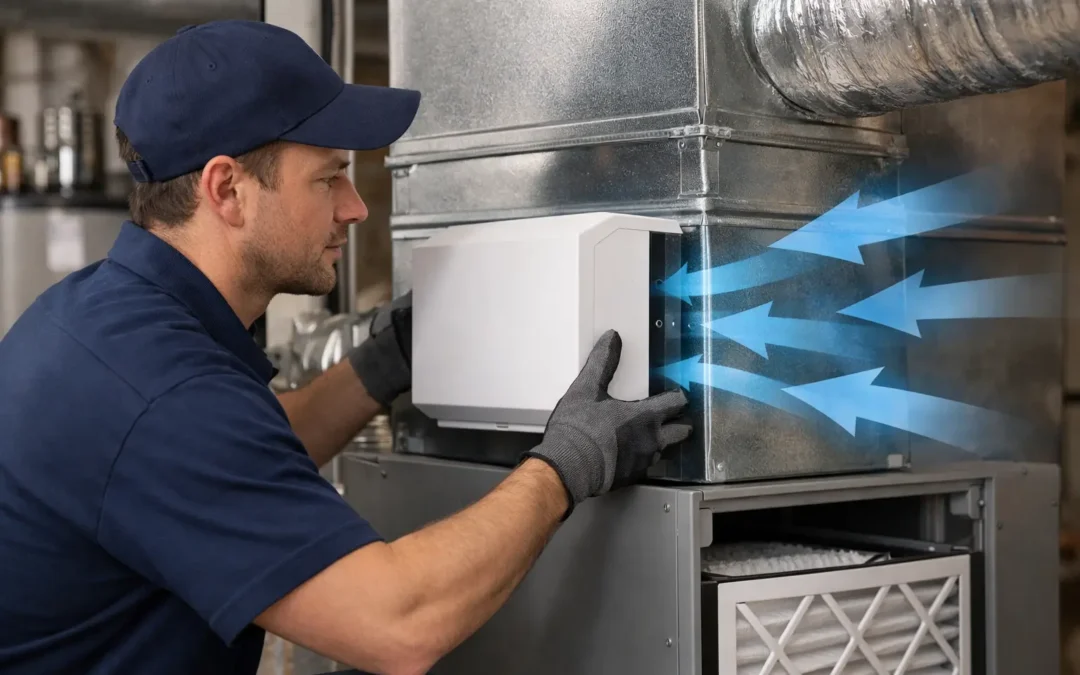
Dust on the furniture an hour after cleaning, allergy flare-ups that never seem to calm down, and that stale, closed-in smell when the system kicks on – these are often signs your home needs more than a standard filter change. Whole house air purifier installation is designed to treat the air moving through your HVAC system, so you are improving air quality throughout the home instead of room by room.
For many homeowners, that sounds like the obvious next step. The reality is a little more nuanced. The right system can make a noticeable difference in comfort, but the wrong setup, poor sizing, or rushed installation can leave you paying for equipment that never performs the way you expected.
What whole house air purifier installation actually does
A whole-house air purifier is installed as part of your heating and cooling system, usually in the ductwork near the air handler or furnace. As air circulates, the purifier works alongside your existing filtration to reduce airborne particles, and in some cases, certain biological contaminants or odors depending on the technology used.
That last part matters. Not all air purifiers do the same job. Some are mainly focused on capturing fine particles like dust, pollen, pet dander, and smoke. Others are designed to address airborne contaminants at a microscopic level. Some combine multiple approaches. If you are comparing options, the question is not just, “Do I want cleaner air?” It is, “What problem am I trying to solve?”
If your main concern is visible dust and everyday allergens, filtration-based improvements may be the best fit. If you are more concerned about germs, persistent odors, or a household with respiratory sensitivities, a different type of purifier may make more sense. A professional recommendation should start with your needs, not with a one-size-fits-all product pitch.
When a whole-house system makes more sense than portable units
Portable air purifiers can help in a bedroom, office, or nursery. They are useful for targeted improvement in a single area. But they have limits, especially in larger homes or buildings with multiple occupied rooms.
A whole-house system is usually the better option when air quality concerns affect the entire property, when you want a cleaner solution without moving units from room to room, or when you want the purifier to work continuously with the HVAC system. It also tends to be the more practical choice for households that want less clutter, less maintenance across multiple devices, and more consistent air treatment.
For property managers and commercial spaces, this is even more relevant. Relying on a few standalone units rarely creates consistent results across the full building. Integrated purification is cleaner, more efficient, and easier to manage long term.
The biggest factors before installation
The most important part of whole house air purifier installation is not the box itself. It is the evaluation that happens first. A technician should look at your existing HVAC system, duct configuration, airflow, filter setup, and the square footage being served.
Compatibility matters. Some systems work well with certain furnaces or air handlers and not others. Airflow matters too. If the purifier restricts airflow too much, it can affect HVAC performance, increase strain on the equipment, and create new comfort issues. That is why installation should never be treated like an add-on that can simply be dropped into place.
You also want to think about maintenance before you commit. Some air purification systems need replacement media on a regular schedule. Others require cleaning, periodic inspection, or component replacement. A good system should improve day-to-day comfort, not create a maintenance routine you are unlikely to keep up with.
Electrical requirements are another detail homeowners often do not expect. Depending on the type of purifier, the installation may involve power connections, control integration, and safety checks. That is one more reason professional workmanship matters.
Types of systems and how to think about them
There is no single best air purifier for every home. The better approach is to match the technology to the problem.
Media-based filtration systems are often a strong choice for capturing fine airborne particles. These can be effective for homes dealing with dust, pet dander, pollen, and similar irritants. They are generally straightforward, but the filter rating needs to be balanced with your system’s airflow capacity.
Electronic air cleaners use electrically charged components to trap particles. These can be effective in the right setup, but they may require more cleaning and upkeep than some homeowners expect.
UV air purification systems are commonly used to target biological growth within the HVAC system, especially near coils or moisture-prone areas. They are often part of a broader indoor air quality strategy rather than a complete solution on their own.
Some homes benefit from a combination approach. For example, if you are dealing with both allergy concerns and recurring odor or microbial issues, one piece of equipment may not cover everything. That does not mean you need the most expensive package. It means the recommendation should be based on how you live, how your HVAC system performs, and what your indoor air quality issues actually are.
What to expect during whole house air purifier installation
A proper installation usually begins with confirming the right equipment for your HVAC system and identifying the best placement in the ductwork. The technician may need to modify part of the return or supply plenum, create mounting access, connect controls, and test the system after installation.
Testing is not optional. Once installed, the purifier should be checked for proper operation without compromising airflow or system performance. The installer should also explain how the unit works, what maintenance it needs, and when service should be scheduled.
In many cases, the work can be completed without major disruption to your day. Still, it depends on the equipment and the condition of the existing system. Older HVAC systems, space limitations, or previous ductwork issues can add complexity. That is normal, and it is exactly why the installation should be done by trained, insured technicians rather than treated like a quick add-on.
The benefits are real, but expectations should be realistic
A professionally installed air purifier can help reduce airborne particles, improve general indoor freshness, and support a healthier-feeling indoor environment. Many homeowners notice less dust buildup, fewer allergy triggers, and cleaner airflow from the vents.
At the same time, an air purifier is not a cure-all. It will not fix leaky ductwork, poor ventilation, excess humidity, or an HVAC system that is overdue for service. In some homes, those issues are part of the reason indoor air feels stale or uncomfortable in the first place.
This is where experienced guidance matters. If a home has persistent indoor air quality concerns, the best answer may involve more than just purifier installation. Filter upgrades, humidity control, ventilation improvements, and duct inspection may all play a role. A trustworthy contractor will tell you when that is the case instead of pushing one product as the answer to everything.
Is it worth the investment?
For many households, yes – especially if someone in the home deals with allergies, asthma, pet-related air quality issues, or sensitivity to airborne particles. It can also be a smart upgrade for newer, tighter homes where indoor air tends to recirculate more and natural fresh-air exchange is limited.
The value comes from more than cleaner air on paper. It comes from how the home feels day to day. Less dust, fewer irritants, and more confidence in the air your family is breathing can make the investment worthwhile.
That said, value depends on quality. The right recommendation, proper installation, and realistic maintenance are what make the system pay off over time. If you are considering a whole-house upgrade, it is worth having the conversation with a local HVAC professional who can evaluate your equipment and your goals clearly. Aircon HVAC Solutions helps Northern Virginia property owners take that next step with the kind of straightforward guidance and workmanship that makes comfort improvements feel worthwhile from day one.
Cleaner indoor air should not feel complicated. With the right system and the right installation, it becomes one more part of a home that works the way it should.
