

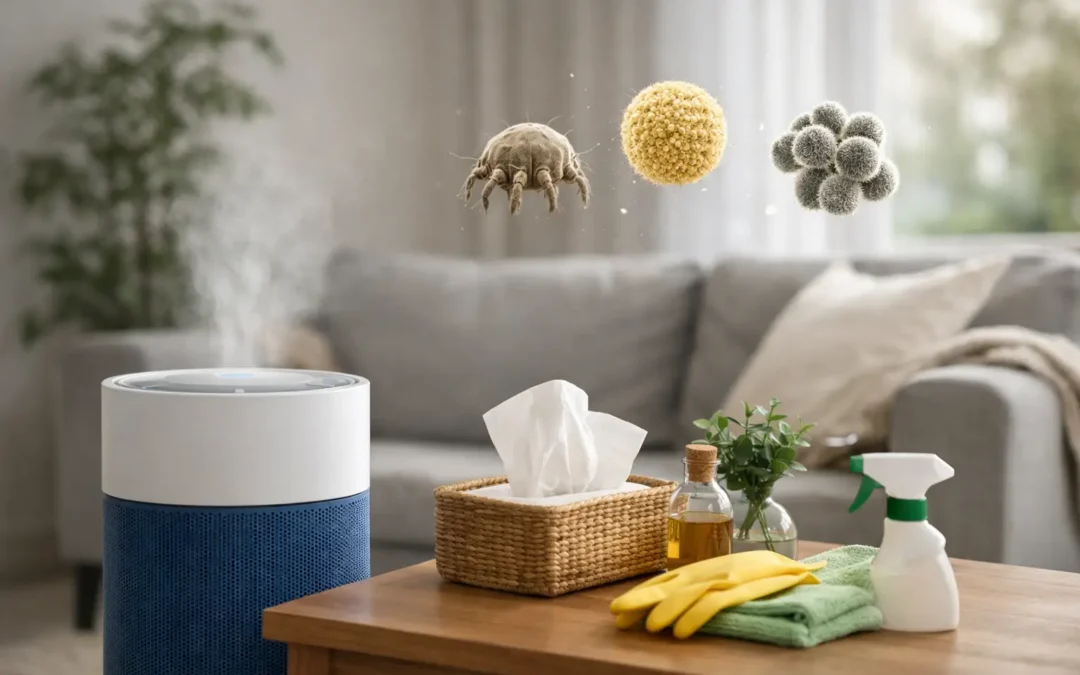
If your allergies seem worse at home than outside, the problem may be hanging in the air, settled into carpet, or circulating through your HVAC system. Knowing how to reduce indoor allergens starts with one simple idea: treat your home as a whole system, not a collection of separate rooms.
That matters because indoor allergens rarely come from one source. Dust mites build up in soft surfaces. Pet dander moves from room to room. Mold grows where moisture lingers. Pollen gets tracked inside and then keeps circulating long after the windows are shut. If you only clean one area or replace one filter without addressing the bigger picture, symptoms often come right back.
How to reduce indoor allergens without guessing
The most effective approach is to reduce what gets in, remove what settles, and improve how air moves through the home. For most homeowners, that means focusing on humidity, filtration, cleaning habits, and ventilation at the same time.
Humidity is a major factor. When indoor air stays too damp, dust mites and mold have an easier time thriving. When it is too dry, irritation can feel worse even if allergen levels are moderate. In many homes, the healthiest target is around 30% to 50% indoor humidity. Bathrooms, basements, laundry areas, and kitchens are common problem spots because moisture tends to build up there first.
Filtration matters just as much, but only if the system can support it. A higher-rated air filter can capture more particles, including pollen, dust, and some pet dander, yet a filter that is too restrictive for your HVAC system can reduce airflow and strain performance. That is one reason professional guidance can be helpful. Better filtration is not just about buying the densest filter on the shelf.
Cleaning also needs to be more targeted than most people expect. Stirring up dust with dry sweeping or using the wrong vacuum can make symptoms worse for a few hours. Homes with allergy concerns usually benefit more from vacuuming with a sealed HEPA-equipped machine, damp dusting hard surfaces, and washing bedding regularly in hot water.
The main sources of indoor allergens
Dust mites are one of the most common triggers, especially in bedrooms. They feed on dead skin cells and tend to collect in mattresses, pillows, upholstered furniture, and carpet. You may not see them, but they are often a major reason people wake up congested.
Pet dander is another frequent issue. Even homes that feel clean can have persistent dander in vents, rugs, and furniture. It is also worth knowing that pet hair itself is not always the main allergen. Microscopic proteins found in skin flakes, saliva, and urine are often the real trigger.
Mold is different because it points to a moisture problem, not just a cleaning problem. If spores keep returning, the source may be a leak, poor ventilation, or excess humidity. Cleaning visible growth without fixing the cause usually leads to repeat issues.
Pollen often gets overlooked indoors because people think of it as an outdoor problem. In reality, it comes in on clothing, shoes, pets, and through open doors and windows. Once inside, it can settle into surfaces and recirculate through the HVAC system.
Start with the bedroom
If you want faster relief, begin where you spend the most time. Bedrooms tend to hold the highest concentration of dust mites and fabric-based allergens, and poor air quality there can affect sleep night after night.
Wash sheets and pillowcases weekly in hot water. Use allergen-resistant covers on mattresses and pillows if dust mites are a concern. If you have heavy drapes, extra throw pillows, or rarely washed blankets, those can quietly collect allergens over time. Reducing fabric clutter in the bedroom often makes a noticeable difference.
Flooring is another factor. Carpet can be comfortable, but it also holds onto dust, dander, and pollen. If replacing it is not realistic, frequent vacuuming with the right machine becomes much more important. For families with severe allergies, hard surface flooring is often easier to manage.
Your HVAC system can help or hurt
A forced-air system can improve indoor comfort and air quality, but if it is neglected, it can also move allergens throughout the building. Dirty filters, leaky ductwork, and poor airflow all work against you.
Changing the air filter on schedule is one of the simplest ways to reduce indoor allergens. The exact timing depends on the filter type, system use, pets, and how much dust your home collects, but waiting until the filter looks overloaded is usually too late. A clogged filter can reduce efficiency and allow more particles to circulate.
Duct condition matters too. If ducts are leaking or pulling in dust from attics, crawl spaces, or wall cavities, indoor air quality can suffer even when the rest of the house is kept clean. In some cases, homeowners focus on constant dusting when the larger issue is actually in the air distribution system.
Ventilation is another piece of the puzzle. Tightly sealed homes are energy efficient, but they can trap pollutants and moisture. Proper ventilation helps remove stale indoor air and replace it with fresher air in a controlled way. That is especially useful in kitchens, bathrooms, and homes that stay closed up for much of the year.
For some properties, adding an air purifier, upgrading filtration, or installing a whole-home dehumidifier makes sense. The right option depends on what is driving symptoms. A home with persistent dampness needs a different solution than a home with pets and seasonal pollen problems.
Cleaning habits that actually help
You do not need to clean constantly, but the method matters. Dry dusting tends to push fine particles back into the air. A damp microfiber cloth does a better job of trapping them. The same goes for floors. Sweeping can send dust airborne, while vacuuming with a sealed system is usually more effective.
Pay extra attention to soft surfaces. Upholstered furniture, rugs, pet beds, and curtains can all hold allergens long after they look clean. If someone in the home has frequent allergy symptoms, washing or deep cleaning these items on a regular schedule is often worth the effort.
Shoes-off policies help more than many homeowners realize. They reduce the amount of pollen, dirt, and outdoor debris brought inside. During heavy pollen seasons, changing clothes after being outdoors and wiping down pets can also cut down what gets transferred into living spaces.
Moisture control is non-negotiable
If mold or musty odors are part of the problem, cleaning alone is not enough. You need to find where moisture is entering or lingering. That could mean a slow plumbing leak, poor bathroom exhaust, a damp basement, condensation around vents, or an oversized AC system that cools quickly without removing enough humidity.
This is where professional inspection can save time. Moisture issues are not always obvious, and if they are tied to HVAC performance, the fix may involve airflow, drainage, ventilation, or equipment sizing rather than surface treatment alone.
In Northern Virginia, seasonal humidity can make indoor moisture harder to manage, especially in basements and older homes. When the air feels damp even with the AC running, a dedicated dehumidification solution may be the better long-term answer.
When DIY stops being enough
Basic cleaning and filter changes can absolutely help, but ongoing symptoms usually mean something deeper is being missed. If you notice constant dust buildup, uneven humidity, musty smells, frequent sneezing indoors, or worsening symptoms when the system runs, it may be time to look at the HVAC side of the equation.
A professional can check whether your filtration is appropriate, whether your ducts are sealed properly, and whether your system is moving and conditioning air the way it should. In some homes, the answer is maintenance. In others, it is an indoor air quality upgrade tailored to the space.
Aircon HVAC Solutions works with homeowners and businesses that want cleaner, healthier indoor air without guesswork. The goal is not just to mask symptoms. It is to improve the environment people live and work in every day.
Reducing allergens indoors is rarely about one big fix. It is usually the result of several smart adjustments that work together – cleaner surfaces, better moisture control, proper filtration, and an HVAC system that supports the air you want to breathe. When those pieces come together, home starts to feel like relief instead of the source of the problem.
