

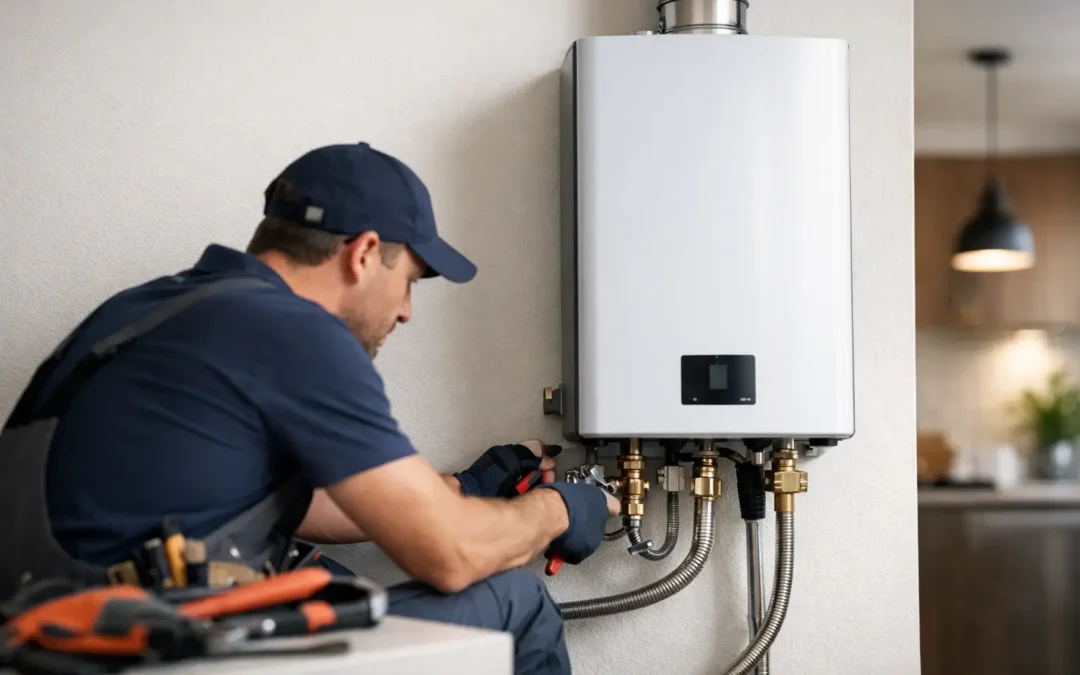
If you’ve priced out a new water heater lately, you’ve probably noticed that tankless water heater installation cost can vary a lot from one home to the next. That is not a pricing trick. It usually comes down to the type of unit, your home’s existing plumbing and fuel setup, venting needs, and how much work it takes to install the system safely and correctly.
For many homeowners, the appeal is easy to understand. A tankless water heater can provide hot water on demand, take up less space, and avoid the standby energy losses that come with storing hot water all day. But the upfront price is higher than a standard tank model, so it helps to know what you are actually paying for before you schedule the job.
What does tankless water heater installation cost?
In most homes, a professionally installed tankless water heater lands somewhere between about $3,000 and $6,500. Some straightforward electric installations may come in lower, while larger gas systems or homes that need venting, gas line, or electrical upgrades can push the total higher.
That wide range is normal. A direct replacement in a home that already has the right utility connections is a very different project than converting from a tank unit in an older property. The final cost depends less on the box itself and more on the full scope of installation.
What drives the price up or down?
Gas vs. electric
Gas tankless systems usually cost more to install than electric models. The equipment is often more expensive, and gas units may require new venting, combustion air planning, and gas line sizing checks. If the existing gas line is too small to support the new unit, that upgrade adds labor and material cost.
Electric tankless systems can be simpler in some homes, but they are not automatically the budget option. Whole-home electric units often need significant electrical capacity. If your panel cannot handle the load, you may need breaker, wiring, or service upgrades. In that case, the lower equipment cost can be offset by electrical work.
Size and hot water demand
A small unit for a compact home or light-use space will cost less than a high-capacity model designed to serve multiple bathrooms at the same time. Sizing matters. An undersized unit may struggle during peak demand, while an oversized system can mean paying more than necessary.
That is why a proper estimate should include more than a quick product recommendation. A contractor should look at your household size, number of fixtures, incoming groundwater temperature, and your typical hot water use patterns.
Venting requirements
For gas models, venting can be one of the biggest cost variables. Some installations allow for a relatively simple vent run. Others require longer runs, special vent materials, roof or sidewall penetrations, or rerouting around structural obstacles.
Condensing units may offer efficiency benefits, but they also involve condensate drainage considerations. Non-condensing units may have different vent material requirements. Neither is universally better for every home. The right choice depends on layout, budget, and efficiency goals.
Plumbing modifications
Tankless systems do not always line up with the old piping configuration left by a tank water heater. Installers may need to move water lines, add shutoff valves, install service valves for future flushing, or make code-related updates around pressure relief and drainage.
These changes are not just cosmetic. Good plumbing work affects performance, serviceability, and long-term reliability.
Permits and code compliance
A legitimate installation should include permit and inspection requirements where applicable. That can affect pricing, but it is money well spent. Water heaters involve fuel, electricity, combustion, venting, and water connections. Cutting corners here can create safety issues and expensive corrections later.
In Northern Virginia, local code requirements and inspection standards can also shape the final scope. A professional installer should explain what is required rather than treating it like an afterthought.
Equipment cost vs. installation cost
One reason homeowners get confused is that online prices often show only the unit. The heater itself may cost a fraction of the total project price. Installation includes labor, fittings, valves, venting materials, possible line upgrades, disposal of the old unit, testing, and startup.
That difference matters. A lower-priced unit is not necessarily the better value if it leads to more installation complexity, weaker warranty support, or poor long-term performance. The best quote is usually the one that clearly separates equipment from labor and explains what is included.
Tankless vs. tank: is the higher upfront cost worth it?
This is where the answer depends on your priorities.
If you plan to stay in your home for years, want more efficient hot water delivery, and like the idea of longer equipment life, tankless can make strong financial sense over time. Many homeowners also value the space savings and the convenience of not running out of hot water as quickly during back-to-back showers.
If your budget is tight and your current hot water needs are modest, a traditional tank water heater may still be the more practical replacement. The upfront cost is lower, and installation is often simpler.
There is also a middle ground. Some homeowners choose tankless not because it is the cheapest option today, but because they want the long-term benefits and are ready to invest in a more efficient setup now.
Hidden costs to watch for
When comparing estimates, ask whether the quote accounts for the details that often get missed early on. Gas line upsizing, electrical panel work, venting changes, condensate management, and permit fees can all affect the total. So can access issues in tight utility closets, finished basements, or older mechanical spaces.
Maintenance should also be part of the conversation. Tankless systems need periodic flushing, especially in areas with hard water. That is not a reason to avoid them, but it is part of ownership. A good installer should tell you what maintenance is recommended and what it will take to keep the unit running efficiently.
How to get an accurate estimate
The most reliable quote usually starts with an on-site evaluation. Photos can help, but they do not always reveal gas capacity, venting path challenges, water quality concerns, or electrical limitations.
A strong estimate should explain the recommended unit size, whether your home needs utility upgrades, what code-related work is included, and whether disposal of the old heater is part of the price. If a quote seems dramatically lower than others, it is worth asking what has been left out.
Homeowners and property managers often benefit from asking a few direct questions. Is this quote for a gas or electric model of the right size? Does it include permits? Will venting or line upgrades be needed? What maintenance will the system require after installation? Clear answers now can prevent surprise charges later.
When spending more upfront can save money later
The least expensive installation is not always the least expensive ownership experience. A properly sized, professionally installed tankless system can deliver better efficiency, fewer performance issues, and a longer service life than a rushed or poorly planned job.
That is especially true in homes with heavy hot water use or households frustrated by a standard tank running cold at the wrong time. Paying for the right setup the first time can reduce callbacks, improve comfort, and protect the equipment warranty.
For local homeowners looking at tankless water heater upgrades, working with a licensed and insured professional matters. Companies like Aircon HVAC Solutions approach these projects with the kind of planning that helps avoid the common mistakes – wrong sizing, incomplete venting work, and installation shortcuts that become expensive later.
Is tankless right for your home?
A tankless water heater is a strong fit for many homes, but not every home. If your utility connections are already compatible and your household wants efficient, on-demand hot water, the investment often makes sense. If your home needs major gas, venting, or electrical upgrades, the value decision becomes more personal.
The good news is that you do not need to guess. A professional assessment can tell you whether tankless is a smart upgrade, what the real installation cost will be, and whether another option might serve your home better.
When hot water is part of your daily comfort, the goal is not just finding the lowest number on a quote. It is choosing a system that fits your home, your usage, and your budget without surprises later.
