

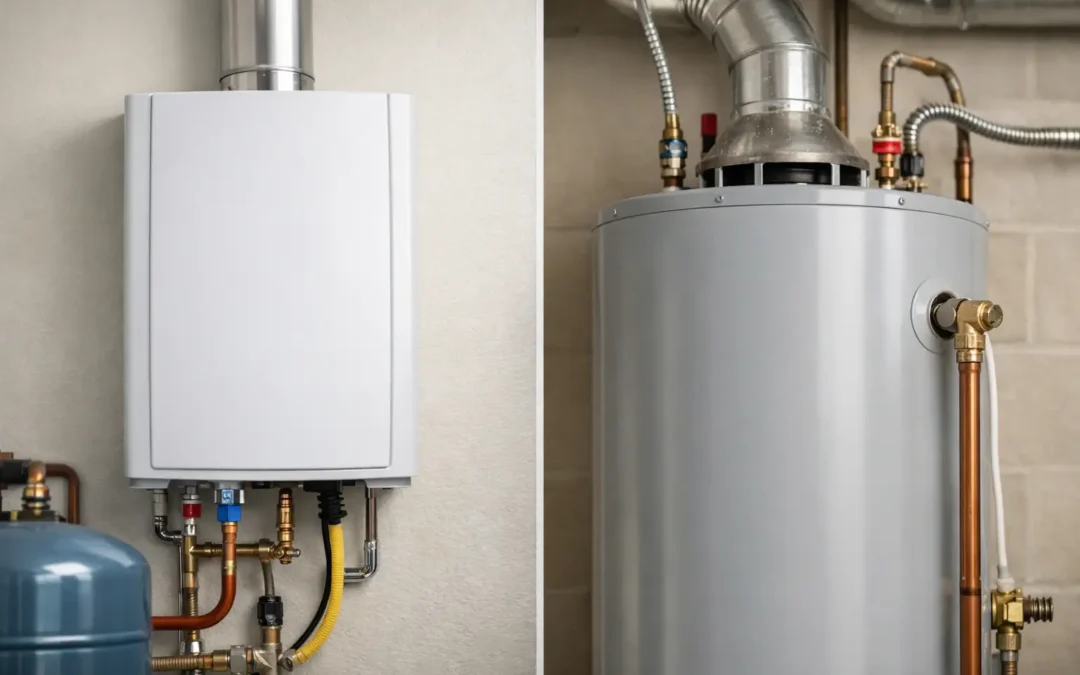
Running out of hot water in the middle of a shower usually starts the same conversation: tankless vs traditional water heater. For some homes, the answer is obvious after one estimate. For others, it comes down to usage habits, plumbing setup, budget, and how long you plan to stay in the property.
If you are weighing a replacement or planning an upgrade, it helps to look past the marketing. Both systems can work well. The right choice depends on what you expect from your hot water, how your building is configured, and whether you care more about lower upfront cost or long-term efficiency.
Tankless vs traditional water heater: What changes day to day?
A traditional water heater stores and heats a set amount of water in a tank, usually 40 to 80 gallons. When you use hot water, the system draws from that stored supply and reheats the tank as needed. This setup is familiar, dependable, and often the most straightforward replacement option.
A tankless water heater works differently. Instead of storing hot water, it heats water on demand as it flows through the unit. That means you are not paying to keep a full tank hot around the clock. It also means performance depends on flow rate, gas or electrical capacity, and how many fixtures are calling for hot water at the same time.
From a daily comfort standpoint, the biggest difference is consistency. A properly sized tankless unit can deliver hot water for much longer without the “tank ran out” problem. A traditional tank system, on the other hand, may be perfectly adequate for smaller households or properties with predictable hot water usage.
Upfront cost is where most decisions are made
For many property owners, budget is the first filter. Traditional water heaters usually cost less to buy and install. If your current system already uses a tank and the connections are in place, replacement is often faster and more affordable.
Tankless systems typically come with a higher upfront price. The unit itself may cost more, and installation can involve added labor if gas lines, venting, electrical service, or water lines need upgrades. In some homes and commercial spaces, those changes are minor. In others, they are significant enough to shift the value equation.
That does not mean tankless is too expensive to be worth it. It means you should compare total value, not just the equipment price. If you plan to stay in the property for years, want better efficiency, and need longer hot water availability, the added investment may make sense.
Energy efficiency and operating costs
This is where tankless systems often get the spotlight. Because they heat water only when needed, they avoid standby heat loss, which is the energy wasted keeping stored water hot when nobody is using it. That can translate into lower utility bills, especially in households with moderate hot water use.
Traditional tank systems are less efficient by design because they maintain a reservoir of hot water. Even well-insulated tanks lose some heat over time. That said, modern tank water heaters are much better than older models, and efficiency differences may not always be dramatic enough to outweigh higher installation costs.
Usage patterns matter. A household with steady but not excessive demand may see good savings with tankless. A property with frequent short bursts of hot water use may also benefit. But if installation costs are high and hot water demand is relatively simple, a traditional system can still be a practical and cost-effective option.
Performance during busy hours
The biggest selling point for tankless is endless hot water. That sounds ideal, and in many cases it is. But endless hot water is not the same as unlimited hot water.
A tankless unit has a maximum flow rate. If too many showers, sinks, dishwashers, or laundry loads are running at once, it may struggle to keep up unless it is sized properly or multiple units are installed. That is especially important in larger homes, businesses, and properties with high simultaneous demand.
Traditional tanks have a different limitation. They can handle several fixtures at once until the stored hot water is depleted. Once that reserve runs out, recovery time becomes the issue. If your household tends to cluster hot water use in the morning or evening, tank size and recovery rate matter just as much as the brand name on the label.
Space, placement, and building layout
Tankless units are compact and wall-mounted, which makes them attractive in tight mechanical rooms, utility closets, and commercial spaces where floor space matters. For property managers or homeowners trying to maximize usable room, that can be a real advantage.
Traditional tanks need more physical space and are heavier when full. In many homes, that is not a problem because the area is already designed for a tank replacement. But in remodels, additions, or smaller buildings, footprint can become part of the decision.
Placement also affects performance. Long pipe runs can delay hot water delivery no matter which system you choose. In some homes, a recirculation option or strategic unit placement may improve comfort more than switching heater types alone.
Lifespan and maintenance expectations
Tankless systems often last longer than traditional tank heaters when they are installed correctly and maintained regularly. It is common for a tankless unit to outlast a standard tank by several years. That longer service life can help offset the higher upfront cost.
Maintenance is where reality matters. Tankless units usually need periodic descaling, especially in areas with hard water. Without it, mineral buildup can reduce efficiency and shorten equipment life. Traditional tanks also need maintenance, including flushing sediment and checking the anode rod, but many owners neglect those steps until performance drops.
Neither option is maintenance-free. The better question is whether you are willing to keep up with routine service. If the answer is yes, both systems can provide dependable hot water for years.
Which system fits different households?
When a traditional water heater makes more sense
A traditional tank is often the better fit if you want the lower upfront cost, your current setup already supports a tank replacement, and your household size or usage is fairly predictable. It is also a practical choice when you need to restore hot water quickly and want a simple installation with fewer variables.
For rental properties or buildings where budget control is the top concern, a standard tank often offers strong value. The technology is familiar, replacement parts are widely available, and installation is usually less disruptive.
When a tankless water heater makes more sense
A tankless unit may be the better choice if you want better energy efficiency, more installation flexibility, and longer-lasting performance. It can also be ideal for households that regularly use large amounts of hot water or for owners who are tired of the tank running cold during peak times.
It is especially appealing when you are already planning broader mechanical upgrades and can account for venting, gas, or electrical improvements at the same time. In that situation, the long-term benefits are often easier to justify.
Tankless vs traditional water heater for Northern Virginia properties
In Northern Virginia, many homes range from older properties with existing tank setups to newer builds with more upgrade flexibility. That matters because the best recommendation is not just about the heater. It is about the full installation environment.
Older homes may need additional work to support tankless equipment properly. Newer homes may be easier to adapt. Commercial properties also vary widely, depending on fixture count, daily demand, and how important continuous hot water is to operations.
This is why an on-site evaluation matters. A reliable recommendation should consider fixture demand, fuel source, available venting, plumbing layout, and realistic budget, not just what sounds newer or more efficient.
What to ask before you decide
Before choosing either option, ask how much hot water you actually use, not how much you think you use. Think about busy mornings, laundry days, dishwashing, tenant turnover, or customer-facing business needs. Then ask what your property can support without major modifications.
You should also ask about maintenance, expected lifespan, installation timeline, and the total installed cost. A lower bid is not always the better value if the system ends up undersized or the workmanship creates problems later.
At Aircon HVAC Solutions, these are the kinds of details that shape the right recommendation. A water heater should fit the property and the people using it, not just the sales pitch.
If you are deciding between the two, the smartest move is usually the least flashy one: choose the system that gives you reliable hot water, manageable operating costs, and the fewest surprises over time.
