

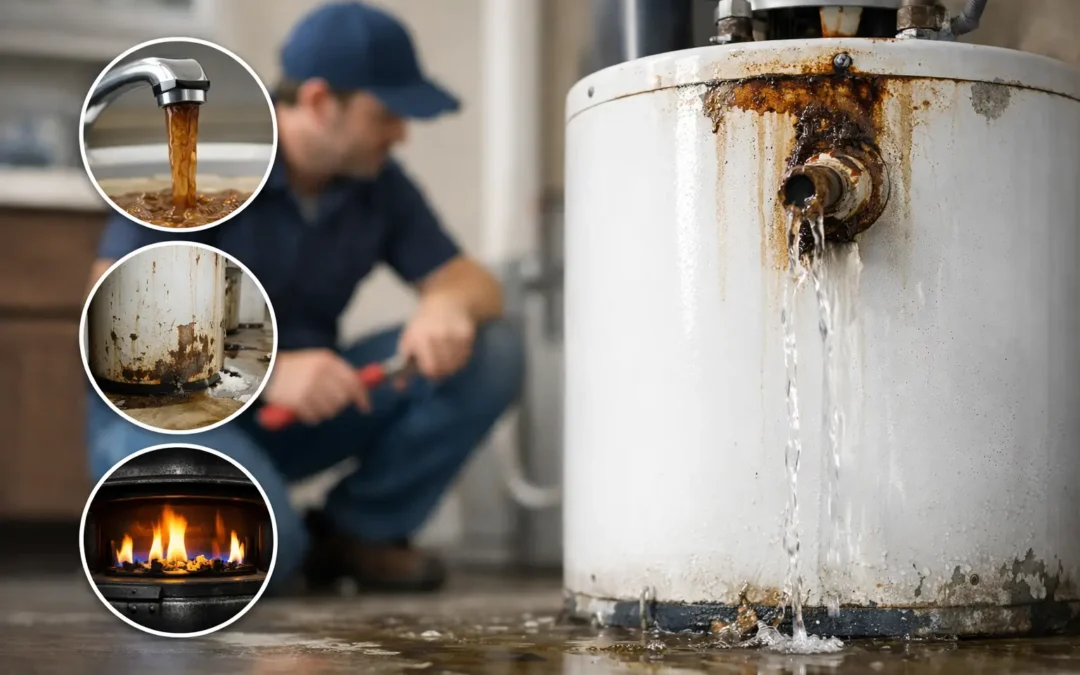
Hot water problems rarely start with a dramatic failure. More often, they show up as small annoyances first – a lukewarm shower, rusty water, a popping sound from the tank, or water that runs cold faster than it used to. Those early water heater replacement signs matter because they can help you avoid a total breakdown, water damage, and the stress of making a rushed decision.
If you are trying to decide whether your unit needs a repair or a full replacement, the answer depends on age, condition, efficiency, and how often problems keep coming back. A skilled inspection can clarify that quickly, but there are clear warning signs that homeowners and property managers should not ignore.
When water heater replacement signs point to more than a repair
Not every issue means the system is finished. A failed thermostat, heating element, or pressure relief valve can often be repaired without replacing the entire unit. But when multiple problems show up at once, or when the tank itself is deteriorating, replacement is usually the smarter long-term move.
That is especially true if the unit is older and your hot water demand has changed. A household with more people, added bathrooms, or heavier laundry use may be pushing an aging water heater past what it can reliably handle.
1. Your water heater is over 8 to 12 years old
For many traditional tank water heaters, the expected lifespan is around 8 to 12 years. Some last longer with excellent maintenance, while others wear out sooner due to hard water, heavy use, or lack of flushing. Tankless systems often last longer, but they are not immune to age-related wear.
If your water heater is already in that range and starting to show performance issues, replacement often makes more sense than paying for repeated repairs. Age alone does not guarantee failure tomorrow, but it does raise the risk that one repair will be followed by another.
2. You are seeing rusty or discolored hot water
Brown, reddish, or rusty-looking hot water is one of the more concerning warning signs. In some cases, the issue comes from galvanized piping rather than the water heater. But if the discoloration only appears when running hot water, the tank may be corroding from the inside.
Once internal rust takes hold, the problem usually gets worse, not better. The anode rod may have been depleted, and the tank lining may be breaking down. At that point, replacement is often the safest option.
3. There is water around the base of the tank
A little moisture does not always mean the tank is cracked. It could be a loose connection, a leaking valve, or normal condensation in some situations. Still, water pooling around the unit should never be ignored.
If the tank itself is leaking, replacement is generally necessary. Tank leaks do not repair the same way component leaks do, and they can quickly lead to floor damage, mold concerns, and emergency cleanup. For homes and commercial spaces alike, that is a problem worth addressing early.
Common water heater replacement signs homeowners notice first
Most people do not inspect their water heater regularly. They notice the symptoms when daily comfort starts to slip. That is why performance-related signs are often the first clue that the system is reaching the end of its service life.
4. Hot water runs out too quickly
If your showers are getting shorter because the hot water cannot keep up, your water heater may be struggling. Sediment buildup inside the tank can reduce capacity and force the system to work harder. In other cases, heating elements may be failing, or the unit may simply be undersized for current demand.
A repair may solve the issue if the problem is isolated. But if the system is older and the short hot water supply has become a regular frustration, replacement may give you more reliable performance and better efficiency.
5. Water temperature is inconsistent
One day the water is fine. The next day it is barely warm, or suddenly too hot. Inconsistent water temperature can point to failing components, sediment interference, or a system that is no longer operating reliably under normal demand.
This is one of those signs where context matters. A newer unit with a single bad part may be worth fixing. An older unit with erratic performance, rising utility bills, and visible wear is a different story.
6. The tank is making rumbling or popping noises
As sediment hardens at the bottom of a tank, it creates a barrier between the burner or heating elements and the water. That can cause popping, crackling, or rumbling sounds during operation. The unit has to work harder to heat water through that buildup, which increases strain and reduces efficiency.
Flushing can help if the issue is caught early. But in older systems, heavy sediment can contribute to overheating and tank damage. If the noises are loud, persistent, and paired with poor performance, replacement should be on the table.
7. Your energy bills are climbing without another clear cause
Water heaters are one of the larger energy users in many buildings. When they lose efficiency, that change often shows up on utility bills. Sediment buildup, worn parts, or simple age can all make the unit work harder than it should.
Of course, higher bills can also be tied to HVAC use, insulation issues, or seasonal demand. But if your hot water system is older and you are noticing weaker performance at the same time, the water heater may be contributing more than you realize.
Signs replacement is the safer financial choice
Many customers ask the same practical question: should I repair it one more time or stop putting money into an aging system? That is the right question, because the cheapest fix today is not always the lowest-cost choice over the next year or two.
8. Repairs are becoming more frequent
A single repair on a fairly new water heater is normal. Multiple repairs in a short span usually mean the system is entering a more expensive phase of ownership. One part fails, then another, and you are left paying service costs over and over without solving the underlying decline.
If you are seeing a pattern, replacement often brings more peace of mind. It also reduces the risk of losing hot water at the worst possible time, which matters for busy households and businesses that depend on reliable plumbing every day.
9. The tank no longer matches your needs
Sometimes the issue is not failure but fit. If your building has changed and the existing water heater cannot keep up, replacing it with the right size or type can improve comfort immediately. That might mean moving from an older storage tank to a higher-capacity model, or considering tankless if the layout and usage pattern make sense.
There is no one-size-fits-all answer here. Tankless systems offer efficiency and endless hot water potential, but they are not the best match for every property. Traditional tanks can still be the right solution when installation cost, space, and usage patterns point that way. A good recommendation should reflect how the building is actually used.
Repair or replace? What usually makes the difference
In general, replacement becomes more likely when the unit is older, leaking from the tank, showing signs of corrosion, or requiring repeated service. Repair is more reasonable when the system is newer and the problem is limited to a replaceable component.
The biggest mistake is waiting until a small warning becomes a full emergency. Water heaters often give you some notice before they fail. Paying attention to those signs gives you more time to compare options, plan the installation, and avoid unnecessary disruption.
For homeowners and property managers in Northern Virginia, timing also matters from a comfort standpoint. Losing hot water during a busy week is inconvenient enough. Adding water cleanup and emergency replacement into the mix makes it much harder.
If your water heater is showing several of these symptoms, a professional evaluation can help you make a clear, cost-conscious decision. At Aircon HVAC Solutions, the goal is simple: give you honest guidance, transparent pricing, and a replacement recommendation only when it truly makes sense. A reliable hot water system should feel easy to depend on – and when it no longer does, that is usually your clearest sign to act.
