

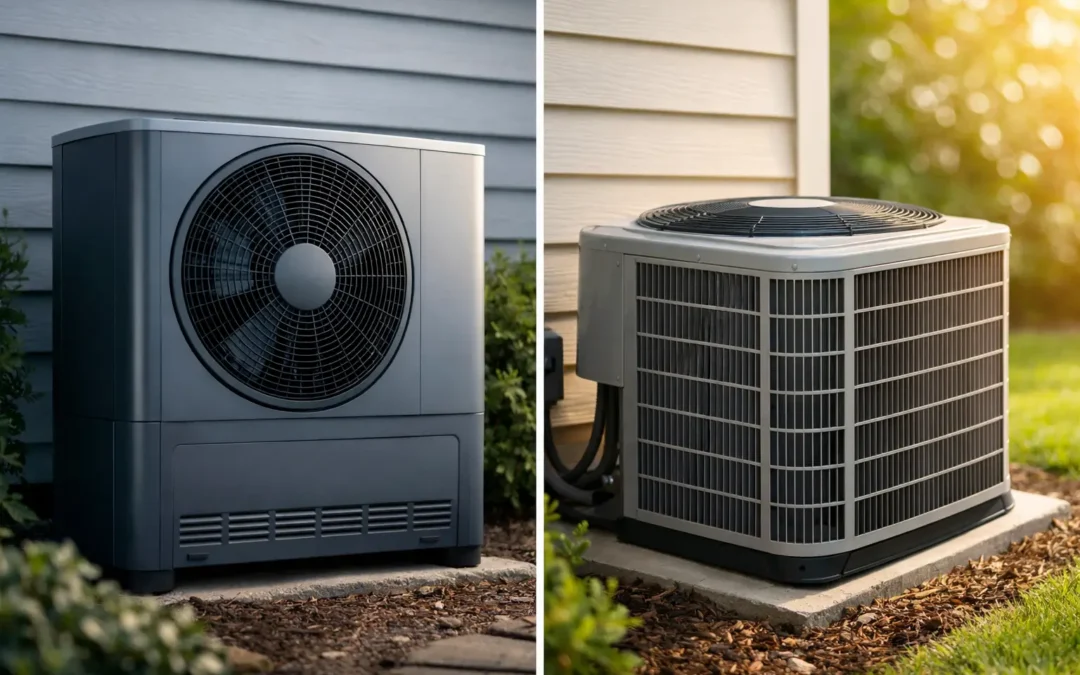
If your current cooling system is aging out or your utility bills keep climbing, the question of heat pump versus air conditioner stops being theoretical very quickly. For many homeowners and property managers, the right choice comes down to how you heat the space, how long you plan to stay in the property, and how much year-round efficiency matters.
At a glance, both systems can cool your home. That is why they are often compared side by side. The real difference is that a heat pump can also provide heat, while a traditional air conditioner only cools and must work alongside a furnace or another heating source.
Heat pump versus air conditioner: the core difference
A central air conditioner moves heat out of your home during warmer months. It works with an indoor coil and an outdoor condenser to remove indoor heat and humidity, then sends the cooled air back through your ductwork. When temperatures drop, the air conditioner does not switch into heating mode. You need a separate furnace or heating system for that job.
A heat pump uses similar cooling technology, but it can reverse the process. In summer, it cools your home much like an air conditioner. In winter, it pulls heat from the outdoor air and transfers it inside. Even when it feels cold outside, there is still heat energy in the air that the system can use.
That dual-purpose design is what makes a heat pump appealing. It can reduce the need for separate equipment, and in the right home, it can improve overall efficiency.
How the choice affects comfort
Comfort is not only about getting the house cool in July. It is also about how evenly the system handles temperature changes through the year.
An air conditioner paired with a furnace often delivers strong cooling in summer and powerful heat in winter. Gas furnaces in particular tend to produce hotter supply air, which some homeowners prefer during very cold weather. If you are used to that blast of warm air on a freezing morning, a heat pump may feel different. Heat pumps generally deliver steadier, milder heat rather than short bursts of very hot air.
That does not mean one is always more comfortable than the other. It depends on your expectations, the insulation level of the building, duct condition, thermostat settings, and local winter temperatures. In many homes, a properly sized heat pump provides excellent year-round comfort. In others, especially where heating demand is high or building performance is weak, a furnace and air conditioner combination may still be the better fit.
Energy efficiency and operating costs
This is where the heat pump versus air conditioner decision gets more interesting.
Because a heat pump transfers heat instead of generating it directly, it can be very efficient in heating mode. In moderate climates, that can translate into lower winter energy use compared with electric resistance heating. It may also offer savings over older, less efficient HVAC setups.
A standard air conditioner can still be highly efficient for cooling, especially if it is a modern high-SEER system. But remember, cooling is only half the story. Since an AC system needs a separate furnace for heating, your total operating cost depends on both pieces of equipment and the fuel source used for winter heat.
For example, a home with an efficient gas furnace and central air may have a very different cost profile than a home with an older electric furnace and central air. Likewise, a heat pump in a well-insulated home may perform very differently than one installed in a drafty property with leaky ducts.
This is why blanket claims can be misleading. Heat pumps are often praised for efficiency, and for good reason, but actual savings depend on your home and utility rates.
Upfront cost versus long-term value
Installation cost matters, especially if you are replacing a failed system and need a fast decision.
In some cases, a heat pump may cost more upfront than a comparable air conditioner because it does more. You are paying for cooling and heating capability in one system. If your property already has a newer furnace in good condition, replacing only the air conditioner may be the more budget-friendly move in the short term.
On the other hand, if both your cooling and heating equipment are older, a heat pump can make more financial sense than replacing two separate systems. It may also simplify future maintenance planning because you are relying on one primary piece of equipment for both seasons.
Long-term value should include more than the installation invoice. It should also include expected lifespan, repair risk, seasonal efficiency, comfort goals, and whether the system fits how the building is actually used.
Climate matters more than most people think
In Northern Virginia, weather can swing from humid summers to cold winter stretches. That makes system selection more nuanced than it would be in a purely warm climate.
A heat pump can work very well in this region, especially modern systems designed to perform better in lower outdoor temperatures. Still, some homes benefit from a dual-fuel setup, where a heat pump handles much of the heating and cooling, while a furnace supports the system during colder periods. That approach can balance efficiency with strong cold-weather performance.
A traditional air conditioner with a furnace remains a solid choice too, particularly for homeowners who prefer gas heat or already have dependable heating equipment in place. There is no one-size-fits-all answer, and that is exactly why load calculations, duct evaluation, and equipment matching matter.
Heat pump versus air conditioner for different property types
For homeowners planning to stay in the property for years, a heat pump can be attractive because it supports long-term efficiency and all-season performance. If the home needs both heating and cooling equipment updates, that option becomes even more compelling.
For property managers, the decision may come down to reliability, tenant comfort, and operating costs across multiple units. In some buildings, keeping separate systems can make service planning simpler. In others, upgrading to heat pumps may help modernize older equipment and reduce energy waste.
For commercial spaces, usage patterns matter. Office buildings, retail properties, and mixed-use spaces may have very different heating and cooling demands. The right answer depends on occupancy, square footage, zoning needs, and the condition of existing infrastructure.
Common mistakes when comparing systems
The biggest mistake is comparing equipment by label alone. A heat pump is not automatically the better choice just because it is newer technology, and an air conditioner is not automatically the safer choice just because it is familiar.
Another common issue is focusing only on unit price instead of system design. An oversized system can cycle too often, reduce comfort, and waste energy. An undersized one can struggle in peak weather. Poor ductwork, weak airflow, or bad installation can undermine either option.
It is also easy to overlook indoor air quality. Filtration, humidity control, and ventilation all affect comfort, especially in tightly sealed buildings or homes with allergy concerns. The equipment decision should support the full comfort picture, not just the thermostat setting.
How to decide what makes sense for your home
Start with a few practical questions. Do you need to replace just cooling equipment, or is your heating system aging too? Do you prefer gas heat, or are you open to an electric heating solution? Are your utility bills a major concern? Is the home insulated well enough to support high-efficiency equipment?
Then look at the condition of your ductwork, the size of the space, and how evenly the current system heats and cools. If some rooms are always too hot or too cold, equipment replacement alone may not fix the issue.
This is where a professional evaluation makes the difference. A trustworthy HVAC contractor should look at the whole system, explain the trade-offs clearly, and give you pricing that matches the scope of work. Aircon HVAC Solutions takes that approach because the goal is not just to install equipment quickly. It is to recommend a system that will serve the property well over time.
If you are weighing heat pump versus air conditioner, the best choice is the one that fits your building, your budget, and your comfort expectations without guesswork. A good system should make daily life easier, not leave you questioning whether you chose wrong every time the weather changes.
