

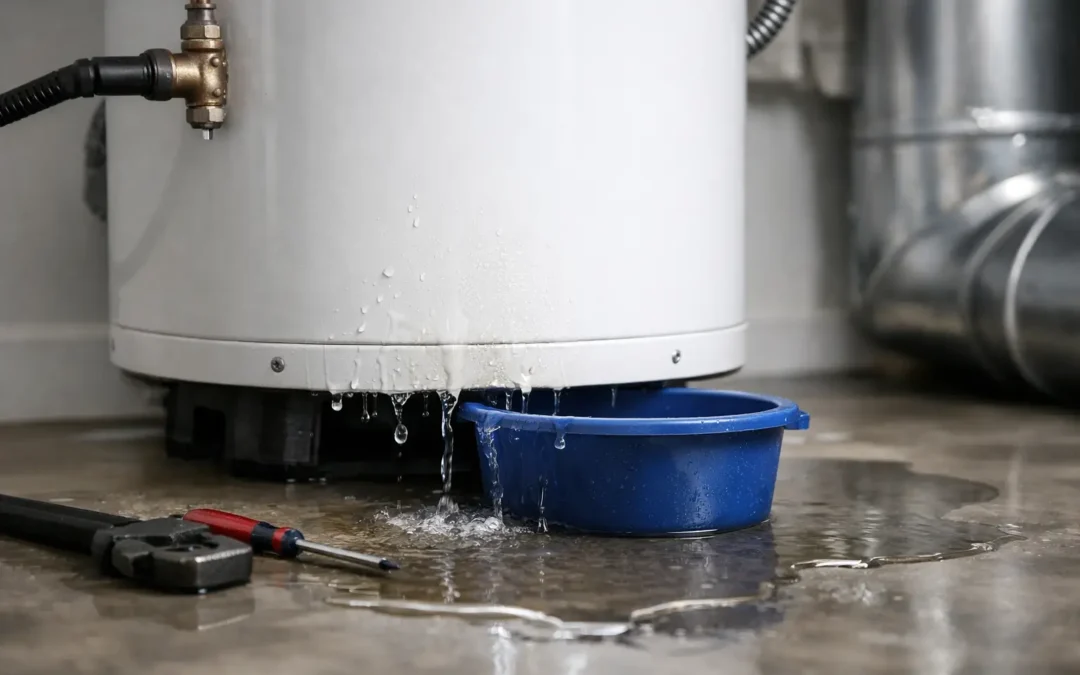
A puddle around the tank usually shows up at the worst time – before work, before guests arrive, or right when you realize the hot water is acting strange too. If you are asking why is water heater leaking, the answer can range from a loose connection to a failing tank, and the difference matters. Some leaks are quick fixes. Others are a sign that the unit is close to the end.
The first step is not guessing. Water can travel before it drips onto the floor, so the spot where you see the leak is not always where it starts. A careful look can help you understand whether this is a minor repair, a safety issue, or a replacement decision.
Why is water heater leaking from the top, side, or bottom?
Where the water appears gives you a strong clue.
If the leak seems to come from the top, the issue is often tied to the cold water inlet, hot water outlet, or the connections above the unit. Over time, fittings can loosen slightly, seals can wear out, and corrosion can develop around the connections. In many cases, this type of leak can be repaired without replacing the full system.
If water is dripping from the side, the pressure relief valve may be the source. This valve is designed to release water if pressure or temperature gets too high inside the tank. That is a safety feature, not a defect. But if it keeps leaking, it may point to excess pressure in the system, a faulty valve, or a problem with the expansion tank if your plumbing system uses one.
If the leak is at the bottom, the situation can be more serious. Sometimes it is only condensation or a drain valve that is not fully closed. Other times, the inner tank itself has failed. Once the tank is leaking through the body of the unit, repair is usually no longer the practical option.
Common reasons a water heater leaks
Loose pipe connections
This is one of the better-case scenarios. The water lines entering and leaving the heater can shift over time from normal vibration, temperature changes, or previous plumbing work. Even a small gap in a fitting can create a steady drip.
You may notice moisture around threaded joints or pooling near the top of the unit. If the heater is otherwise in good shape, tightening or replacing a connector may solve the problem quickly.
Faulty temperature and pressure relief valve
The temperature and pressure relief valve, often called the T&P valve, is there to keep the system safe. If pressure gets too high, it opens to release some water. When it leaks occasionally, that may be a warning that the system pressure is not balanced correctly. If it leaks constantly, the valve itself may be worn out.
This is not a part to ignore. A relief valve issue may be simple, but it can also signal a larger pressure problem affecting your plumbing system.
Drain valve problems
Near the bottom of a traditional tank water heater, there is a drain valve used for flushing sediment. If it is loose, damaged, or not sealing correctly, water can drip from that point and collect underneath the unit.
This can look worse than it is. A leaking drain valve may be repairable or replaceable on its own. The key is confirming that the water is truly coming from the valve and not from the tank seam above it.
Sediment buildup inside the tank
Northern Virginia homes can experience mineral buildup over time, especially if the unit has not been flushed regularly. Sediment settles at the bottom of the tank and forces the heater to work harder. As the tank overheats around that buildup, the metal can weaken.
In earlier stages, sediment may cause popping sounds, reduced efficiency, and inconsistent hot water. Left alone long enough, it can contribute to cracks or leaks. This is one reason routine maintenance has real value – it helps catch wear before it becomes water damage.
Corrosion and tank failure
Water heaters do not last forever. As the system ages, the protective components inside the tank wear down. Once corrosion takes hold and the steel tank begins to rust through, water starts escaping from the body of the unit.
At that point, repair is rarely cost-effective. If the tank itself is leaking, replacement is typically the right move. Most homeowners notice this after years of normal use, often around the point when other symptoms have already started, like rusty water, reduced hot water capacity, or strange noises.
Condensation that looks like a leak
Not every wet floor means the tank is broken. Sometimes a gas water heater produces condensation, especially during heavy use or in humid conditions. That moisture can drip and collect around the base, making it look like the heater is leaking.
The difference is consistency. Condensation may come and go. A true leak usually keeps returning and often gets worse. If the source is unclear, it is worth having the unit checked before assuming the tank has failed.
What to do first when your water heater is leaking
Start by staying calm and limiting damage. If water is actively pooling, turn off the power to the unit first. For an electric water heater, switch it off at the breaker. For a gas unit, turn the gas control to the appropriate setting and avoid doing anything that feels unsafe.
Next, shut off the water supply to the heater. There is usually a shutoff valve on the cold water line above the unit. This will stop more water from entering the tank.
After that, look around the heater carefully. Check the top connections, the relief valve, the drain valve, and the area underneath the tank. Drying the outside with a towel can help you see where fresh water appears. If the leak is heavy, the tank is old, or you see rust around the body of the unit, it is best not to delay service.
Can you still use a leaking water heater?
Usually, it is not a good idea.
A minor drip from a connection may not feel urgent, but leaks tend to get worse, not better. Continued use can damage flooring, drywall, stored items, and nearby equipment. More importantly, if the leak is tied to pressure, corrosion, or electrical components, the risk goes beyond inconvenience.
There is also the question of efficiency. A water heater that is leaking or struggling internally often uses more energy while delivering less reliable hot water. Waiting too long can turn a manageable repair into an emergency replacement.
When repair makes sense and when replacement is smarter
This depends on the source of the leak, the age of the system, and the overall condition of the unit.
Repair usually makes sense when the problem is isolated to a valve, fitting, or connection and the tank itself is still sound. If the unit is relatively newer and has been maintained well, a targeted repair can restore normal performance without much disruption.
Replacement is often the better decision when the tank is leaking, corrosion is visible, or the unit is already near the end of its expected life. Paying for repeated repairs on an aging water heater can cost more in the long run, especially if reliability is already slipping.
For property managers and business owners, the decision is often about risk as much as cost. A water heater leak in a commercial space, rental property, or multi-use building can lead to downtime, tenant complaints, and preventable damage. In those cases, acting early is usually the smarter financial move.
Why is water heater leaking even if it still heats water?
This is a common point of confusion. A water heater can continue producing hot water while still developing a serious leak. Heating performance and structural condition are related, but they are not the same thing.
For example, a tank may heat normally even while corrosion is eating through the bottom. A relief valve may leak while the burner or heating elements still work. A loose fitting can drip for days before hot water service is affected. That is why visible water around the unit should never be brushed off just because the shower still gets hot.
The value of getting it checked early
A leaking water heater is one of those problems that rewards fast action. Catching a valve issue early may save the tank. Catching a failing tank early may save the floor around it.
A professional inspection also helps remove guesswork. Instead of watching the puddle and hoping it stays small, you get a clear answer on what is leaking, how serious it is, and whether repair or replacement makes better sense for your property. For homeowners and businesses that want a dependable local team, Aircon HVAC Solutions approaches water heater problems the same way it handles every comfort issue – with clear communication, precise workmanship, and respect for your time.
If your water heater is leaking, the best next step is simple: stop the damage, get the source identified, and deal with it before a small puddle becomes a much bigger repair.
