

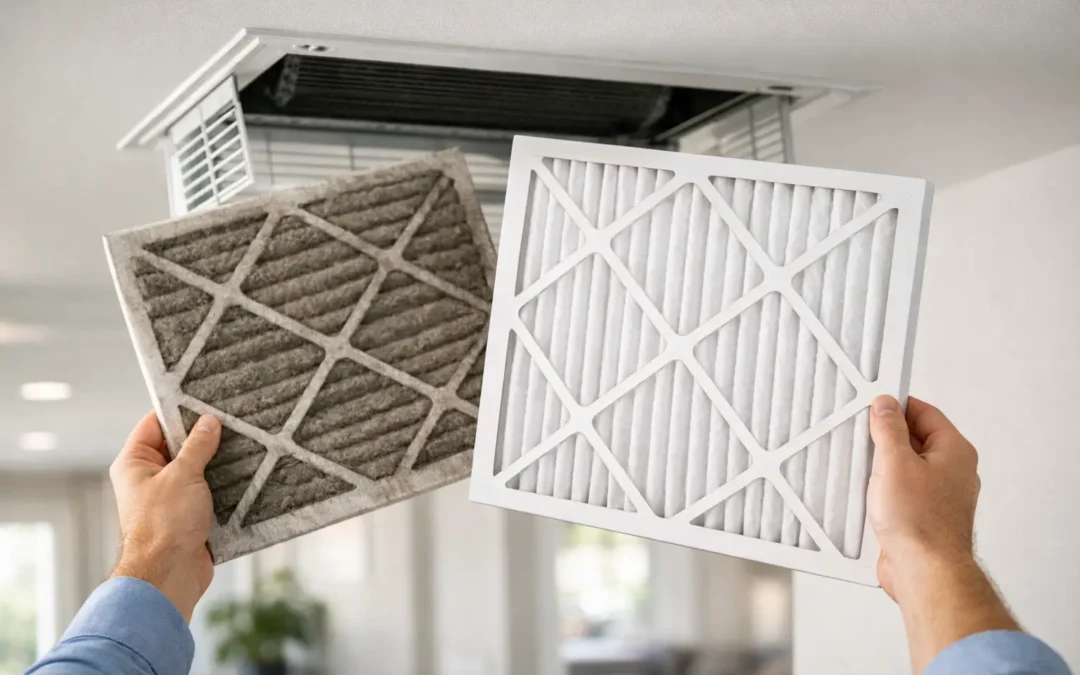
A dirty air filter can make a perfectly good heating and cooling system work harder than it should. It can also leave rooms feeling dusty, reduce airflow at the vents, and contribute to higher energy bills. If you are asking how often replace air filter media in your home or business, the honest answer is that the calendar matters, but your household and system use matter just as much.
For many Northern Virginia homes, checking the filter monthly and replacing it every one to three months is a dependable starting point. A home with pets, allergies, construction dust, or heavy HVAC use may need more frequent changes. The right schedule protects your comfort without replacing a clean filter before its time.
How Often to Replace an Air Filter at Home
Most standard 1-inch disposable filters should be replaced every 30 to 90 days. That broad range exists because filters do different jobs in different homes. A lightly used system in a clean, low-occupancy home may be fine with a new filter every 90 days. A busy household that runs the air conditioner through a humid Virginia summer may need one every 30 days.
Use this practical schedule as a guide:
- Replace a basic fiberglass or low-cost 1-inch filter about every 30 days.
- Replace a pleated 1-inch filter every 60 to 90 days in an average home.
- Check homes with one or more pets every 30 days and expect to replace filters every 30 to 60 days.
- Replace filters every 30 to 45 days when someone in the home has allergies, asthma, or other respiratory sensitivities.
- Check thicker 4-inch or 5-inch media filters monthly, even though many can last six to 12 months.
The package recommendation is useful, but it is not a guarantee. A filter advertised to last three months can load up much sooner when it is catching pet dander, pollen, dust, and everyday household debris.
Why Northern Virginia Homes May Need More Frequent Changes
Spring pollen, summer humidity, and year-round construction activity can all add particles to indoor air. In communities such as Manassas, Chantilly, Fairfax, and Reston, homes near active roads or building projects may see filters become dirty faster than expected.
The system itself also affects the schedule. A heat pump often runs in both summer and winter, which means the filter sees more total operating hours than one in a home with separate heating and cooling equipment. Homes that keep the fan set to “on” rather than “auto” may also need more frequent filter checks because air moves through the filter continuously.
If you have recently remodeled, replaced flooring, sanded drywall, or had other work done inside the home, inspect the filter right away. Fine construction dust can restrict airflow quickly. Replacing a filter after a dusty project is a small step that can help prevent unnecessary strain on your equipment.
Signs Your HVAC Filter Needs Replacement Now
A visual inspection is still one of the best ways to decide whether a filter should be changed. Turn off the HVAC system, remove the filter, and look at the surface. If it is gray, visibly coated in dust, bent, damp, or clogged with pet hair, replace it.
Your home may offer other clues. Weak airflow from supply vents, more dust on furniture, musty smells when the system starts, and uneven heating or cooling can all point to a restricted filter. These symptoms do not always mean the filter is the only problem, but changing a dirty one is the right first step.
Pay attention to utility bills as well. A clogged filter makes the blower work harder to pull air through the system. That added resistance can increase energy use and may contribute to overheating, frozen AC coils, or premature component wear if it is ignored for too long.
A filter that looks dark after only a few weeks is not necessarily defective. It may be doing its job in a home with high particle levels. The better question is whether the filter is so loaded that it is limiting airflow.
Choose the Right Filter, Not Just the Cheapest One
Filter selection affects both indoor air quality and system performance. Filters are commonly rated by MERV, which measures how effectively they capture different particle sizes. Higher MERV ratings can capture smaller particles, but they can also create more airflow resistance.
For many residential systems, a MERV 8 filter provides a practical balance of filtration and airflow. MERV 11 filters may be a good choice for homes with pets or allergy concerns, provided the HVAC system is designed to handle them. Very high-efficiency filters are not automatically better for every system. Installing a filter that is too restrictive can reduce airflow and create comfort problems.
Commercial properties need an even more tailored approach. A retail space, office, medical setting, or multifamily building may have different ventilation needs, equipment capacities, and occupant expectations. Filter changes should be part of a planned maintenance routine rather than a task handled only after complaints arise.
If you are unsure which filter your equipment can support, check the owner’s documentation or ask a qualified HVAC technician. The correct size, airflow direction, and MERV rating all matter. A good filter installed backward or squeezed into the wrong rack will not perform as intended.
How to Replace an Air Filter Correctly
The process is simple, but a few details prevent common mistakes. First, turn the thermostat off or set the system so it will not start while the filter is out. Find the filter cabinet, return-air grille, or air handler slot. Many homes have more than one filter location, especially if they have multiple systems or return grilles.
Remove the old filter and check its dimensions, which are printed on the frame. Do not rely only on the nominal size. A filter labeled 16 x 25 x 1 may have slightly different actual measurements, so buying the same listed size is usually the safest choice.
Before installing the new filter, find the airflow arrow on its frame. The arrow should point toward the equipment or blower, not toward the return grille. Slide it in securely, close the access panel, and restore normal thermostat operation.
Write the installation date on the filter frame or set a recurring phone reminder. This takes the guesswork out of maintenance, particularly when the heating and cooling system is running heavily during the hottest and coldest parts of the year.
When a New Filter Does Not Solve the Problem
A fresh filter should help restore normal airflow if the old one was clogged. If rooms are still stuffy, airflow remains weak, or the system cycles constantly, another issue may be involved. Dirty evaporator coils, duct leaks, blower problems, refrigerant issues, or an undersized system can create similar symptoms.
Do not keep installing increasingly restrictive filters in an attempt to fix a larger indoor air quality concern. Persistent dust, odors, humidity, or allergy symptoms may call for a closer look at filtration, ventilation, ductwork, or whole-home air purification. The right solution should improve the air you breathe without compromising the equipment that keeps your home comfortable.
Regular filter changes are one of the simplest ways to protect your HVAC system, but they work best as part of consistent professional maintenance. If you are dealing with recurring airflow or comfort concerns, Aircon HVAC Solutions can help identify what your system needs and provide clear, dependable recommendations.
