

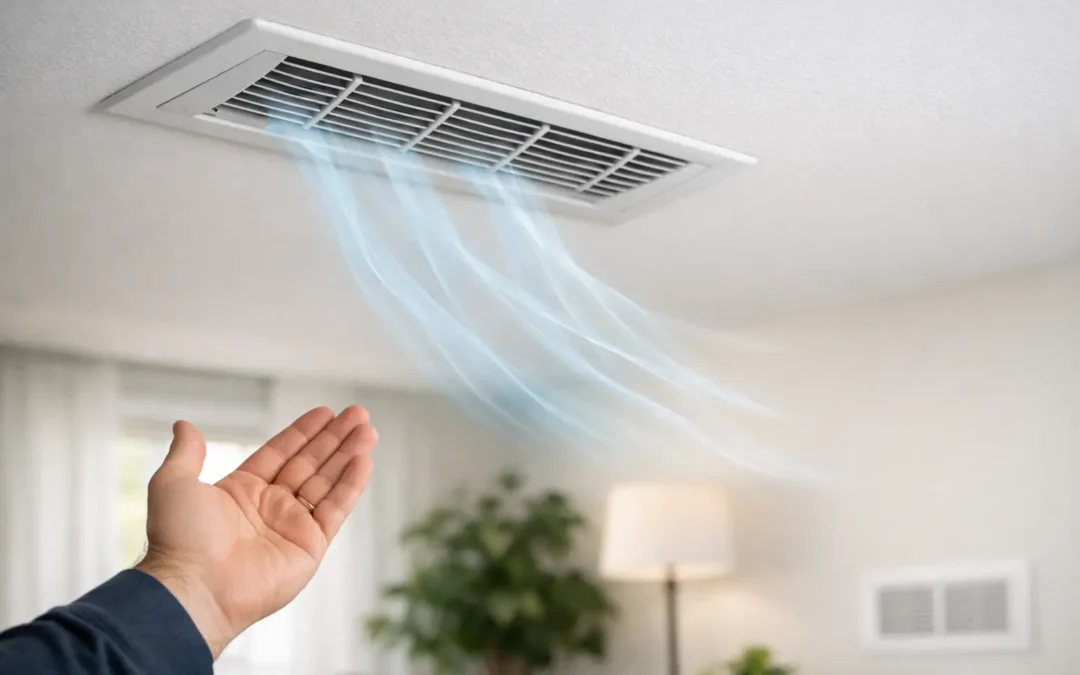
One room feels stuffy, another never cools down, and the vents barely seem to push any air at all. If you are asking what causes weak airflow, the answer usually comes down to a problem somewhere between the air filter, the ductwork, and the blower that moves conditioned air through your home or building.
Weak airflow is more than a comfort issue. It can make your HVAC system work harder, raise energy costs, and put extra strain on parts that are already under pressure during peak summer and winter demand. In some cases, low airflow is a simple fix. In others, it is an early warning sign that your system needs professional attention before a small issue turns into a repair call.
What causes weak airflow most often?
In most homes and light commercial spaces, weak airflow starts with restriction or loss. Either the system cannot move enough air, or the air is escaping before it reaches the rooms that need it.
A clogged air filter is one of the most common reasons. When the filter is packed with dust, pet hair, and debris, your system has to pull air through a barrier that is no longer doing its job properly. That reduces the volume of air moving through the equipment and out of the vents. It also forces the blower motor to work harder, which can shorten equipment life over time.
Closed or blocked vents are another frequent cause. Furniture placed over registers, rugs covering returns, or vents that have been shut in unused rooms can throw off airflow throughout the system. Many people close vents thinking it will save energy, but in a forced-air system, that often creates pressure problems instead of improving efficiency.
Duct issues are also high on the list. If ducts are leaking, disconnected, crushed, or poorly designed, air may never make it to the far rooms. You may still hear the system running, but the airflow at the register feels weak because a portion of the conditioned air is getting lost in attics, crawl spaces, walls, or utility areas.
Then there is the blower assembly itself. If the blower motor is failing, the fan wheel is dirty, or the capacitor is weak, the system may not be able to circulate enough air even when the thermostat is calling normally. This tends to show up as low airflow across multiple rooms, not just one.
Signs the problem is bigger than a dirty filter
A dirty filter is the first thing to check, but it is not the only possibility. If you replace the filter and airflow still feels weak after a day or two, there may be a larger issue in the system.
One clue is uneven comfort from room to room. If one area of the home is always warm while another is fine, that can point to duct leaks, balancing issues, or blocked branch lines. If every vent feels weak, the problem may be closer to the air handler, blower, or return side of the system.
Another sign is unusual noise. Whistling can suggest restricted airflow. Rattling or banging may indicate a duct problem. A humming unit with poor air movement can point to a struggling motor or capacitor. Ice on the indoor coil is another red flag. Restricted airflow can cause the evaporator coil to get too cold, leading to freezing that makes the airflow even worse.
If your energy bills are climbing while comfort is dropping, that is also worth attention. A system with weak airflow often runs longer cycles to reach the thermostat setting, and that extra runtime adds up.
What causes weak airflow from one vent only?
When the issue is limited to one vent or one room, the cause is often local rather than system-wide. The register itself may be closed or obstructed. A damper in the duct branch may be partially shut. Flexible ducting may be kinked or crushed. In older properties, dust buildup or physical damage inside the duct can also reduce flow to a specific area.
Room layout can make the issue feel worse too. Large sun exposure, high ceilings, or poor insulation can make a room seem like it has weak airflow when the real issue is heat gain or heat loss. That is why airflow complaints sometimes need a full system view rather than a quick guess.
For property managers and business owners, one underperforming zone can affect tenant comfort, employee productivity, and customer experience. It is not always just a vent problem. It can reflect an imbalance in how the entire system was set up or how it has aged.
Return air problems are easy to miss
Most people focus on supply vents because that is where they feel the air. But return air matters just as much. Your HVAC system needs to pull enough air back in before it can condition and redistribute it.
If return grilles are blocked by furniture, clogged with dust, or undersized for the space, the system can become starved for air. That reduces overall circulation and may create pressure imbalances in the home. In extreme cases, rooms can feel stagnant even though the equipment itself is running.
This is one reason airflow problems should not always be treated as a vent issue. Sometimes the air coming out is weak because the air going back in is restricted.
Equipment problems that can reduce airflow
Mechanical issues tend to be less obvious to the average homeowner, but they are common enough that they should be considered when basic checks do not solve the problem.
A failing blower motor may still run, just not at the proper speed. A bad capacitor can prevent the motor from operating efficiently. Dirt on the blower wheel can reduce how much air the fan can move. In cooling mode, a dirty evaporator coil can restrict airflow dramatically, especially if it starts to freeze. Heat pumps and furnaces can also experience airflow issues tied to internal components, control settings, or neglected maintenance.
In some cases, the system itself is not the right size for the building. An undersized system may struggle to move enough conditioned air where it is needed. An oversized system can create different performance issues, including short cycling and poor comfort. Airflow is not just about how strong the fan feels at the vent. It is part of the entire design and operation of the system.
What you can check before calling for service
There are a few practical steps worth taking first. Check the air filter and replace it if it is dirty. Make sure supply and return vents are open and not blocked by furniture, curtains, or rugs. Look for obvious signs of duct damage in accessible areas such as basements, utility rooms, or attics. If your thermostat fan settings were changed recently, confirm the system is operating as expected.
Pay attention to when the weak airflow started. If it came on gradually, buildup or wear may be involved. If it happened suddenly, a part failure, duct separation, or frozen coil may be more likely. That timing can help a technician diagnose the issue faster.
It is best not to keep pushing the system if airflow is very low and temperatures are not improving. Running an HVAC unit under restricted airflow conditions can lead to further wear and more expensive repairs.
When professional service makes the most sense
If the filter is clean, vents are open, and airflow is still weak, it is time for a closer inspection. Professional testing can determine whether the issue is duct leakage, static pressure, blower performance, coil restriction, or a system design problem. That matters because the fix depends on the cause. Replacing a part will not solve a hidden duct leak, and sealing ducts will not fix a failing motor.
For homes and commercial spaces in Northern Virginia, airflow issues also tend to show up during weather extremes, when systems are working hardest. Fast, accurate diagnosis helps protect comfort and prevents avoidable strain on the equipment. That is where an experienced team like Aircon HVAC Solutions can make a real difference, especially when the goal is not just restoring airflow but improving long-term performance.
Weak airflow rarely gets better on its own. If your vents are not delivering the comfort they should, a prompt check now can save you from bigger problems when you need your system most.
