

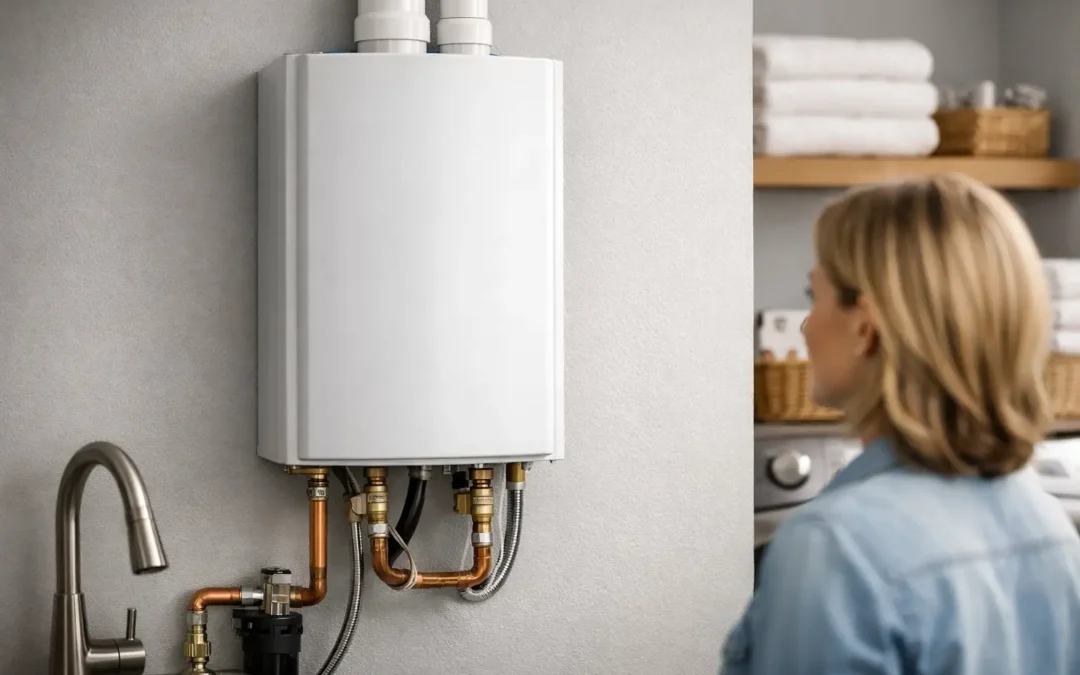
A cold shower halfway through the morning routine is a clear sign that your water heater is no longer keeping up. For many homeowners, a tankless model is an appealing answer. This guide to tankless water heaters explains what these systems do well, where their limits are, and how to decide whether one fits your home, hot water habits, and budget.
How Tankless Water Heaters Work
A traditional water heater stores a set amount of hot water in a tank and reheats it as needed. A tankless water heater heats water only when you open a hot water fixture. Cold water travels through the unit, a powerful gas burner or electric element raises the temperature, and hot water flows to the shower, sink, appliance, or fixture.
Because there is no storage tank to empty, a properly sized tankless unit can provide hot water for much longer than a standard tank heater. That does not mean it produces unlimited hot water under every condition. Its output depends on the unit’s flow-rate capacity, the temperature of incoming water, and how many fixtures are demanding hot water at the same time.
For example, a unit may comfortably serve one shower and a dishwasher. Add a second shower, laundry, and a kitchen faucet during a cold Northern Virginia morning, and an undersized system can struggle. Sizing is the difference between a dependable upgrade and an expensive disappointment.
When a Tankless Water Heater Makes Sense
Tankless water heaters are especially useful for households that regularly run out of hot water, have limited mechanical-room space, or want to reduce the energy used to keep a large tank hot around the clock. Their wall-mounted design can free up valuable floor space in a utility room, basement, closet, or commercial service area.
They can also be a practical long-term choice. Many tankless systems last longer than conventional tank models when they are correctly installed and maintained. Since they do not store 40 or 50 gallons of water, they also avoid the same risk of a tank rupture flooding a finished area.
Still, tankless is not automatically the best choice for every property. A traditional tank water heater may be more cost-effective if hot water demand is modest, the existing unit is easy to replace, and upfront cost is the deciding factor. In some homes, electrical service, gas piping, venting, or plumbing changes can make a tankless installation more involved.
The right question is not simply, “Is tankless better?” It is, “Which system will provide reliable hot water for this building at a price that makes sense?”
Choosing Between Gas and Electric Tankless Units
Gas and electric tankless water heaters both heat water on demand, but they have very different installation requirements and performance ranges.
Gas tankless water heaters
Gas models are often the stronger choice for larger households and properties with high simultaneous demand. They generally offer higher flow rates, which can make them well suited for multiple bathrooms, larger families, and many commercial applications.
However, installing a gas tankless unit may require upgrades to the gas line, new venting, condensate drainage for high-efficiency models, and a safe outdoor termination point. These details are not optional. Proper combustion air, vent sizing, and gas pressure are essential for safe, efficient operation.
Electric tankless water heaters
Electric units are compact and do not require combustion venting. They can be a good fit for a point-of-use application, such as a remote bathroom, office sink, garage addition, or small space with limited hot water needs.
For whole-home use, electric tankless systems can demand substantial electrical capacity. A home may need panel upgrades or additional circuits before installation. In colder months, the incoming water temperature is lower, meaning the unit must work harder to produce the desired outlet temperature. That can limit flow during heavy demand.
A qualified technician can evaluate your current gas and electrical infrastructure before recommending either option. This step prevents surprises after installation begins.
Sizing Is More Than Counting Bathrooms
The most common mistake in tankless water heater selection is choosing a unit based only on the number of bathrooms. Bathrooms matter, but actual usage matters more.
A proper sizing assessment considers the fixtures likely to run at the same time, their expected flow rates, your preferred hot water temperature, and the groundwater temperature entering the home. A shower may use around 2 gallons per minute, while a dishwasher, washing machine, or soaking tub adds its own demand. Low-flow fixtures can reduce the required capacity, while rainfall showerheads and body sprays can increase it significantly.
A technician will also consider your home’s plumbing layout. A tankless heater cannot eliminate the wait for hot water caused by long pipe runs. If the primary bathroom is far from the water heater, you may still wait for cooled water in the pipes to clear. A recirculation system can improve convenience in some homes, though it adds cost and should be selected carefully to avoid unnecessary energy use.
For commercial properties, demand patterns are equally important. A small office, salon, restaurant, or multi-tenant building may have short but intense periods of hot water use. The system must be designed for the peak load, not just average daily use.
What Installation Can Involve
Replacing a conventional tank with a tankless system is often more than a simple equipment swap. The wall location, water lines, gas supply or electrical circuits, vent route, drainage, and local code requirements all need to be reviewed.
Gas-fired condensing tankless units commonly use specialized vent materials and produce condensate that must be drained properly. In some cases, a neutralizer is needed to protect drainage piping. Outdoor installations can be an option for certain units and locations, but equipment must be rated and installed for local weather conditions.
A professional installation should include correct mounting, isolation valves for future service, pressure and temperature verification, venting or electrical safety checks, and a test of hot water performance at fixtures. Permitting requirements can also apply, particularly when gas piping, venting, or electrical work changes.
Clear pricing should account for these site-specific needs. The lowest equipment quote does not always reflect the actual scope required to install a system safely and correctly.
Maintenance Protects Performance
Tankless water heaters are low-maintenance, not no-maintenance. Mineral deposits can build up inside the heat exchanger, especially in areas with hard water. Over time, scale can reduce efficiency, restrict water flow, and place added stress on internal components.
Most manufacturers recommend periodic flushing, often once a year, though the appropriate interval depends on water quality and usage. A professional maintenance visit can also include cleaning inlet filters, checking the burner or electrical components, inspecting venting, confirming condensate drainage, and testing overall operation.
If your home has hard water, water treatment may help protect not only the tankless unit but also fixtures, appliances, and plumbing throughout the property. It is worth discussing the full water quality picture rather than treating repeated scale buildup as a one-time issue.
Costs, Savings, and Realistic Expectations
Tankless water heaters usually cost more to purchase and install than a basic tank water heater. The final price varies based on capacity, fuel type, required infrastructure changes, venting, labor, permits, and whether old equipment must be removed.
The potential savings come from avoiding standby heat loss. A tank heater repeatedly reheats stored water even when no one is using it, while a tankless system heats only during demand. The actual savings depend on household usage, fuel prices, efficiency ratings, and how well the system is sized.
For a busy household that uses substantial hot water throughout the day, a tankless system may offer meaningful efficiency and comfort benefits. For a smaller household with low demand, the payback period may be longer. Reliability, space savings, and longer service life can still be valuable factors, but they should be weighed honestly against upfront cost.
Signs It Is Time to Consider an Upgrade
A water heater does not have to fail completely before you start planning. Frequent hot water shortages, rusty water, rumbling noises, leaks around a tank, rising repair needs, and an aging unit are all reasons to evaluate replacement options.
If you are renovating a bathroom, adding household members, finishing a basement, or changing how a commercial space is used, your current water heater may no longer match the demand. Planning the upgrade before an emergency gives you more choices and more time to choose the right system.
For homeowners and property managers in Northern Virginia, Aircon HVAC Solutions can assess your hot water needs, explain the installation requirements clearly, and recommend a solution built for dependable daily comfort. A properly sized and professionally maintained water heater should stay in the background of your day – right where reliable hot water belongs.
