

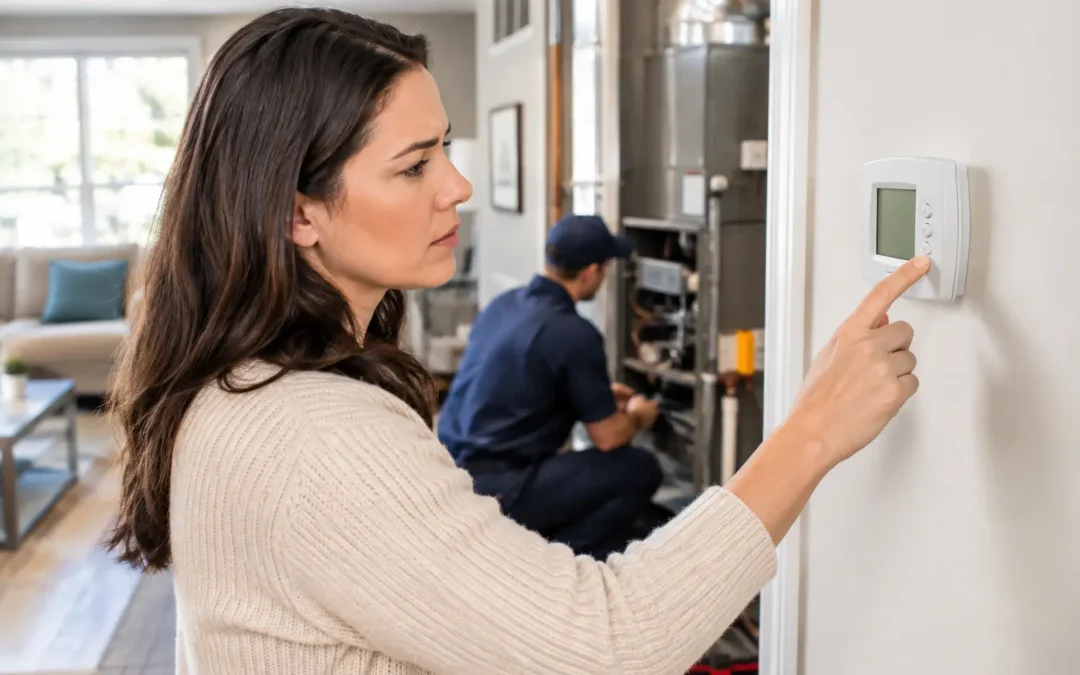
A cold house can become uncomfortable quickly, especially when temperatures drop overnight. If your heating is not working near Gainesville, VA, a few safe checks may identify a simple issue, but a complete loss of heat, burning smell, gas odor, or repeated system shutdown calls for professional service. The goal is not to guess at a repair. It is to restore safe, dependable comfort without causing further damage to your equipment.
Start With the Safe, Simple Checks
Before assuming the furnace or heat pump has failed, check the thermostat. Confirm it is set to Heat, the temperature setting is above the current room temperature, and the batteries are fresh if your thermostat uses them. A thermostat that is set to Cool, Off, or a schedule that has changed can make a working system appear unresponsive.
Next, look at the electrical panel. A tripped breaker can interrupt power to an indoor air handler, furnace, or outdoor heat pump. Reset a breaker once if it has tripped. If it trips again, leave it alone and schedule service. Repeated breaker trips can point to an electrical fault, a failing motor, or another condition that should not be handled through repeated resets.
For a gas furnace, make sure the furnace switch is on and the gas supply has not been shut off. Check the filter as well. A heavily clogged filter restricts airflow and can cause overheating, poor heat delivery, or a safety shutdown. Replacing a dirty filter is appropriate for most homeowners, but do not remove furnace panels or attempt to relight equipment if you are unsure of the correct process.
If you have a heat pump, remember that it may run longer during colder weather than a traditional furnace. Air from the registers can feel less hot, even when the system is operating properly. What matters is whether the home is gradually reaching the thermostat setting. Cool air, ice buildup, unusual noises, or no temperature improvement are signs that the system needs attention.
When No Heat Becomes an Urgent Problem
Some heating problems should not wait for a convenient appointment. Turn the system off and seek professional help promptly if you notice a gas smell, smoke, sparking, a strong burning odor that does not fade after initial seasonal use, or a carbon monoxide alarm. Leave the building and contact emergency services or your gas utility first if you suspect a gas leak.
A heating outage is also more urgent when indoor temperatures are falling quickly, children or older adults are in the home, or pipes may freeze. Commercial properties have additional concerns. Cold indoor conditions can disrupt employees, customers, tenants, inventory, and critical operations. Property managers should document the affected areas, check for frozen-pipe risks, and arrange qualified HVAC service as soon as possible.
Avoid using an oven, grill, or unvented fuel-burning appliance to heat a room. These methods create serious fire and carbon monoxide risks. Portable electric space heaters can provide limited short-term warmth when used carefully: plug them directly into a wall outlet, keep them clear of curtains and furniture, and never leave them unattended. They are not a replacement for a properly operating central heating system.
Why Heating Systems Stop Working
A heating system can fail for many reasons, from a minor airflow issue to a component that has reached the end of its service life. The right repair depends on the equipment type, its age, the symptoms, and its maintenance history.
Furnace problems often involve ignition, airflow, or safety controls
Modern gas furnaces rely on a sequence of components to start safely. The thermostat calls for heat, the inducer motor starts, the igniter activates, gas is released, burners light, and the blower distributes warm air. A problem at any point can stop the cycle.
Common causes include a dirty flame sensor, failed igniter, malfunctioning limit switch, blocked condensate drain, worn blower motor, or a control board issue. A furnace may also turn on and off repeatedly, known as short cycling, because of a clogged filter, overheating, incorrect thermostat placement, or an improperly sized system. These symptoms can look similar to a homeowner, which is why accurate diagnosis matters before replacing parts.
Heat pump issues can be affected by outdoor conditions
Heat pumps transfer heat rather than create it through combustion, making them efficient for many Northern Virginia homes. During winter, however, the outdoor unit must periodically enter a defrost cycle. Frost is normal. A thick layer of ice that remains on the unit is not.
Low refrigerant, a failed defrost control, damaged fan motor, compressor issue, or electrical problem can reduce heat output. Auxiliary or emergency heat may keep the house warmer temporarily, but it can raise energy use significantly. If auxiliary heat runs constantly or the system cannot maintain temperature, it is time for a professional inspection.
Airflow issues can affect any system
Closed or blocked registers, damaged ductwork, dirty filters, and weak blower performance all limit the heat that reaches living and working spaces. You may notice that one room stays cold while the rest of the building is comfortable, or that the system runs but barely moves air.
The fix may be as straightforward as a filter replacement or as involved as duct repair, blower service, or airflow balancing. A qualified technician should evaluate the full system instead of treating uneven temperatures as a thermostat problem alone.
What to Expect From a Professional Heating Visit
A dependable repair visit begins with listening. Details such as when the problem began, whether the system makes a new sound, whether breakers have tripped, and whether some rooms are still warm help narrow the diagnosis.
The technician should then inspect the equipment, thermostat operation, electrical connections, safety controls, airflow, and relevant fuel or refrigerant components. For a furnace, that may include checking ignition performance, burner operation, venting, and carbon monoxide safety. For a heat pump, the inspection may include the outdoor unit, defrost operation, refrigerant performance, and auxiliary heat.
After identifying the problem, you should receive a clear explanation of the recommended repair and pricing before work begins. In some cases, repair is the sensible choice. In others, especially when an older system has frequent breakdowns, expensive component failures, or poor efficiency, replacement may offer better long-term value. The decision depends on repair cost, remaining equipment life, comfort needs, and budget – not simply the age of the system.
Aircon HVAC Solutions provides responsive heating service for homeowners and businesses that need clear answers and careful workmanship. Certified, insured technicians can diagnose furnace and heat pump issues, explain practical options, and help restore reliable indoor comfort.
Prevent the Next No-Heat Call
Heating failures are not always preventable, but routine maintenance reduces the chance of being surprised by one. Schedule service before the coldest stretch of the season whenever possible. A professional tune-up can identify worn ignition parts, dirty components, loose electrical connections, drainage issues, airflow restrictions, and developing safety concerns before they cause a shutdown.
Between visits, replace filters on the schedule recommended for your system and household conditions. Homes with pets, construction dust, allergies, or high system use may need more frequent changes. Keep outdoor heat pump units free of leaves, snow buildup, and stored items, while maintaining clear space around the equipment for proper airflow.
For commercial buildings and rental properties, planned maintenance is especially valuable. Keeping service records, monitoring tenant comfort reports, and addressing uneven heating early can help avoid emergency disruptions later. It also makes it easier to budget for repairs or replacements rather than making a rushed decision during a cold-weather outage.
Heating Is Not Working Near Gainesville, VA: Get the Right Help
When the heat stops, the fastest path back to comfort is a safe initial check followed by qualified diagnosis when the issue is not obvious. Do not ignore repeated shutdowns, strange odors, weak airflow, or a system that cannot keep up with the thermostat. Those warning signs rarely improve on their own.
A properly repaired and maintained heating system should do more than turn on. It should keep your home or business consistently comfortable, operate safely, and give you confidence when the temperature outside drops.
