

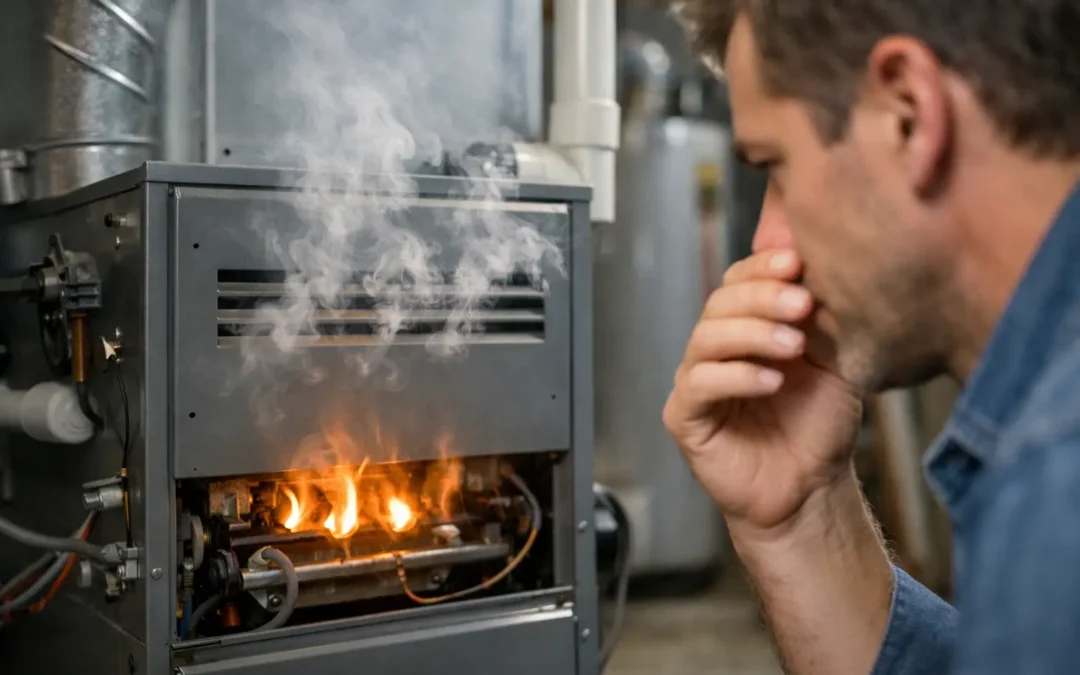
A burning smell from the vents can turn a routine heat cycle into an urgent question: why does furnace smell burning? The answer may be as harmless as dust warming up after months without use, or it may point to an electrical issue that needs immediate professional attention. The key is paying attention to the type of odor, how long it lasts, and whether you notice smoke, unusual sounds, or performance changes along with it.
For Northern Virginia homeowners and property managers, a furnace odor is not something to ignore or guess at. A safe response can protect your equipment, your building, and the people inside it.
When a burning furnace smell is normal
The most common harmless cause is dust. During spring, summer, and early fall, a furnace often sits unused while dust settles on the heat exchanger, burners, and nearby components. When the system first begins heating again, that dust burns away and may create a dry, dusty, or mildly burning odor.
This smell should be temporary. It commonly appears during the first few heating cycles of the season and clears within 15 to 30 minutes. Opening a window briefly and replacing a dirty air filter can help improve airflow while the odor dissipates.
A light dust smell is generally not a concern if it fades quickly, there is no visible smoke, and the furnace continues operating normally. If the same smell returns every time the system runs, lasts longer than an hour, or grows stronger, it is time to have the equipment inspected.
Why does furnace smell burning after it has been running?
A burning smell that starts after the furnace has been running for a while is more concerning than a brief first-use dust odor. Restricted airflow, overheating components, or electrical problems can all produce a similar smell, but each requires a different repair.
A clogged filter can cause overheating
Your furnace needs steady airflow to move heat safely through the system. A heavily clogged filter limits that airflow, allowing heat to build up inside the furnace. The unit may shut down on its high-limit safety switch, cycle on and off repeatedly, or send unusually hot air through the vents.
Check the filter first, following the size and replacement recommendations for your system. If it is gray, packed with debris, or overdue for replacement, install a clean filter. Do not use a filter with a higher rating than your system can handle unless an HVAC professional has confirmed it is appropriate. A filter that is too restrictive can create airflow problems of its own.
If replacing the filter does not stop the odor, do not keep resetting or repeatedly running the furnace. The underlying issue could be a dirty blower, blocked return duct, failing limit switch, or another condition that needs service.
Electrical components may be overheating
An acrid smell similar to burning plastic, hot wiring, or melting insulation is not normal. It can come from an overheating blower motor, loose electrical connection, damaged wire, failing capacitor, or control board issue. These problems can worsen quickly and may create a fire risk.
Turn the furnace off at the thermostat. If you see smoke, sparks, or flames, leave the area and call 911. If there is no immediate emergency but the electrical odor is present, switch off power to the furnace at the breaker if you can do so safely, then arrange professional service before using the system again.
Debris near the furnace can heat up
Storage items placed too close to a furnace can create a burning odor as the cabinet and venting become hot. Cardboard, paint, cleaning supplies, fabric, and other household items should never be stored against or on heating equipment.
Keep the mechanical area clear, clean, and accessible. This is especially relevant in utility closets, unfinished basements, and commercial mechanical rooms where supplies tend to accumulate. Removing nearby clutter is a smart safety step, but it does not rule out an internal furnace issue if the smell persists.
Smells that require a faster response
Not every unusual furnace smell is literally a burning smell, and the distinction matters. Certain odors call for immediate action rather than troubleshooting at home.
- Burning plastic or electrical insulation: Shut the system off and request prompt HVAC service. Do not continue operating the furnace to see if the smell goes away.
- Rotten eggs or sulfur: This can indicate a natural gas leak. Leave the building, avoid switches, flames, and electronics, and contact your gas utility or emergency services from a safe location.
- Smoke or a sharp burning odor with visible haze: Turn off the system if safe, evacuate if smoke is building, and call 911.
- Exhaust-like fumes, headaches, dizziness, or nausea: Get everyone into fresh air immediately and seek emergency help. Carbon monoxide has no smell, so working carbon monoxide alarms are essential in any home or building with fuel-burning equipment.
A musty odor is usually not a fire emergency, but it can signal moisture, dirty ductwork, or biological growth around the system. A dead-animal smell may point to an obstruction in ductwork or near the equipment. Both deserve attention, particularly when they affect indoor air quality or tenant comfort.
What to do before calling for furnace service
If there is no gas odor, smoke, or immediate electrical danger, a few simple observations can help speed up a repair visit. Note when the smell began, whether it occurs only during heat cycles, and whether it is strongest near the furnace or at the vents. Listen for banging, squealing, or repeated clicking, and check whether rooms are heating evenly.
You can also confirm that the return and supply vents are open and not blocked by furniture, rugs, or boxes. Check the filter condition and make sure the thermostat is set correctly. These basic checks are useful, but avoid removing furnace panels, touching wiring, or attempting to clean burners yourself. Modern heating systems contain electrical, gas, and combustion components that require trained service.
For a commercial property, document any tenant reports and identify which zones or areas are affected. A smell limited to one suite or section of a building may involve a local air handler, duct issue, or electrical component rather than the central furnace alone.
Prevent burning odors with routine maintenance
Many furnace odor problems are easier to prevent than repair. Seasonal maintenance gives a technician the opportunity to inspect wiring, test safety controls, clean critical components, verify combustion, and identify airflow restrictions before they cause an unexpected heating failure.
Homeowners should replace filters on schedule, keep the furnace area free of storage, and test smoke and carbon monoxide alarms regularly. The right replacement schedule depends on the filter type, household activity, pets, and indoor air quality needs. A typical 1-inch filter may need changing every one to three months, while some thicker media filters can last longer.
Professional maintenance is also valuable when a furnace is older, has a history of short cycling, or has been exposed to construction dust. Fine dust from renovations can settle in equipment and ductwork, making first-season odors more noticeable and putting extra strain on filters.
Get clear answers before a small issue grows
A furnace should provide quiet, dependable heat without filling your home or business with uncertainty. If the smell is brief and clearly dusty after the first seasonal startup, monitor it as it fades. If it smells electrical, persists, returns frequently, or comes with smoke or system trouble, shut the furnace down and have it checked.
Aircon HVAC Solutions provides responsive furnace service for homeowners and businesses across Northern Virginia, with clear recommendations and repairs focused on long-term comfort. When a burning smell leaves you unsure, choosing a prompt inspection is the practical way to restore confidence in your heat.
