

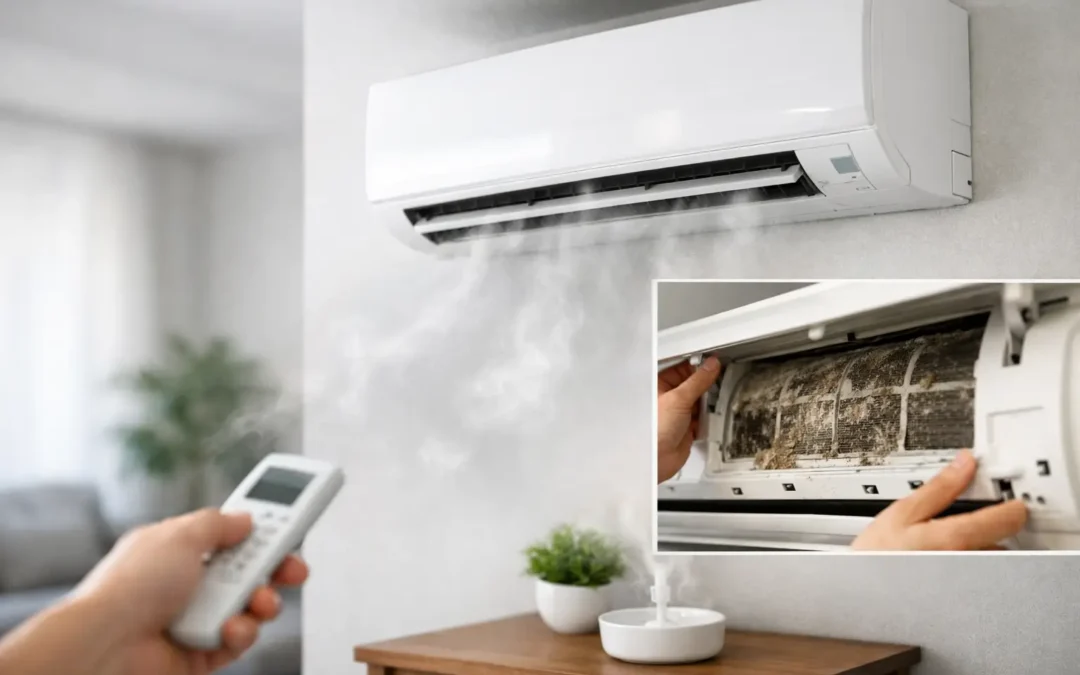
A musty odor from the vents can make an otherwise comfortable home feel immediately less clean. If you are asking, “why does AC smell musty,” the usual answer is moisture where it should not be, often combined with dust and organic buildup inside the system. The good news is that many causes can be corrected before they become a larger comfort or indoor air quality concern.
Why Does AC Smell Musty When It Starts?
Your air conditioner does more than lower the temperature. As warm indoor air passes over the cold evaporator coil, the system removes moisture from that air. Under normal conditions, the water drips into a condensate pan and leaves through a drain line.
When that moisture does not drain completely, or when dust collects on damp components, mildew and microbial growth can develop. The blower can then carry that stale, earthy smell through the ductwork each time cooling begins. You may notice the odor most strongly after the AC has been off for several hours or when it first cycles on.
A mild odor that appears briefly at startup is not always an emergency. Still, it should not be ignored, especially if it becomes stronger, lasts throughout the cooling cycle, or returns soon after you replace the filter.
The Most Common Causes of a Musty AC Smell
A dirty air filter
A clogged filter restricts airflow and allows more dust to settle on the evaporator coil and other internal components. In Northern Virginia’s humid summer weather, that dust can hold moisture and contribute to unpleasant odors.
Replacing the filter may improve the smell if it is overdue for service, but it is not a cure for every problem. If the odor remains after a new filter is installed, there may be buildup deeper in the system.
Moisture and buildup on the evaporator coil
The evaporator coil stays wet while the system is cooling. It needs proper airflow and drainage to dry as intended between cycles. A dirty coil creates a surface where dust, moisture, and microbial growth can collect.
Coil cleaning requires care. Spraying household cleaners into the equipment or trying to scrub delicate coil fins can damage the system, reduce efficiency, or push debris farther inside. A trained HVAC technician can inspect the coil, clean it appropriately, and identify the reason buildup developed in the first place.
A clogged condensate drain line or pan
The condensate drain carries water away from your air conditioner. Algae, sludge, and debris can clog the line, causing water to back up into the pan or air handler. That standing water is one of the most common reasons an AC develops a musty smell.
Some systems shut off automatically when a drain safety switch detects a backup. Others may continue operating while water collects where it does not belong. In either case, prompt service can help prevent water damage as well as odor problems.
Excess indoor humidity
Your AC should remove a meaningful amount of humidity during cooling season. But a system that is oversized, short-cycling, improperly adjusted, or struggling with airflow may cool the home before it has enough runtime to dehumidify it well.
The result can be rooms that feel cool but clammy, along with condensation, stale smells, and recurring mildew around vents or other damp areas. A whole-home dehumidifier may be worthwhile in some homes, but only after the HVAC system is evaluated. The right solution depends on the equipment, ductwork, insulation, and how moisture is entering the home.
Dirty ductwork or damp insulation
The AC unit is not always the source. Dust and moisture inside ducts, especially near a disconnected duct, an unsealed return, or poorly insulated ductwork in an attic or crawlspace, can create a stale smell. Water-damaged insulation around ducts can hold odor as well.
Duct cleaning may help when there is confirmed contamination or unusual debris, but it is not a universal answer. If the moisture source is still present, odors can return. A proper inspection should focus on the cause, not just the symptom.
What You Can Safely Check First
Start with the simple items that do not require opening electrical panels or handling internal components. Confirm that your thermostat is set to cool and that the smell occurs during AC operation rather than from another appliance or drain in the home.
Check the air filter and replace it if it is visibly dirty or has been in place longer than the manufacturer recommends. Then look around the indoor air handler or furnace cabinet for signs of water, such as a damp floor, a full drain pan, staining, or visible drips. If you see standing water, turn the system off and arrange service rather than allowing the unit to continue running.
Also pay attention to humidity. If windows fog easily, rooms feel sticky, or you see condensation around supply vents, tell your HVAC technician. Those details can point to a drainage, airflow, equipment-sizing, or ventilation issue.
Avoid pouring harsh chemicals into the drain line, using bleach inside the system, or spraying fragrances into vents. These shortcuts can damage components, create fumes, and cover the odor without fixing the moisture problem.
When a Musty AC Odor Needs Professional Service
Schedule an HVAC inspection if the smell persists after a filter change, gets worse, or appears along with poor cooling performance. A technician can inspect the evaporator coil, drain pan, condensate line, blower compartment, electrical components, and accessible duct connections.
Call sooner if you notice any of the following:
- Water leaking from the indoor unit or pooling near the furnace or air handler
- Weak airflow, warm air, frequent cycling, or unusually high indoor humidity
- Visible mold-like growth near vents, inside the cabinet, or around the drain area
- Family members experiencing worsening allergy or respiratory symptoms when the system runs
A musty smell alone does not prove that there is hazardous mold throughout the home. However, ongoing moisture and microbial growth deserve professional attention. Finding and correcting the source early is typically simpler and less disruptive than dealing with repeated odors, damaged materials, or a system failure later.
Preventing the Smell From Returning
Consistent maintenance is the best defense against AC odors. Replace filters on schedule, keep supply and return vents open and unobstructed, and have the cooling system serviced before heavy summer use. During a maintenance visit, a qualified technician can check drainage, clean components as needed, verify airflow, and look for early signs of moisture problems.
For property managers and business owners, routine maintenance is especially valuable because odor complaints can affect tenants, employees, and customers before a mechanical problem is obvious. Documented service also makes it easier to address recurring humidity or drainage issues across multiple spaces.
If your AC smells musty, you do not have to settle for masking it with candles or air fresheners. Aircon HVAC Solutions can help homeowners and businesses identify the source, protect their equipment, and restore cleaner, more comfortable air. A timely inspection can turn an unpleasant odor into a straightforward repair and help your system stay dependable through the season.
