

A puddle around an indoor AC unit, a musty smell near a vent, or water staining on a ceiling can turn a small drainage problem into an urgent repair. Knowing how to unclog AC drain safely can help you respond quickly, but the goal is not simply to get water moving again. It is to clear the blockage without damaging the drain line, air handler, or surrounding property.
Your air conditioner removes humidity as it cools your home. That moisture collects in a drain pan and flows through a condensate drain line to the outside or a nearby plumbing connection. Over time, algae, mold, dust, and sludge can build up in that line. In Northern Virginia’s humid cooling season, a clogged drain can develop faster than many homeowners expect.
Signs Your AC Drain Line May Be Clogged
Water is the most obvious warning sign, but it is not the only one. Check around the indoor portion of your system, often located in a basement, utility closet, attic, or mechanical room. If the drain line cannot carry condensation away, water backs up into the pan.
Common signs include water near the air handler, dripping from a secondary drain pipe, a musty odor when the AC runs, visible water stains, or an AC system that shuts off unexpectedly. Many newer systems have a float safety switch that turns the equipment off when the drain pan fills. That shutdown can feel inconvenient, but it helps prevent overflow and water damage.
A clogged line is not always the cause. A cracked drain pan, disconnected pipe, failed condensate pump, improperly sloped drain, or frozen evaporator coil can create similar symptoms. If water keeps returning after you clear the line, a professional inspection is the safer next step.
Before You Unclog an AC Drain, Protect the System
Start by turning off your AC at the thermostat. For added protection, switch off power at the breaker or the nearby service disconnect before opening an air handler cabinet or working near wiring. Water and electrical components do not belong together.
Place towels and a shallow pan around the unit if there is standing water. Do not force open panels, poke at the evaporator coil, or remove wiring to reach the drain. Those components are easy to damage and can turn a straightforward drain issue into a larger repair.
You will typically need a wet/dry vacuum, distilled white vinegar, warm water, a funnel, towels, and gloves. Avoid drain cleaners designed for sinks and toilets. Caustic chemicals can damage PVC fittings, create fumes, and harm internal HVAC components if they back up into the drain pan.
How to Unclog AC Drain Lines Safely
Most residential systems have a white PVC condensate line connected to the indoor unit. Look for a capped vertical section or T-shaped fitting near the air handler. This access point is often where you can flush the line. If you are not sure which pipe is the condensate drain, stop and have a technician identify it. Do not experiment with pipes connected to your plumbing system.
1. Find the Outside Drain Outlet
Locate the point where the condensate line exits your home. It may terminate near the outdoor condenser, at an exterior wall, or above a landscaping area. Some systems drain into a plumbing connection instead, so you may not have an accessible outdoor outlet.
Look for standing water, algae, dirt, insects, or visible blockage around the pipe opening. Clear loose debris by hand, but do not insert a sharp object into the line. A punctured or separated drain line can leak inside walls or ceilings.
2. Use a Wet/Dry Vacuum at the Outlet
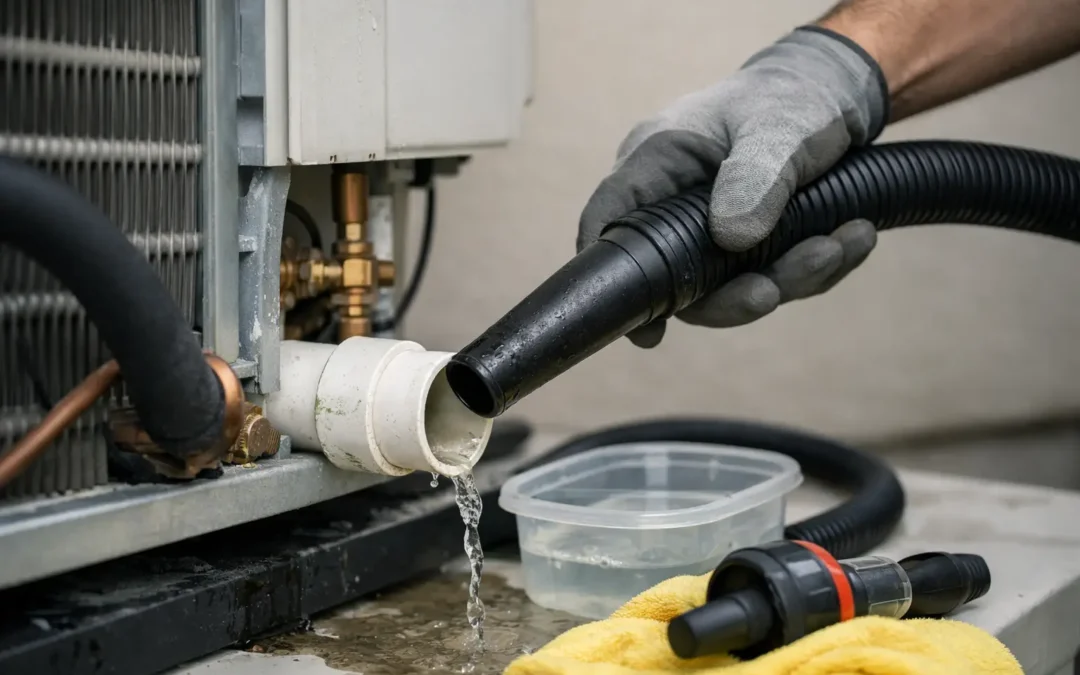
If the outlet is accessible, place the wet/dry vacuum hose over the end of the drain pipe. A towel wrapped around the connection can help create a better seal. Run the vacuum for one to two minutes to pull out sludge and debris.
This is often the most effective DIY method because it removes the blockage rather than pushing it farther into the line. You may see dark water, algae, or slimy buildup in the vacuum. That is normal for a neglected condensate drain, though it is a good reason to add drain maintenance to your seasonal AC service routine.
3. Flush the Drain From the Indoor Access Point
After vacuuming, remove the cap from the drain line access fitting near the air handler. Slowly pour about one cup of distilled white vinegar into the line using a funnel. Vinegar helps break down light organic buildup without the harsh effects of chemical drain cleaner.
Let it sit for about 30 minutes, then flush with warm water. Use a small amount at first and watch carefully for backup at the pan or access point. If the water does not flow, stop. Continuing to pour water into a fully blocked line can cause an overflow.
Some homeowners use compressed air to clear a drain. This can work in limited situations, but it can also separate glued PVC joints or push debris into a trap where it becomes harder to remove. A wet/dry vacuum and gentle flush are usually the lower-risk options.
4. Confirm Proper Drainage Before Restarting the AC
Check the outside drain outlet or collection point while flushing the line. You should see water leaving the system. Wipe up any remaining water near the air handler and make sure the drain pan is not still full.
Replace the cap on the access fitting, restore power, and run the AC. Check the system again after 15 to 30 minutes. A small amount of water at the outdoor drain outlet is normal when cooling is running in humid weather. Water around the indoor unit is not.
When a Clogged AC Drain Needs Professional Service
DIY drain cleaning is best for a simple, accessible blockage with no active overflow or equipment damage. It is time to call an HVAC professional if the system will not restart, water has reached electrical components, the line repeatedly clogs, or you cannot identify the correct drain access point.
You should also schedule service if the drain pan is cracked or rusted, the float switch keeps tripping, or the AC is freezing up. Ice on refrigerant lines or the indoor coil may indicate restricted airflow, a dirty filter, blower trouble, or a refrigerant issue. Clearing the drain alone will not correct those problems.
For property managers and commercial clients, repeated drain issues deserve prompt attention. A clogged condensate line in an attic, ceiling plenum, or equipment closet can damage finishes, disrupt tenants, and create avoidable downtime. Regular maintenance is generally less disruptive and less costly than responding after a leak spreads.
Aircon HVAC Solutions can diagnose the reason behind recurring condensate problems, clear the line correctly, and check the drain pan, pump, float switch, airflow, and cooling performance as part of the visit. Clear pricing and a complete diagnosis help you decide what needs attention now and what can be planned.
Prevent Future AC Drain Clogs
A clean drain line starts with a well-maintained system. Replace or clean your air filter on schedule, because excess dust can contribute to buildup on the evaporator coil and in the condensate pan. Keep the area around the indoor unit clean and dry, especially in utility rooms where lint and household debris can collect.
During annual AC maintenance, ask the technician to inspect and flush the condensate drain, test the safety switch, and check that the line is properly supported and sloped. Homes with condensate pumps need pump testing as well. If your drain frequently clogs due to heavy humidity or system design, a technician may recommend a treatment strategy or drainage improvement that fits your equipment.
If you catch a drain issue early, you may be able to restore normal operation with careful cleaning. If you see water where it should not be, turn the system off and arrange service before a minor clog becomes a repair to your ceiling, flooring, or air handler. Comfort you can feel starts with the small parts of your system working exactly as they should.
