

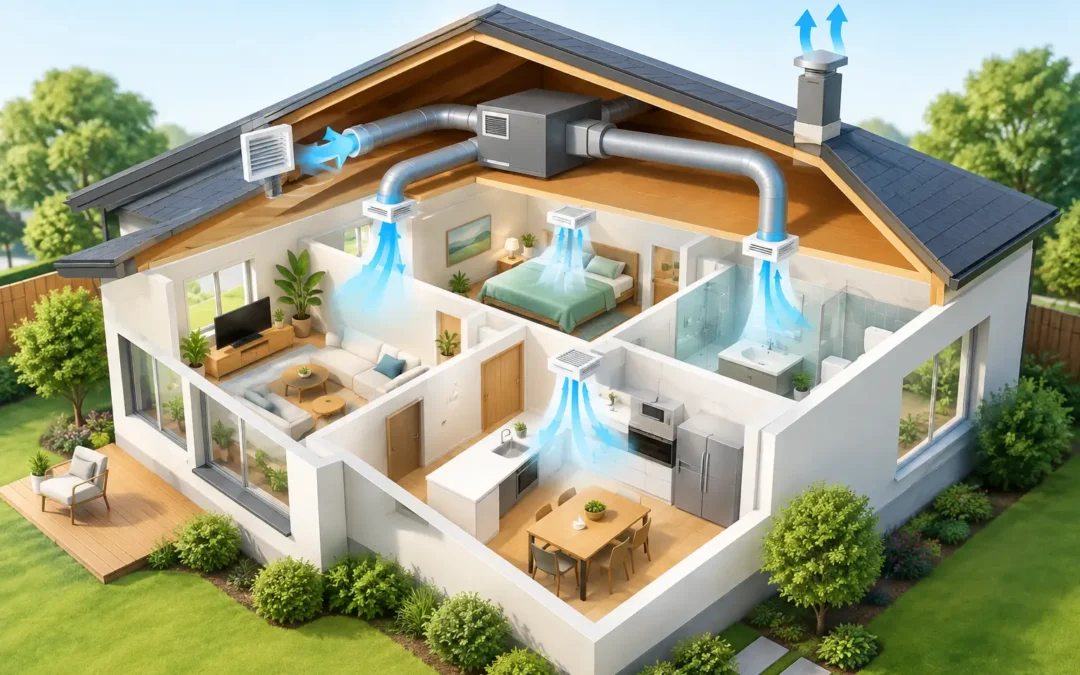
A home can feel stuffy long before there is an obvious HVAC failure. Lingering cooking odors, window condensation, uneven temperatures, excess dust, and rooms that never seem fresh are often signs that indoor air is not moving as it should. This home ventilation upgrade guide helps you identify what is happening, choose the right level of improvement, and make decisions that support comfort without wasting energy.
Northern Virginia homes are especially likely to need a thoughtful approach. Seasonal humidity, pollen, tightly sealed construction, basements, and busy household routines can all affect indoor air quality. Better ventilation is not simply about bringing in more outdoor air. It is about exchanging stale indoor air in a controlled way while managing moisture, temperature, and filtration.
Start With the Air Problems You Notice
Ventilation upgrades work best when they solve a specific problem. A bathroom that stays damp for hours needs a different solution than a whole home with persistent odors or family members bothered by allergy symptoms.
Pay attention to patterns. Do windows fog up mainly in winter? Does the basement smell musty after rain? Does one bedroom feel warm and stale when the door is closed? These details help determine whether the issue is localized exhaust, inadequate return-air pathways, humidity control, duct performance, or whole-home fresh-air exchange.
A basic visual inspection can reveal some concerns. Check whether bathroom and kitchen exhaust fans actually move air outside rather than into an attic or crawlspace. Look for crushed, disconnected, or dirty ductwork. Notice whether supply and return vents are blocked by furniture, rugs, or stored items. These checks are useful, but they do not replace a professional evaluation of airflow, equipment capacity, and building pressure.
What a Home Ventilation Upgrade Can Include
There is no single upgrade that fits every property. The right solution depends on your home’s age, layout, heating and cooling equipment, occupancy, and moisture levels. In many cases, a targeted improvement delivers more value than a major system change.
Better bathroom and kitchen exhaust
High-use bathrooms and kitchens produce a surprising amount of moisture and airborne pollutants. A properly sized, vented exhaust fan removes humid air at the source before it can spread through the home. Quiet modern fans are often a worthwhile upgrade for older homes where residents avoid using loud, ineffective fans.
Kitchen ventilation deserves special attention if you cook frequently with gas or high-heat appliances. A range hood that vents outdoors can reduce grease, odors, moisture, and combustion byproducts. Recirculating hoods can help with some odors and particles, but they do not remove moisture or contaminants from the house.
Whole-home fresh-air ventilation
Tightly built homes may not receive enough natural air exchange through gaps around windows, doors, and framing. While that efficiency helps reduce heating and cooling losses, it can allow indoor pollutants to build up. A dedicated fresh-air system brings outdoor air in at a controlled rate rather than relying on random leaks.
Depending on the home, this may involve an outdoor-air intake integrated with the HVAC system or a separate ventilation unit. The design matters. Bringing in unconditioned air without considering humidity, filtration, and equipment sizing can create comfort problems instead of solving them.
Energy recovery ventilation
Heat recovery ventilators and energy recovery ventilators provide controlled fresh air while reducing the energy penalty of ventilation. They transfer heat between outgoing and incoming air streams. Energy recovery models also transfer some moisture, which can be useful in humid climates.
The choice between these systems depends on the home and the goals. An ERV may be a strong fit for households dealing with summer humidity, while an HRV may suit other conditions. Proper sizing, duct routing, drainage, and maintenance are essential. These systems are effective when designed around the building, not added as an afterthought.
Filtration and air cleaning
Ventilation and filtration support one another, but they do different jobs. Ventilation replaces stale air. Filtration captures particles moving through the HVAC system, including dust, pollen, and some pet dander. Air purification equipment may address certain airborne contaminants depending on the technology and application.
A high-efficiency filter is not automatically the best choice. Filters that are too restrictive for the system can reduce airflow, strain equipment, and affect comfort. A technician can recommend a filter level that balances cleaner air with proper HVAC performance.
Why Moisture Control Belongs in the Plan
Humidity is one of the most overlooked parts of indoor comfort. In summer, high indoor humidity can make a home feel warmer even when the thermostat setting looks reasonable. It can also encourage musty odors, condensation, and mold growth in vulnerable areas. In winter, overly dry air can contribute to irritated skin, dry sinuses, and static electricity.
Ventilation can help manage moisture, but it is not always enough by itself. A basement with persistent dampness may need dehumidification, drainage corrections, insulation improvements, or air sealing in addition to better airflow. A home that feels clammy during cooling season may need an HVAC performance check before adding more ventilation equipment.
The goal is balance. Too little airflow traps moisture. Too much outdoor air, especially during a humid Northern Virginia summer, can add moisture faster than the system can remove it. A professional assessment helps prevent this common and costly mistake.
A Practical Home Ventilation Upgrade Guide: How to Prioritize
Start with health and building-protection concerns, then work toward comfort improvements. If you see mold, suspect a combustion safety issue, notice water damage, or experience severe condensation, address those concerns promptly. Ventilation may be part of the solution, but the underlying source of moisture or pollutants must also be corrected.
For most homeowners, a sensible order looks like this:
- Repair or replace ineffective bathroom and kitchen exhaust equipment.
- Confirm that exhaust ducts terminate outdoors and are properly connected.
- Restore proper HVAC airflow through maintenance, duct repairs, and correctly selected filters.
- Add humidity control where moisture levels remain outside a comfortable range.
- Consider balanced whole-home ventilation when stale air, odors, or indoor air quality concerns affect the entire house.
This order is not absolute. A newer, tightly sealed home with no local exhaust problems may benefit from whole-home ventilation sooner. A property manager dealing with repeated bathroom moisture complaints may see the biggest return from upgraded exhaust fans and timer controls. The right priority comes from the conditions in the building, not a one-size-fits-all checklist.
Questions to Ask Before Approving an Upgrade
Before investing in ventilation equipment, ask how the recommendation addresses your specific concerns. You should understand where air will enter and leave the home, how the system will handle humidity, whether new ductwork is required, and how the upgrade will affect heating and cooling costs.
Also ask about noise, maintenance, and controls. A ventilation system is only useful when occupants are comfortable operating it. Timers, humidity sensors, and smart controls can make daily use easier, but they should be programmed for the household rather than left at generic settings.
For larger upgrades, request clear information about equipment capacity, installation scope, warranty coverage, and ongoing service needs. Transparent pricing and a complete explanation of the work make it easier to compare options based on long-term value, not just the initial number.
When Professional Evaluation Makes Sense
A professional assessment is particularly valuable when a home has recurring humidity, musty odors, uneven temperatures, allergy concerns, or recent renovations that tightened the building envelope. It is also wise before installing an ERV, HRV, whole-home dehumidifier, or advanced air-cleaning equipment.
Certified technicians can evaluate ductwork, exhaust routing, HVAC airflow, indoor humidity, and how your current equipment performs as a system. Aircon HVAC Solutions helps Northern Virginia homeowners identify practical ventilation improvements that protect comfort, indoor air quality, and equipment performance without adding unnecessary complexity.
Fresh indoor air should not be something you only notice when it is missing. If your home feels damp, stale, or uneven, a focused evaluation can turn small warning signs into a clear plan for healthier, more dependable comfort.
