

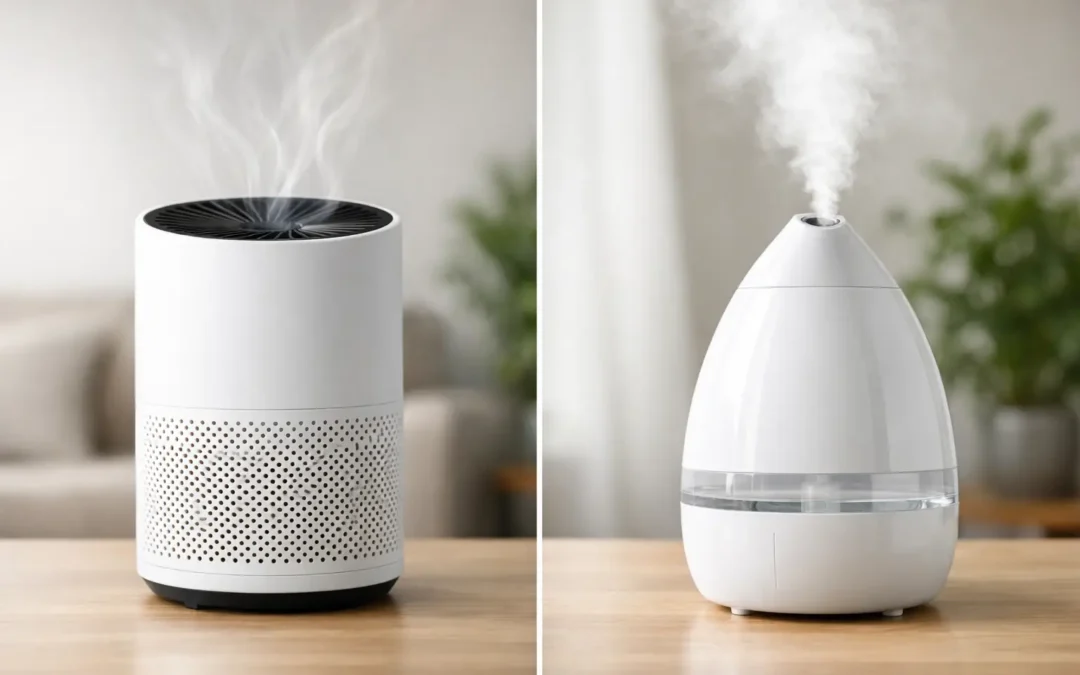
A Northern Virginia winter can leave your nose dry, your throat scratchy, and every room feeling less comfortable after the heat has been running for days. An air purifier versus humidifier comparison starts with one key fact: these appliances solve different problems. One cleans the air you breathe. The other adds moisture to air that is too dry. Choosing the wrong one may mean spending money without addressing what is actually making your home or workplace uncomfortable.
Air purifier versus humidifier: the core difference
An air purifier is designed to reduce airborne particles and, depending on its filter and technology, certain odors or gases. It pulls room air through a filter, captures contaminants, and circulates cleaner air back into the space. A quality purifier with a true HEPA filter can be particularly useful for pollen, pet dander, dust, smoke particles, and other fine particulate matter.
A humidifier does not clean the air. It releases water vapor to raise indoor humidity. This can ease the dry-air discomfort that often shows up during heating season: dry skin, chapped lips, irritated nasal passages, static electricity, and a scratchy throat.
Put simply, an air purifier focuses on what is in the air. A humidifier focuses on how dry the air feels. They can work well in the same building, but they are not interchangeable.
When an air purifier is the better choice
Choose an air purifier when allergens, dust, odors, or particles are the concern. If someone in your home wakes up congested, sneezes indoors, or has symptoms that worsen around pets or during spring pollen season, better filtration may help reduce the irritants circulating through the room.
Air purifiers are also useful after activities that add particles to the air, such as cooking, renovations, fireplace use, or opening windows during a high-pollen day. In commercial settings, portable purifiers can support cleaner air in offices, conference rooms, waiting areas, and other occupied spaces where improved filtration is needed in a specific zone.
The filter matters as much as the machine. Look for a purifier sized for the room, with a true HEPA filter for particles and an activated carbon component if odors are a major concern. Check the recommended room coverage, not just the unit’s appearance or fan speed. A small purifier in a large open living area may run constantly without delivering meaningful results.
Keep expectations realistic. A purifier will not fix moisture problems, eliminate a source of mold, remove settled dust from carpets, or replace proper ventilation. If you smell mildew, see water damage, or notice recurring mold growth, the first priority is finding and correcting the moisture source.
When a humidifier is the better choice
A humidifier is often the right answer when indoor air feels noticeably dry, especially in late fall and winter. Forced-air heating can lower relative humidity indoors, and tightly closed homes can make the difference more apparent. You may notice dry sinuses in the morning, wooden furniture shrinking, floors creaking, or frequent static shocks.
For most homes, indoor relative humidity between 30% and 50% is a reasonable target. The ideal level depends on outdoor temperatures, window quality, insulation, and the building’s overall condition. When it is very cold outside, keeping humidity too high can cause condensation on windows, which can lead to moisture damage and mold over time.
A small portable humidifier may work well in a bedroom. However, if several rooms feel dry or you are constantly moving, refilling, and cleaning portable units, a whole-home humidifier may be the more practical option. Installed as part of the HVAC system, it can distribute balanced moisture through the home rather than treating one room at a time.
Humidifiers require regular care. Stagnant water can allow mineral buildup and microbial growth, and an unclean unit can send unwanted particles into the air. Follow the manufacturer’s cleaning instructions, use the recommended water type where applicable, change filters or pads as needed, and empty portable tanks when they are not in use.
Can you use both at the same time?
Yes. Many homes benefit from both an air purifier and a humidifier because dry air and airborne particles frequently occur together. For example, a family may need a humidifier during the heating season to reduce dry-air irritation while using an air purifier in bedrooms to reduce pet dander, dust, or seasonal pollen.
The important part is using each device correctly. Place a portable purifier where it has open airflow and where people spend the most time. Do not tuck it behind furniture or press it against a wall. Keep a portable humidifier on a stable, water-resistant surface away from electronics, and avoid aiming mist directly at walls, bedding, or wood furniture.
Monitor humidity with a simple hygrometer instead of guessing. If indoor humidity climbs above 50%, reduce humidifier use. Excess moisture can encourage dust mites and mold, making allergy symptoms worse rather than better. This is one reason a humidifier is not automatically the right choice for every cough, congestion issue, or uncomfortable room.
Consider the HVAC system, not just the appliance
Portable devices can make a real difference, but ongoing indoor air quality problems often point to a larger HVAC issue. A clogged air filter, leaky ductwork, poor return-air design, an oversized system that short-cycles, or inadequate ventilation can affect comfort throughout the building.
Start with the basics. Use the correct HVAC filter size, replace it on schedule, and avoid installing a filter with a high MERV rating that your system cannot handle. A filter that is too restrictive can reduce airflow and put extra strain on heating and cooling equipment. The best filtration level is one that matches your system, household needs, and manufacturer guidance.
For homes with recurring allergy concerns, dry winter air, odors, or uneven comfort, a professionally designed indoor air quality solution may offer better results than adding several countertop machines. Options can include upgraded media filtration, whole-home humidification, dehumidification, ventilation improvements, and UV equipment when it is appropriate for the application. The right recommendation should be based on the building, the HVAC equipment, and the problem you want to solve – not on a one-size-fits-all product.
How to make the right decision
Ask what you are noticing first. If the issue is dust on surfaces, pet allergies, smoke, pollen, or lingering odors, begin with air filtration and source control. If the issue is dry skin, static, irritated sinuses, or dry air during heating season, check your indoor humidity level and consider humidification.
If you see condensation, smell mustiness, or have visible mold, do not add humidity. Address the water intrusion, ventilation, drainage, or equipment issue causing the moisture. Likewise, if your home feels stale or stuffy, a purifier may help with particles but will not provide the fresh-air exchange that proper ventilation can deliver.
Property managers and business owners should also consider maintenance demands. A device that is difficult to clean or has filters that are rarely replaced can become less effective over time. For multi-room spaces, a centralized solution can be easier to manage and more consistent than relying on multiple portable units.
Aircon HVAC Solutions helps homeowners and businesses evaluate indoor air quality concerns with the same practical approach used for heating and cooling service: identify the cause, explain the options clearly, and recommend equipment that fits the space. Whether you need cleaner air, balanced humidity, or both, the goal is lasting comfort rather than another device that only partially addresses the problem.
The most useful next step is simple: pay attention to the pattern. Note when discomfort happens, which rooms are affected, whether it changes with the season, and what your humidity reading shows. Those details turn an air-quality guess into a clear plan for a more comfortable space.
