

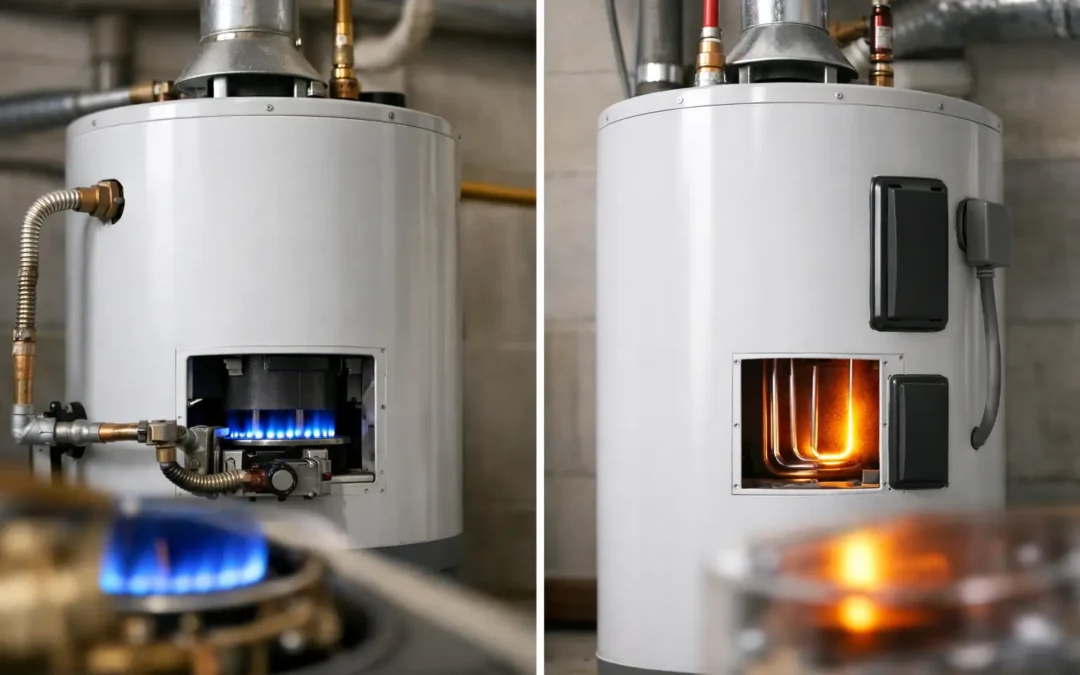
A water heater decision usually becomes urgent when the last shower runs cold, the utility bill climbs, or a leak appears beneath an aging tank. In the gas vs electric water heater decision, the better choice is not always the unit with the lowest price tag. Your existing utilities, household demand, venting options, electrical capacity, and long-term operating costs all matter.
For Northern Virginia homeowners, property managers, and business owners, the goal is simple: dependable hot water without an installation that creates avoidable expense or future headaches. Here is how to weigh the practical differences before replacing your current system.
Gas vs Electric Water Heater: The Key Difference
A gas water heater uses natural gas or propane to heat water with a burner. Most traditional gas tank models vent combustion gases outdoors through a flue or dedicated venting system. Electric water heaters use one or two heating elements inside the tank, powered by your electrical panel.
Both types store a reserve of heated water in a tank unless you select a tankless model. The primary difference is how quickly they heat incoming cold water and what infrastructure they require to operate safely.
Gas models typically recover faster after the tank has been depleted. That can be valuable in a busy home with several showers, laundry, and dishwashing occurring close together. Electric models generally heat water more slowly, but they can be a practical, efficient option where gas service or proper venting is not available.
Compare Upfront Cost With Total Cost of Ownership
The purchase price is only one part of the equation. A replacement that seems inexpensive can become costly if it requires a new gas line, chimney liner, power vent, electrical-panel upgrade, or extensive plumbing changes.
A standard electric tank water heater is often simpler and less expensive to install when the home already has the proper 240-volt circuit. It has no combustion venting requirement, which can make placement more flexible. However, if the existing electrical service is limited, adding the required circuit or upgrading the panel can change the budget quickly.
A standard atmospheric-vent gas water heater may cost more to install because it needs a safe path for exhaust gases. Replacing a like-for-like gas tank unit in an established utility area is often straightforward. Moving from electric to gas, however, can involve gas piping, venting, permits, and combustion-air considerations.
Operating costs depend on local utility rates, the heater’s efficiency, and how much hot water the property uses. Natural gas has historically provided a cost advantage in many areas, but rates vary. Electricity may be the more economical choice in a smaller household with modest hot-water use, especially when installation costs are considered over the expected life of the equipment.
A professional estimate should separate equipment, labor, code upgrades, venting or electrical work, permit needs, and haul-away. Clear numbers make it easier to compare the real cost of each option.
Recovery Rate Matters for Busy Homes
Recovery rate is the amount of hot water a unit can heat in an hour. It matters more than tank size alone.
A 50-gallon gas tank often replenishes hot water faster than a comparable electric tank. For a household that regularly has back-to-back showers, a large soaking tub, or a full laundry schedule, that faster recovery can prevent cold-water surprises. A gas unit may let a family use a somewhat smaller tank while still meeting demand.
Electric tank water heaters can work very well for smaller households, condos, guest suites, and homes with predictable hot-water schedules. Choosing a larger tank can help offset their slower recovery rate, but a larger tank also requires more space and holds more water on standby.
For multifamily properties and commercial applications, demand calculations are especially important. The right choice depends on peak usage, fixture count, operating hours, and whether tenants or customers need hot water at the same time. An undersized unit can lead to complaints even when the heater itself is functioning properly.
Tankless Changes the Conversation
Tankless water heaters heat water as it flows through the unit rather than storing it in a tank. Gas tankless systems are common where high flow rates and continuous hot water are priorities. Electric tankless systems can be useful at a point of use, such as a remote bathroom or break room, but whole-home electric tankless models may require substantial electrical capacity.
Tankless equipment can save space and reduce standby heat loss, but it is not automatically the right upgrade for every property. Gas tankless installations may need larger gas lines, specialized venting, condensate drainage, and water treatment in areas with mineral buildup. A qualified technician should size the system based on actual demand rather than a generic recommendation.
Installation and Safety Requirements
Gas water heaters require careful attention to combustion and venting. Improper vent connections, insufficient combustion air, gas leaks, and backdrafting can create serious safety risks. The unit must be installed to current code, with appropriate shutoffs, drainage protection, and venting materials.
Electric water heaters avoid combustion-related concerns, but they still need proper wiring, grounding, a correctly sized breaker, and a functioning temperature-and-pressure relief valve. Water and electricity are not a do-it-yourself combination. An improper installation can lead to damaged wiring, leaks, or unreliable performance.
For either fuel type, the installation should account for the drain pan, discharge piping for the relief valve, earthquake or restraint requirements where applicable, access for future service, and local permit rules. A replacement is also a good time to inspect aging shutoff valves and the condition of nearby plumbing.
Efficiency Is More Than the Fuel Source
Efficiency labels help compare models, but household habits affect the final bill. Long showers, high temperature settings, recirculation systems, and uninsulated hot-water pipes can all increase energy use.
Electric resistance water heaters are highly efficient at converting electricity into heat at the appliance, but electricity generation and pricing affect the overall cost. Gas units lose some heat through venting, although high-efficiency condensing gas models reduce that loss and can offer strong performance.
Heat pump water heaters deserve consideration if you are open to an electric option with lower operating costs. They pull heat from surrounding air rather than creating all heat through resistance elements. They are usually best in spaces with sufficient air volume, such as a garage, basement, or utility room, and they may cool or dehumidify that space slightly. Their higher upfront cost and slower recovery need to be weighed against potential energy savings.
No matter which model you choose, setting the water temperature appropriately, repairing drips promptly, and flushing a tank periodically can support efficiency and equipment life.
When Gas Is Usually the Better Fit
Gas is often the stronger choice when your property already has a properly sized gas line and suitable venting, and when hot-water demand is high. Larger families, homes with multiple bathrooms, and properties that need fast recovery often benefit from gas performance.
It can also be a sensible replacement when an existing gas water heater has reached the end of its service life. Keeping the same fuel source may limit installation changes, provided the venting and gas connection meet current requirements.
That said, a gas water heater is not a default answer. If the vent system needs major work, the unit will be placed in a difficult location, or gas service is unavailable, an electric installation may be more practical.
When Electric Is Usually the Better Fit
Electric water heaters make sense in all-electric homes, smaller households, locations without gas service, and spaces where venting a gas appliance would be complicated or costly. They can also be a good fit for a rental unit or commercial space that needs a straightforward replacement with fewer combustion-related maintenance concerns.
An electric model may be the better long-term choice if you plan to pair it with solar generation or select a heat pump water heater. Before committing, confirm that the electrical panel can safely support the equipment. This is particularly important in older homes that have added EV chargers, heat pumps, finished basements, or other high-demand electrical loads.
Choose Based on Your Property, Not a Rule of Thumb
The most reliable answer comes from looking at the whole system: fuel availability, household size, peak demand, equipment location, safety requirements, and budget for both installation and operation. Replacing a failing water heater is not the time to guess at capacity or assume that the old unit was correctly sized.
Aircon HVAC Solutions can assess your existing setup, explain the trade-offs in plain language, and provide clear options for tank or tankless gas and electric water heaters. A properly sized, professionally installed water heater gives you something more valuable than a lower monthly bill: confidence that hot water will be there when your home or property needs it.
