

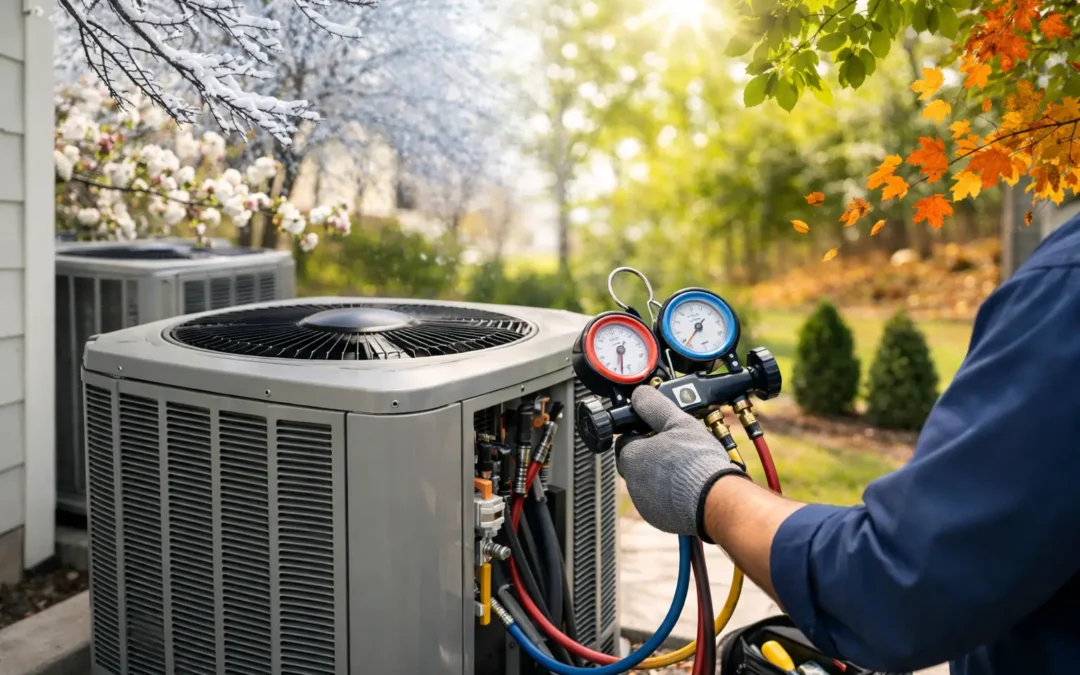
The first 90-degree afternoon of summer and the first freezing night of winter are the worst times to learn your HVAC system has been working harder than it should. A consistent residential HVAC maintenance guide gives homeowners a practical way to protect comfort, reduce surprise breakdowns, and make informed decisions before a small issue becomes an urgent repair.
Your heating and cooling system does not need constant attention, but it does need the right attention at the right time. Some tasks are simple homeowner habits. Others require a trained technician who can safely inspect electrical components, refrigerant performance, combustion equipment, and airflow.
Why Routine HVAC Maintenance Pays Off
Your HVAC system moves a large volume of air through your home every day. Dust collects, filters restrict airflow, drains can clog, and mechanical parts experience normal wear. When those issues build up, the system may run longer to reach the thermostat setting, create uneven temperatures, or shut down when demand is highest.
Maintenance is not a guarantee that a part will never fail. Age, weather, installation quality, and how heavily the system is used all matter. What regular care can do is reduce avoidable strain, catch developing concerns early, and give you a clearer picture of whether repair or replacement makes the most sense.
For Northern Virginia homes, seasonal swings make preparation especially valuable. Your air conditioner needs to be ready for humid summer conditions, while your furnace or heat pump needs reliable performance through cold winter nights. A spring cooling check and fall heating check are a sensible starting point for most households.
The Homeowner’s Residential HVAC Maintenance Guide
A few simple habits can make a meaningful difference between professional visits. These tasks should be performed with the system turned off when appropriate, and you should never remove electrical panels, handle refrigerant lines, or attempt gas-related repairs yourself.
Change the air filter on schedule
A dirty air filter is one of the most common causes of restricted airflow. Check it monthly and replace it based on the filter type, your household, and your system’s needs. Many homes need a new filter every one to three months, but homes with pets, allergies, active renovations, or frequent HVAC use may need more frequent changes.
Do not assume a higher-rated filter is always better. Very dense filters can improve particle capture, but they may also restrict airflow if the system was not designed for them. If you are unsure what filter is appropriate, ask an HVAC professional to recommend an option that supports both air quality and system performance.
Keep outdoor equipment clear
Your outdoor AC condenser or heat pump needs room to release heat. Keep grass, leaves, mulch, branches, and stored items away from the unit. A clear perimeter of about two feet is a good general target, though the manufacturer’s requirements always take priority.
Do not cover an operating heat pump in winter. Unlike a straight air conditioner, a heat pump may run during cold weather and needs unrestricted airflow. It is normal to see steam during a defrost cycle, but thick ice buildup, loud grinding, or repeated shutdowns should be checked by a technician.
Watch the condensate drain
During cooling season, your system removes moisture from indoor air. That water travels through a condensate drain line. If the line clogs, it can cause water damage, trigger a safety switch, or stop the air conditioner from running.
Look around the indoor unit for moisture, staining, or an unexpectedly full drain pan. A musty smell near the air handler can also point to a drainage or moisture issue. Call for service before a small drain concern affects ceilings, flooring, or the equipment itself.
Pay attention to changes, not just failures
Homeowners often wait for a complete breakdown before calling. It is usually better to act when you notice new behavior, such as rooms that no longer cool evenly, unusual cycling, rising utility bills, rattling noises, weak airflow, or persistent odors.
A thermostat setting that suddenly feels unreliable can come from several sources: the thermostat itself, a dirty filter, duct leakage, airflow restrictions, or an equipment problem. A professional diagnosis prevents guesswork and helps avoid replacing parts that are not actually causing the issue.
What Professional Seasonal Service Should Include
Professional maintenance goes beyond a quick filter change. A qualified technician evaluates how the system is operating as a whole, then addresses issues that can affect safety, reliability, efficiency, and comfort.
During an air conditioning or heat pump cooling visit, the technician may inspect electrical connections, test operating performance, clean components as needed, evaluate airflow, inspect the condensate system, and look for signs of refrigerant or mechanical concerns. Refrigerant is not something that should need routine “topping off.” If a system is low, the underlying cause should be identified rather than masked.
During a furnace or heating visit, safety is a primary concern. Service may include inspection of ignition and burner components, heat exchanger condition, venting, safety controls, electrical connections, and overall heating performance. Gas odors, soot, a yellow burner flame, or a carbon monoxide alarm require immediate attention. Leave the home if you suspect a gas leak and contact the appropriate emergency service provider.
Heat pump maintenance deserves attention in both seasons because the equipment handles heating and cooling. Proper defrost operation, outdoor coil condition, auxiliary heat function, and thermostat setup can all affect winter comfort and operating cost.
A Seasonal Plan That Fits Real Life
Spring is the right time to prepare cooling equipment before humidity and heat arrive. Replace the filter, clear the outdoor unit, check that supply vents are open, and schedule professional AC or heat pump maintenance before the first major heat wave. If certain rooms are consistently warmer than others, mention that during the visit. Uneven comfort can involve ducts, insulation, airflow balancing, equipment sizing, or thermostat placement.
Summer calls for observation. Keep filters clean, watch for water around indoor equipment, and avoid closing too many vents in an effort to force air into another room. Most residential systems need balanced airflow to operate properly. If your AC runs constantly but cannot maintain temperature, schedule service rather than pushing the system harder.
Fall is the time to prepare for heating season. Test your thermostat before you truly need heat, replace the filter, make sure carbon monoxide detectors are working, and schedule a furnace or heat pump check. Property managers should consider this a priority before tenant heating calls begin.
Winter maintenance is mostly about safe operation and quick response to warning signs. Keep outdoor heat pump equipment free of debris, confirm vents and exhaust terminations are unobstructed, and do not ignore banging, burning odors, or repeated system lockouts. A brief dusty smell when heat is first turned on can be normal, but a continuing odor is not.
When Maintenance Reveals a Bigger Decision
At some point, maintenance may show that an aging system needs more than a tune-up. Frequent repairs, declining comfort, high energy use, difficult-to-find parts, and equipment near or beyond its expected service life are all reasons to discuss replacement options.
The right choice depends on the repair cost, the system’s condition, your plans for the home, and whether the existing equipment is properly sized. Replacement is not automatically the answer simply because a system is older. On the other hand, repeatedly investing in a system that cannot reliably keep your home comfortable can become more expensive and stressful over time.
A clear service recommendation should explain what was found, what repair options are available, and what you can reasonably expect from each path. Aircon HVAC Solutions approaches maintenance as long-term comfort care, not a reason to push work you do not need.
Make Comfort a Routine, Not an Emergency
Set a reminder to check your filter, keep the outdoor unit clear, and schedule seasonal service before extreme weather puts your system under pressure. If you notice a change in performance, acting early gives you more options, more clarity, and a better chance of keeping your home comfortable when it matters most.
