

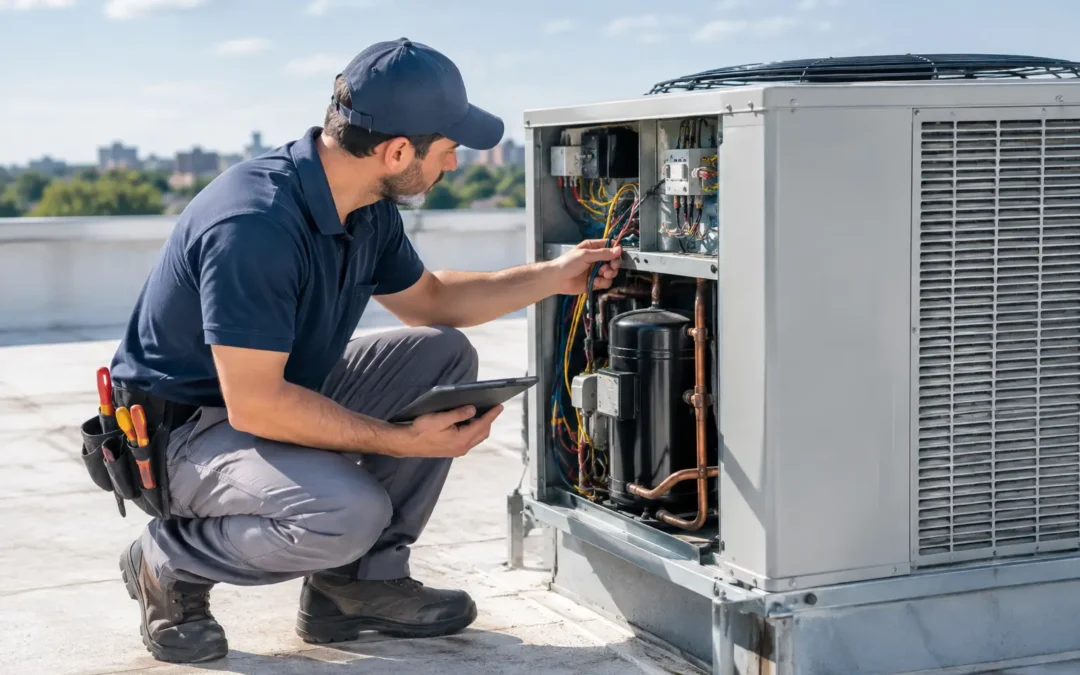
A rooftop unit can keep an entire office, retail space, restaurant, or multi-tenant property comfortable without taking up valuable indoor square footage. But when it begins short-cycling, blowing warm air, leaking, or making unusual noise, the problem affects more than temperature. Delaying rooftop unit repair service can disrupt employees and customers, raise energy costs, and turn a manageable repair into an unexpected replacement.
For Northern Virginia property owners and managers, fast action matters. Rooftop HVAC systems work hard through humid summers, cold winters, pollen-heavy springs, and sudden temperature swings. Knowing what to watch for helps you make a confident repair decision before comfort and operating costs get out of hand.
Signs You Need Rooftop Unit Repair Service
Most rooftop units do not fail without warning. The early signs can be easy to dismiss during a busy workday, especially if the building is still somewhat comfortable. However, a system that is operating differently than usual deserves attention.
Uneven temperatures are often one of the first concerns. One area may feel stuffy while another is too cold, even when the thermostat setting has not changed. This can point to airflow restrictions, a failing blower component, thermostat or control issues, duct problems, or declining cooling and heating performance.
Higher utility bills are another meaningful signal. If energy use rises without a clear change in occupancy, operating hours, or weather, the rooftop unit may be working longer than necessary to meet demand. Dirty coils, worn motors, refrigerant issues, failing capacitors, and clogged filters can all reduce efficiency.
Unusual sounds should also be taken seriously. Rattling may indicate loose panels or hardware, while grinding, squealing, or loud humming can signal trouble with a motor, belt, bearing, compressor, or electrical component. A professional inspection can identify the source before the affected part creates additional damage.
Water around ceiling diffusers, rooftop drains, or the unit itself calls for prompt service. Condensate drainage problems may seem minor at first, but backed-up water can affect ceilings, insulation, electrical components, and indoor air quality. In a commercial setting, water damage can quickly become a disruption for tenants or customers.
Finally, do not ignore frequent cycling, weak airflow, strange odors, or a unit that will not respond properly to thermostat changes. These symptoms do not always mean replacement is necessary. They do mean the equipment needs an accurate diagnosis.
Why Fast Repairs Protect Your Property
A rooftop unit is a combined heating and cooling system with many parts working together: compressors, fans, belts, heat exchangers, electrical controls, filters, economizers, drains, and more. When one part struggles, the rest of the system may compensate. That extra strain is where a small issue can become a costly one.
For example, restricted airflow can cause the system to run longer and may lead to coil freezing during cooling season. A weak capacitor can put stress on a compressor or fan motor. A cracked belt can stop air movement altogether. Addressing the underlying cause early protects the equipment and reduces the risk of an inconvenient shutdown.
Comfort is also a business concern. A hot sales floor, a cold office, or poor ventilation in a shared building can affect customer experience, employee productivity, and tenant satisfaction. For restaurants, medical offices, schools, and other occupancy-sensitive spaces, the stakes can be even higher. Prompt repairs help maintain a space people can work and spend time in comfortably.
There is a financial reason to act quickly as well. Running a struggling system often costs more every hour it operates. A repair visit may uncover a straightforward issue that restores efficiency, while a delay can lead to damaged components, lost refrigerant, water damage, or emergency service needs.
What a Professional Rooftop Unit Repair Visit Should Include
A quality repair is not simply replacing the first part that appears faulty. The technician should evaluate the system as a whole, confirm the source of the problem, and explain what is needed in clear terms.
The visit typically starts with the concern you have noticed, such as no cooling, inconsistent temperatures, a noise, or a spike in energy use. From there, the technician checks the thermostat or control signal, electrical connections, safety switches, airflow, filters, coils, drainage, fan operation, and heating or cooling components relevant to the season.
For cooling issues, this may include checking refrigerant pressures, compressor performance, contactors, capacitors, and condenser airflow. For heating concerns, the inspection may focus on ignition, gas components, heat exchanger condition, inducer operation, limit switches, and combustion safety. The exact process depends on the unit type and symptom, which is why guesswork is rarely a good use of a property manager’s budget.
After diagnosing the problem, the contractor should provide a clear explanation of the recommended repair, the expected cost, and any conditions that may affect the result. Transparent pricing gives you the information needed to authorize work without surprises. If the repair is urgent, the technician should also explain the practical risk of waiting.
At Aircon HVAC Solutions, certified and insured technicians approach rooftop equipment with the same focus we bring to every comfort system: careful diagnosis, responsive service, and workmanship that supports reliable operation over the long term.
Repair or Replace? The Answer Depends on the Unit
Replacement is not automatically the right answer when a rooftop unit breaks down. Many issues, including failed electrical parts, blower repairs, drain clogs, sensor problems, and certain refrigerant-related concerns, can be repaired successfully. The right decision depends on the age of the equipment, its maintenance history, repair frequency, efficiency, and the condition of major components.
If the unit is relatively new and the repair addresses an isolated problem, repair is usually the sensible path. If it has been maintained well, a targeted repair can restore dependable performance and protect the investment already made in the equipment.
Replacement becomes more worth considering when major components fail repeatedly, repair costs begin to stack up, parts are difficult to obtain, or the unit is near the end of its expected service life. Older equipment may also use more energy than a properly sized modern system. Still, the lowest initial replacement price is not the only factor. Equipment size, building load, ventilation needs, installation quality, and future serviceability all affect long-term costs.
An experienced HVAC professional can help you compare immediate repair costs with the likely operating and maintenance costs ahead. That comparison should be honest, not a one-size-fits-all recommendation.
Maintenance Reduces Emergency Rooftop Repairs
Rooftop units face exposure that indoor equipment does not. Leaves, pollen, dust, standing water, windblown debris, and temperature extremes all take a toll. Regular maintenance gives technicians a chance to find issues before they cause a failure during the hottest or coldest part of the year.
A thorough maintenance visit generally includes filter checks, coil cleaning as needed, belt and motor inspection, electrical testing, condensate drain service, refrigerant and heating performance checks, and confirmation that controls and safety devices are functioning properly. Technicians can also look for worn insulation, damaged panels, blocked intake areas, and signs of corrosion.
The ideal maintenance schedule depends on your unit, building use, and operating hours. A lightly used small-office system may need a different plan than a restaurant, retail location, or property with extended hours. In most cases, service before cooling season and again before heating season gives the equipment the best chance of handling peak demand.
Property managers can help between visits by keeping access clear, replacing filters on schedule when appropriate, reporting comfort complaints early, and watching for water stains or unusual sounds. Small observations from onsite staff often give a technician valuable clues.
Choose a Service Partner Who Communicates Clearly
Rooftop HVAC repair requires technical skill, safe roof access, and a practical understanding of how equipment affects the people inside the building. The best service partner does not bury you in jargon or pressure you into a decision. They identify the issue, explain the options, respect your property, and respond when comfort cannot wait.
Look for a contractor that is licensed, insured, experienced with commercial and residential rooftop applications, and willing to provide clear pricing before work begins. Availability matters too. A unit that fails on a hot afternoon or cold morning may require a faster response than a minor efficiency concern.
If your rooftop system is showing signs of trouble, scheduling an inspection now can protect comfort, control costs, and help you plan the next step with confidence. A well-timed repair is often the simplest way to keep your building running the way it should.
