

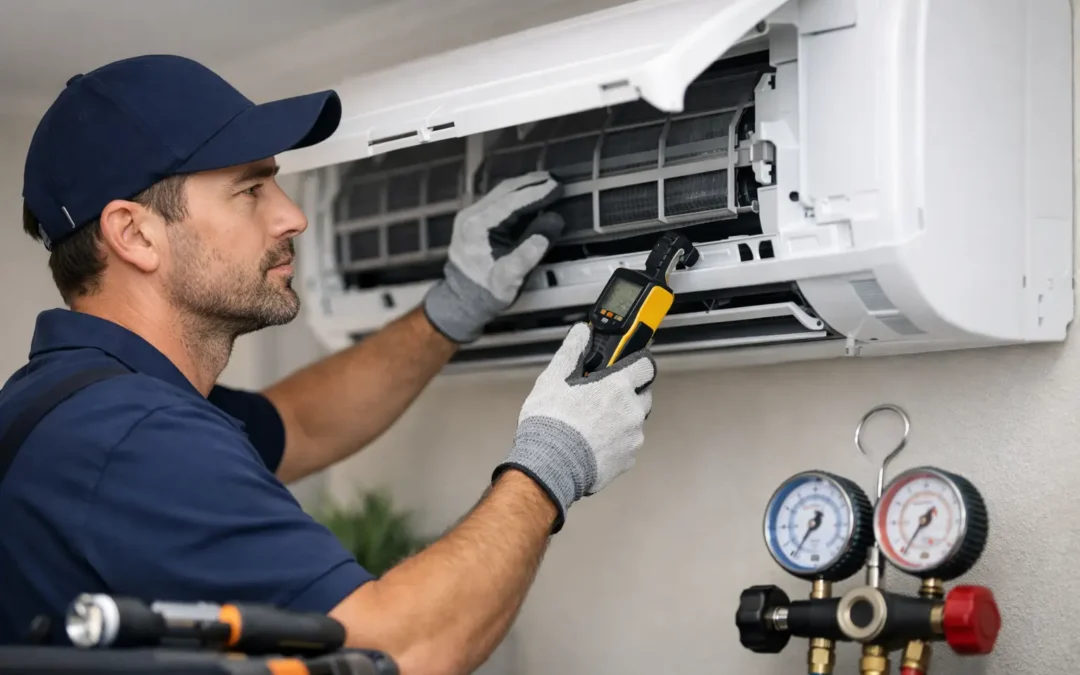
When your AC starts struggling on the first truly hot day, the problem usually did not start that morning. It built up over time – a clogged filter, dirt on the outdoor coil, a drain line starting to back up, or a small issue that went unnoticed. If you are wondering how to do air conditioning maintenance, the good news is that a few basic habits can make a real difference in comfort, efficiency, and system life.
Good maintenance is not about taking your system apart or trying to handle repairs meant for a licensed technician. It is about keeping the equipment clean, checking the parts you can safely access, and knowing when routine care ends and professional service should begin. For homeowners and property managers, that balance matters. A little prevention is far less disruptive than an unexpected breakdown in the middle of summer.
How to do air conditioning maintenance at home
The most useful place to start is your air filter. A dirty filter restricts airflow, forces the system to work harder, and can lead to uneven cooling or higher energy bills. In some cases, poor airflow can even contribute to frozen coils.
Check the filter monthly, especially during heavy cooling season. If it looks dusty or discolored, replace it. Many homes need a new filter every one to three months, but the timing depends on the filter type, whether you have pets, how often the system runs, and indoor air quality conditions. A higher-end filter may last longer, but only if the system is designed for it. Going too dense on filtration can reduce airflow if the equipment is not matched properly.
Next, look at the area around your indoor unit and vents. Make sure supply and return vents are not blocked by rugs, furniture, or storage. Closed or obstructed vents can throw off airflow and make certain rooms harder to cool. If you manage a commercial space or a larger home, this step is easy to overlook because comfort problems often appear room by room before anyone checks the basics.
Your thermostat deserves attention too. Make sure it is reading correctly, set to cooling mode, and responding as expected. If the screen is fading or the thermostat uses batteries, replace them. If your home feels warmer than the setting suggests, the problem may be with the thermostat, but it may also point to airflow issues or a system that needs service. That is where maintenance becomes more than a checklist – you want to notice patterns before they turn into failures.
Cleaning the outdoor unit the right way
The outdoor condenser plays a major role in releasing heat from your home. When it gets packed with leaves, cottonwood, grass clippings, or dirt, cooling performance drops. The unit needs open space around it to breathe.
Start by turning off power to the system at the thermostat and disconnect if you can safely access it. Clear away debris from around the unit, and trim vegetation to leave at least a couple of feet of space. Gently remove leaves and buildup from the exterior.
You can rinse the condenser fins with a garden hose using light pressure. Do not use a pressure washer. High pressure can bend the fins and reduce airflow, which creates a bigger problem than the dirt you were trying to remove. If the fins already look crushed or heavily impacted with grime, that is usually a sign to schedule professional cleaning.
This is one of the best examples of where maintenance has limits. A basic rinse helps, but a deeper coil cleaning often requires removing panels, using the right products, and checking for damage. For many property owners, especially if the unit has not been serviced in a while, it is smarter to let a trained technician handle that part.
Don’t ignore the condensate drain
Air conditioners remove humidity as they cool. That moisture has to go somewhere, and it typically drains through a condensate line. If that line clogs, water can back up, trigger a safety switch, or cause damage around the indoor unit.
Check for standing water near the air handler or furnace area. If your system has a visible drain line, look for signs of blockage or algae growth. Some homeowners flush the line with vinegar or use a wet/dry vacuum on the outside termination point, but this depends on how the system is configured. If you are not sure where the line runs or how it is set up, it is better not to guess.
A backed-up drain is common, especially during humid stretches. In Northern Virginia, where summer humidity can put extra strain on cooling systems, keeping an eye on drainage can prevent an avoidable service call.
What to listen and watch for
Part of learning how to do air conditioning maintenance is learning what normal looks and sounds like. A healthy system should start, run, and cycle off without dramatic noises, hot electrical smells, or obvious performance swings.
Pay attention if you notice buzzing, rattling, short cycling, weak airflow, warm air from the vents, or ice on the refrigerant line. Those are not maintenance items in the usual sense. They are warning signs. Continuing to run the system can make the issue worse.
This is also where trade-offs come in. Some homeowners want to keep pushing an aging unit through one more season. Sometimes that works. Sometimes it turns a manageable repair into a full breakdown during the hottest week of the year. If the system is making new noises or struggling to maintain temperature, quick professional attention usually saves time and money.
Professional AC maintenance still matters
Home maintenance helps, but it does not replace a full tune-up. A professional service visit goes deeper than what most property owners should attempt on their own. That includes checking refrigerant levels, testing electrical components, measuring airflow, cleaning internal coils if needed, inspecting the blower, verifying safe operation, and catching wear before it becomes a no-cooling call.
That matters for both homes and commercial properties. A house with one system may show problems quickly, while a light commercial space can hide comfort issues until tenants, staff, or customers start complaining. In both cases, scheduled maintenance supports reliability.
Professional service is especially important if your system is older, runs constantly, cools unevenly, or has a history of drain or electrical issues. It is also worth scheduling before peak summer heat, when service demand rises and breakdowns become more disruptive.
How often should air conditioning maintenance be done?
For most systems, homeowners should check filters monthly and keep the outdoor unit clear throughout the cooling season. A professional AC maintenance visit once a year is the standard recommendation, ideally in spring before heavy use begins.
That said, some systems need closer attention. Homes with pets, renovation dust, allergy concerns, or high summer runtime may need more frequent filter changes and closer monitoring. Commercial systems or larger residential properties may benefit from a more structured maintenance schedule because usage is heavier and downtime affects more people.
If you are maintaining a rental property, consistency matters even more than perfection. Tenants may not notice a clogged filter or reduced airflow until the problem gets severe. A simple seasonal routine helps avoid emergency calls and keeps the equipment in better shape over time.
A simple maintenance mindset that works
The best approach is not complicated. Keep air moving, keep components clean, and take small warning signs seriously. Replace filters on time, make sure vents stay open, keep the outdoor unit free of debris, and watch for drainage issues or unusual performance.
What you should not do is open sealed components, handle refrigerant, or push through electrical or mechanical problems without training. Air conditioning systems may look straightforward from the outside, but modern equipment depends on correct airflow, calibration, and safe electrical operation. Confidence is helpful. Guesswork is expensive.
If your AC is running well, maintenance helps it stay that way. If it is already showing signs of trouble, maintenance may uncover a repair need before your comfort is on the line. That is why many homeowners and property managers treat service as part of protecting the property, not just fixing a machine.
At Aircon HVAC Solutions, that is how we look at cooling care too – as a long-term comfort decision, not a one-time task. A little attention now can spare you the stress of a system that quits when you need it most.
A well-maintained air conditioner does more than cool the space. It gives you one less thing to worry about when the weather turns hot, and that peace of mind is worth planning for.
