

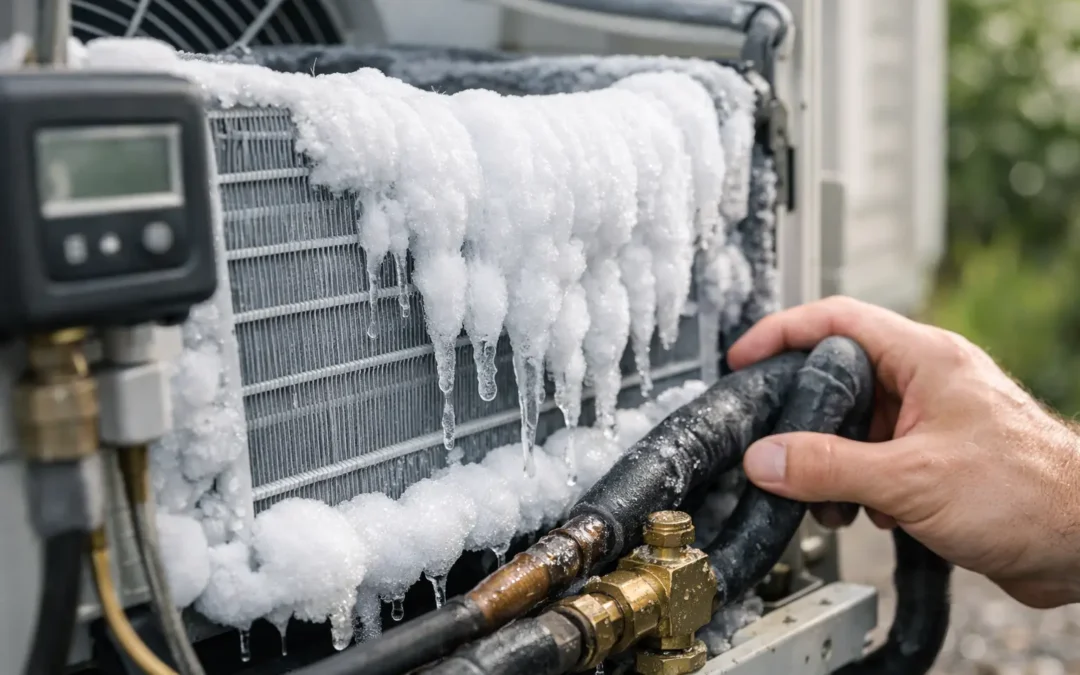
Your air conditioner is supposed to cool your home, not turn into a block of ice. If you opened the panel and saw frost on the coils or noticed weak airflow and rising indoor temperatures, it makes sense to ask, why is my AC freezing? It usually points to one of two problems – poor airflow or a refrigerant issue – and both deserve attention before they turn into a bigger repair.
A frozen AC can still seem like it is running, which is part of what makes this issue frustrating. The thermostat is calling for cooling, the system hums along, and yet the house feels warmer by the hour. The ice itself is not the root problem. It is the symptom. Once that buildup starts, your system cannot transfer heat properly, and performance drops fast.
Why is my AC freezing in the first place?
Your air conditioner works by pulling warm air from your home across the evaporator coil. That coil contains refrigerant and gets cold enough to absorb heat. Under normal conditions, the coil stays cold but not frozen. When airflow drops too low or refrigerant pressure falls out of range, the coil temperature can sink below freezing. Moisture in the air then turns to ice on the coil.
The tricky part is that the ice makes everything worse. As frost spreads, airflow gets even weaker. That leads to more freezing, less cooling, and more strain on the system. What starts as a dirty filter or minor leak can quickly turn into a no-cooling call.
The most common reasons an AC freezes up
Dirty air filter
This is the simplest cause and one of the most common. A clogged air filter restricts the amount of air moving across the evaporator coil. Without enough warm air passing over it, the coil can get too cold and begin to freeze.
If your filter looks gray, dusty, or packed with debris, replace it. Many homeowners are surprised at how often this is the fix, especially during heavy summer use. In homes with pets, renovations, or high pollen levels, filters can clog faster than expected.
Blocked or closed vents
Your AC system needs balanced airflow throughout the house. If multiple supply vents are closed, furniture is blocking returns, or ductwork is heavily restricted, airflow can drop enough to create freezing conditions.
This is one of those it-depends situations. Closing one vent in a guest room usually is not a major problem. Closing many vents to force more air into another part of the house can create pressure issues and hurt system performance.
Dirty evaporator coil
Over time, the indoor coil can collect dust and buildup. Even if air is moving, that layer of grime acts like insulation and interferes with heat transfer. The coil gets colder than it should, and ice can form.
This is not a quick wipe-down job for most property owners. Evaporator coils are delicate, and improper cleaning can damage the fins or other components. If the coil is dirty enough to freeze, it is usually best to have it professionally cleaned and the rest of the system checked at the same time.
Low refrigerant
Low refrigerant is another major cause of freezing. When refrigerant levels drop, usually because of a leak, pressure inside the system changes. That can cause the evaporator coil temperature to fall below freezing.
A lot of people assume refrigerant simply gets used up over time. It does not. If your system is low, there is a problem that needs to be found and repaired. Topping it off without fixing the leak is a short-term patch, not a real solution.
Blower problems
Your indoor blower is responsible for moving air across the coil and through your ductwork. If the blower motor is failing, running at the wrong speed, or struggling because of an electrical issue, airflow may not be strong enough to keep the coil at the right temperature.
This can look a lot like a dirty filter problem from the outside – weak airflow, long run times, and poor cooling. The difference is that the underlying cause is mechanical, not maintenance-related.
Drainage or moisture issues
In some cases, excessive moisture around the coil area can contribute to ice buildup, especially if other performance issues are already present. A clogged condensate drain will not always be the main reason the system freezes, but it can be part of the bigger picture.
That is why a proper diagnosis matters. Freezing is often caused by more than one issue working together.
Signs your AC is freezing before you see ice
Sometimes the warning signs show up before visible frost does. You may notice weak airflow from the vents, warmer indoor temperatures, longer cooling cycles, or unusual dripping around the indoor unit as the ice begins to thaw.
You might also hear the system running constantly without bringing the temperature down. If the refrigerant lines look frosty or the indoor unit is wet, those are strong clues that the system has been freezing and thawing repeatedly.
For commercial spaces and rental properties, these early signs matter even more. A unit that is still partly cooling can get ignored until it stops completely, often during the hottest part of the week.
What you can safely do right away
If your AC is frozen, the first step is to turn off cooling mode. Running it while the coil is iced over can put extra strain on the compressor and lead to more damage. Switch the thermostat from cool to off, or set the fan to on so air can circulate and help thaw the coil.
Next, check the air filter. If it is dirty, replace it. Then make sure vents are open and return grilles are not blocked by furniture, rugs, or boxes.
Give the unit time to thaw fully. Depending on how much ice has built up, that can take several hours. You may see water around the indoor unit as the ice melts, so keep an eye on the area.
Once the system is thawed, you can try turning it back on. If it cools normally and airflow improves, the issue may have been a severe airflow restriction. If it freezes again, call for service. Repeated freezing usually means there is a deeper problem that needs professional repair.
What not to do
Do not chip away at the ice with a tool or sharp object. The coil and fins are easy to damage, and a small puncture can create a much more expensive repair.
Do not keep lowering the thermostat in hopes that the system will catch up. That usually keeps the unit running longer and can make the freezing worse.
And do not assume the problem solved itself just because the ice melted. The ice is the symptom. The reason it formed is still what matters.
When to call a professional
If you have replaced the filter, opened the vents, and let the system thaw but the freezing comes back, it is time for a service visit. The same applies if you hear unusual noises, see water leaking indoors, or notice very weak airflow even with a clean filter.
A trained technician can test refrigerant pressure, inspect the blower, check the coil condition, and look for duct or electrical issues. This is the fastest way to move from guesswork to a real answer.
For homeowners and property managers in Northern Virginia, fast service matters during peak summer heat. A frozen unit can quickly go from inconvenient to urgent, especially in homes with children, older adults, or tenants expecting safe indoor temperatures.
How to reduce the chance of it happening again
The best prevention is routine maintenance. Change filters on schedule, keep supply and return vents unobstructed, and have the system inspected before the cooling season gets busy. Professional maintenance helps catch coil buildup, blower issues, and refrigerant problems before they turn into a mid-season breakdown.
It also helps to pay attention to changes in performance. If airflow seems weaker than usual or some rooms are no longer cooling evenly, do not wait for visible ice. Small symptoms often show up well before a full freeze-up.
At Aircon HVAC Solutions, this is exactly why thorough diagnostics matter. A fast fix is helpful, but a correct fix is what protects your comfort and your system over the long run.
If your AC is freezing, treat it as an early warning, not just an odd inconvenience. A little ice can be the first sign that your system needs attention before a minor issue turns into a costly repair.
