

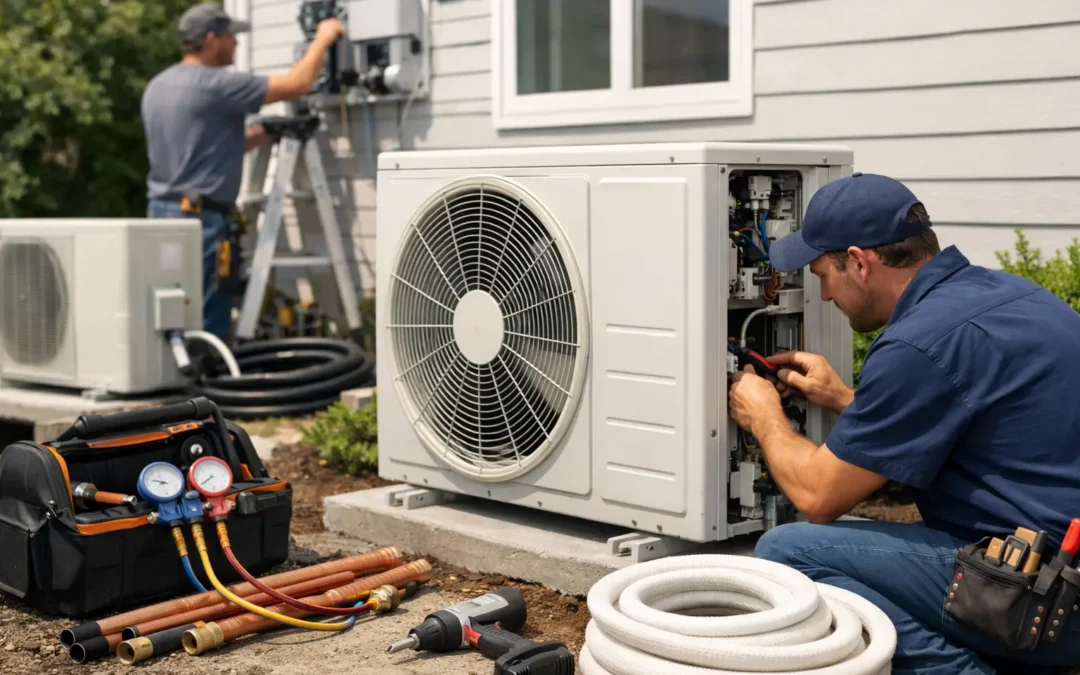
A heat pump install can look simple from the driveway – remove the old unit, set a new one, turn it on. In reality, the heat pump installation steps behind a reliable system are what determine how well it heats, cools, and holds up over time. If the process is rushed, even a high-quality unit can struggle with comfort, efficiency, and service life.
For homeowners and property managers, that matters because installation is where long-term performance is won or lost. A properly installed system should keep temperatures consistent, control humidity, and avoid the short cycling, noise, and high utility bills that often trace back to poor setup. Knowing the process helps you ask better questions and feel confident before work starts.
Why the installation process matters
A heat pump is not just a box that gets swapped out. It is part of a complete system that includes refrigerant lines, electrical components, airflow design, drainage, controls, and often ductwork. Each part affects the next.
That is why the best installs begin with planning, not equipment delivery. The right contractor looks at the home or building, confirms load requirements, checks the condition of the existing setup, and recommends equipment that fits the space. Bigger is not always better. An oversized unit may heat and cool quickly, but it can leave humidity issues behind and cycle on and off too often. An undersized one may run longer than it should and still leave rooms uncomfortable.
Heat pump installation steps before installation day
The first step is evaluating the property. A technician should review square footage, insulation levels, window exposure, and existing duct design or the layout for a ductless system. In Northern Virginia, where summers can be humid and winters can still put real demand on a heating system, sizing should match local conditions rather than a rough estimate.
Next comes equipment selection. This includes choosing the heat pump itself, the indoor air handler or furnace pairing if the system is dual-fuel, and any thermostat or zoning components. Efficiency ratings matter, but they should be balanced against the building’s needs and your budget. The highest-rated option is not always the best value if the application is not right for it.
Permits and code requirements also need to be addressed before work begins. A professional installer handles this as part of the job, which helps protect you from safety issues and future compliance problems. If an install is being pitched without proper permitting when required, that is worth a closer look.
What happens on installation day
Removing the old equipment
If there is an existing system, the crew starts by safely disconnecting and removing it. That includes recovering refrigerant according to environmental regulations, disconnecting power, and taking out indoor and outdoor components as needed. This part should be controlled and careful, especially in finished spaces where walls, flooring, and access points can be affected.
The removal stage is also when hidden issues often show up. Damaged drain lines, worn disconnects, rusted platforms, and undersized return air can all become visible once old equipment is out. A dependable contractor explains these findings clearly and discusses any needed corrections before moving forward.
Preparing the installation area
The new system needs a stable, code-compliant location. For outdoor units, that usually means placing the heat pump on a level pad or mounting system with proper clearance around it. Good placement supports airflow, service access, drainage, and noise control.
Inside, the air handler, coil, or related components must be positioned so they can be serviced and drained properly. In attics, closets, basements, and mechanical rooms, details like secondary drain protection and access clearances matter more than many customers realize. These are not cosmetic choices. They help prevent water damage and make future maintenance possible.
Setting the indoor and outdoor equipment
Once the site is ready, the crew sets the new components in place. The outdoor heat pump and indoor unit have to be matched correctly and installed according to manufacturer specifications. This is a key point because system compatibility affects efficiency, warranty protection, and performance.
If the install uses existing ductwork, the ducts may need modification to support proper airflow. Some homes have leaks, poor sizing, or return air limitations that held back the old system and would do the same to the new one. If the duct system is in poor shape, replacing the equipment alone may not solve comfort problems.
Connecting refrigerant lines, electrical, and drainage
After the equipment is set, the installer connects the refrigerant line set, electrical supply, control wiring, and condensate drain. This is one of the most technical parts of the job. Refrigerant lines must be sized correctly, protected, and sealed. Electrical work has to meet code and manufacturer requirements. Drainage has to be routed to avoid backups and water damage.
If a line set is being reused, it should be evaluated carefully. Sometimes reuse is acceptable, and sometimes it is not. Age, contamination risk, length, and compatibility all factor into that decision. This is one of those areas where the right answer depends on the condition of the existing installation, not just the lowest upfront cost.
The final heat pump installation steps that affect performance
Pressure testing and vacuum
Before refrigerant is released or charged, the system should be pressure tested to confirm there are no leaks. After that, the lines are evacuated with a vacuum pump to remove moisture and non-condensables. This step is essential. Moisture in the refrigerant circuit can damage the system and reduce efficiency.
It is not the part customers usually see, but it is one of the clearest signs of a quality installation. Skipping or rushing it can create problems that may not show up until later.
Charging and startup
Once the system is sealed and evacuated, the installer charges the system according to manufacturer specifications. Then comes startup, where operating pressures, temperature split, airflow, controls, and defrost function are checked. The thermostat is programmed, and the technician verifies that the system shifts properly between heating and cooling modes.
This stage is about more than making sure the unit turns on. It is about confirming it runs correctly under real conditions. Small setup issues at startup can lead to larger comfort and reliability problems later if they are ignored.
Testing airflow and system balance
Airflow is a major part of heat pump performance, especially for comfort and humidity control. If airflow is too low or too high, the system may not operate the way it was designed to. Rooms may feel uneven, the unit may get noisy, and efficiency may suffer.
A thorough installer checks static pressure, blower settings, filter fit, and supply and return performance. In some homes or light commercial spaces, balancing adjustments may be needed to improve how air moves through the building. This is one reason installation is rarely a one-size-fits-all job.
What homeowners and property managers should ask
The best questions are practical ones. Ask how the system was sized, whether the ductwork was evaluated, what corrections are recommended, and what startup testing will be performed. It is also reasonable to ask who will handle permits, what warranty coverage applies, and what kind of maintenance the system will need after installation.
Clear pricing matters too. A professional quote should explain what is included, not just list equipment model numbers. That helps you compare options fairly and avoid surprises once work begins.
Common installation mistakes to avoid
Most heat pump problems after a replacement are not caused by the equipment itself. They come from sizing errors, poor airflow, improper refrigerant setup, bad drainage, or weak electrical work. Sometimes the issue is trying to keep too much of an old system in place when those older components are already limiting performance.
That does not mean every install needs extensive extras. It means the contractor should identify what actually needs attention and what does not. Honest recommendations are part of good service. If every job is treated exactly the same, important details can get missed.
What a smooth install should feel like
From the customer side, a well-run project should feel organized. You should know when the crew is arriving, what work is being done, whether the system will be down for the day, and what to expect when the job is complete. The technicians should protect the work area, explain findings in plain language, and review the thermostat and maintenance basics before leaving.
That customer experience matters just as much as the mechanical work. When installation is handled with care, you get more than new equipment. You get confidence that your comfort system is ready for the seasons ahead.
If you are planning a replacement, the right installer will walk you through the heat pump installation steps without making the process feel complicated. That is usually the clearest sign you are dealing with a team that values workmanship as much as your comfort.
