

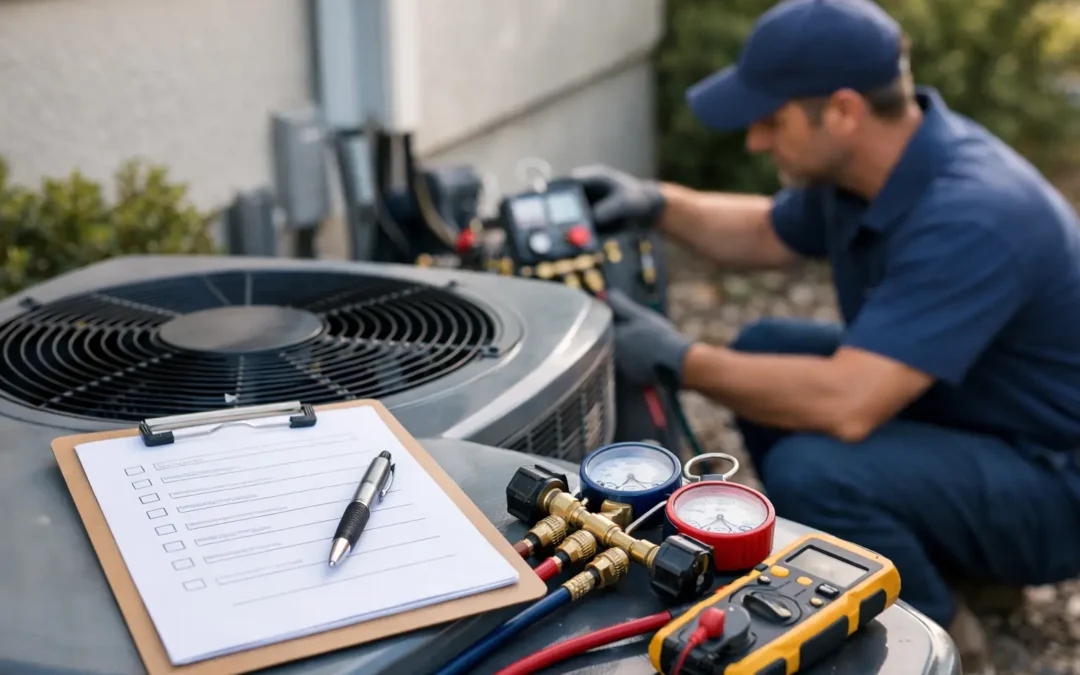
The first 90-degree day has a way of exposing every weak spot in your cooling system. If your AC is blowing warm air, running longer than usual, or driving up your electric bill, a solid ac tune up checklist can help you catch problems early and keep your system working the way it should.
For homeowners and property managers, seasonal maintenance is less about checking a box and more about protecting comfort, efficiency, and equipment life. A tune-up will not fix every aging system, and it will not turn an undersized unit into a high-performance one. What it can do is reduce avoidable wear, improve airflow, and help you spot issues before they turn into urgent repairs.
Why an AC tune-up matters
Air conditioners rarely fail without warning. More often, performance slips first. You may notice uneven cooling, extra humidity, unusual cycling, or a steady increase in utility costs. Those signs usually point to restricted airflow, dirty components, electrical wear, or refrigerant-related issues.
Routine service helps address those problems while they are still manageable. That matters in Northern Virginia, where summer heat and humidity can put a real strain on residential and light commercial systems. A clean, properly adjusted unit has a better chance of keeping up during peak demand and avoiding mid-season breakdowns.
There is also a financial side to maintenance. Small issues like a clogged condensate drain or loose electrical connection are usually much less expensive to handle than a failed motor or compressor. Regular tune-ups also support better indoor air quality because they reduce dust buildup and improve air circulation through the system.
AC tune up checklist: what should be inspected
A complete ac tune up checklist should cover both the indoor and outdoor portions of the system. Some items are safe for a homeowner to review, while others should be handled by a trained technician.
1. Thermostat operation
The tune-up should start with the thermostat. It needs to read accurately, respond correctly to settings, and communicate properly with the system. If cooling cycles are too short or too long, the issue may be with calibration, programming, location, or wiring rather than the air conditioner itself.
Smart thermostats can improve control, but only when they are configured correctly. A poorly programmed schedule can make a system seem unreliable when it is simply following the wrong instructions.
2. Air filter condition
A dirty filter is one of the most common and most avoidable causes of AC trouble. Restricted airflow makes the system work harder, reduces cooling performance, and can contribute to frozen coils.
During a tune-up, the filter should be checked for dirt, fit, and proper size. Some homes need monthly filter changes during heavy-use seasons, while others can go longer. It depends on filter type, pets, occupancy, and indoor air quality conditions.
3. Evaporator coil inspection
The indoor evaporator coil absorbs heat from your home. When it gets coated with dust and debris, heat transfer drops and the system loses efficiency. Coil condition should be inspected carefully, along with signs of ice, corrosion, or drainage problems.
This is not always a visible or easy-access component, which is one reason professional maintenance matters. Cleaning coils improperly can damage delicate fins or create water issues.
4. Condensate drain and drain pan
Air conditioning removes humidity, and that moisture has to go somewhere. The condensate drain line and pan should be checked for clogs, standing water, algae growth, and overflow risk.
If this part of the system is ignored, it can lead to water damage, musty odors, or automatic shutdowns triggered by safety switches. In humid weather, this step is especially important.
5. Outdoor condenser cleaning
Your outdoor unit needs open airflow to release heat. Leaves, dirt, grass clippings, and cottonwood buildup can block that process and force the system to run hotter than it should.
The cabinet, coil surface, and surrounding area should be cleaned and cleared. Shrubs and debris should be kept back to allow proper airflow. Homeowners can help by keeping the area around the unit clean, but coil cleaning should be done with care to avoid bending fins or forcing debris deeper into the equipment.
6. Refrigerant check
Refrigerant levels should not simply be topped off as a routine step. If levels are low, that usually means there is a leak or another system issue that needs diagnosis.
A proper tune-up includes checking operating pressures and temperatures to see whether refrigerant charge appears normal. Low refrigerant can reduce cooling, damage the compressor, and increase energy use. This is always a technician-level task.
7. Electrical components and connections
Capacitors, contactors, relays, wiring, and terminals all affect whether your AC starts and runs correctly. Over time, electrical parts can loosen, wear down, or show signs of overheating.
A technician should inspect these components, test readings where appropriate, and tighten connections if needed. Catching a weak capacitor before it fails on a hot afternoon can save a great deal of inconvenience.
8. Blower components and airflow
The blower motor and wheel move conditioned air through your ductwork. If airflow is weak, rooms may cool unevenly and your system may run longer than necessary.
A tune-up should include checking blower performance, motor condition, and general airflow. In some cases, poor airflow points to duct leaks, closed dampers, dirty coils, or improperly sized equipment rather than the blower itself.
9. Fan motors and moving parts
Both indoor and outdoor fan motors should be checked for proper operation, noise, and wear. Not all modern motors require lubrication, but applicable moving parts should be serviced according to manufacturer requirements.
Unusual sounds often signal a developing problem. Grinding, rattling, or humming should never be ignored, even if the system is still cooling.
10. Temperature split and system performance
A tune-up is not just about inspecting parts one by one. The full system should be tested while operating. That includes checking supply and return temperatures, cooling performance, cycling behavior, and general responsiveness.
This is how technicians confirm whether the unit is doing its job under real conditions. A system may power on and still underperform, which is why performance testing matters.
What you can do yourself before service
There are a few simple steps that can support AC performance between professional visits. Replace the filter on schedule, make sure supply and return vents are not blocked, clear debris from around the outdoor unit, and pay attention to any change in noise, humidity, or airflow.
You can also check your thermostat settings and confirm the drain area looks dry and clean. Those steps will not replace a professional tune-up, but they can reduce strain and give you a clearer picture of how the system is behaving.
What you should not do is open sealed components, handle refrigerant, or attempt electrical repairs. Air conditioning equipment is complex, and a quick DIY fix can easily turn into a larger repair.
How often should AC maintenance be scheduled?
For most homes, once a year is the right baseline, ideally before heavy summer use begins. Commercial properties or homes with older systems, high occupancy, pets, or indoor air quality concerns may benefit from more frequent attention.
If your system has already shown signs of trouble, waiting for the next annual visit is usually not the best move. Warm air, ice on the lines, water around the unit, burning smells, or rising energy bills are all good reasons to schedule service sooner.
Signs your AC may need more than a tune-up
A tune-up is preventive care, not a cure-all. If your system is short cycling, frequently tripping breakers, struggling to cool the space, or requiring repeated refrigerant service, there may be a larger repair issue involved.
Age matters too. Once an air conditioner reaches the later stage of its service life, maintenance is still valuable, but replacement may become the better long-term investment. The right answer depends on repair history, efficiency, comfort issues, and operating cost.
That is why a trustworthy service provider should be clear about what maintenance can accomplish and when repair or replacement deserves a serious conversation. At Aircon HVAC Solutions, that means focusing on what serves the customer best, not what creates the biggest invoice.
Choosing the right AC maintenance approach
The best ac tune up checklist is one that leads to action before a breakdown happens. It should be thorough enough to catch airflow issues, electrical wear, drainage problems, and performance concerns, while also giving you a realistic picture of your system’s condition.
If your cooling system has been running harder than usual, making new noises, or simply has not been serviced in a while, a professional tune-up is a smart next step. A little preventive care now can mean steadier comfort when the heat settles in for the long stretch.
