

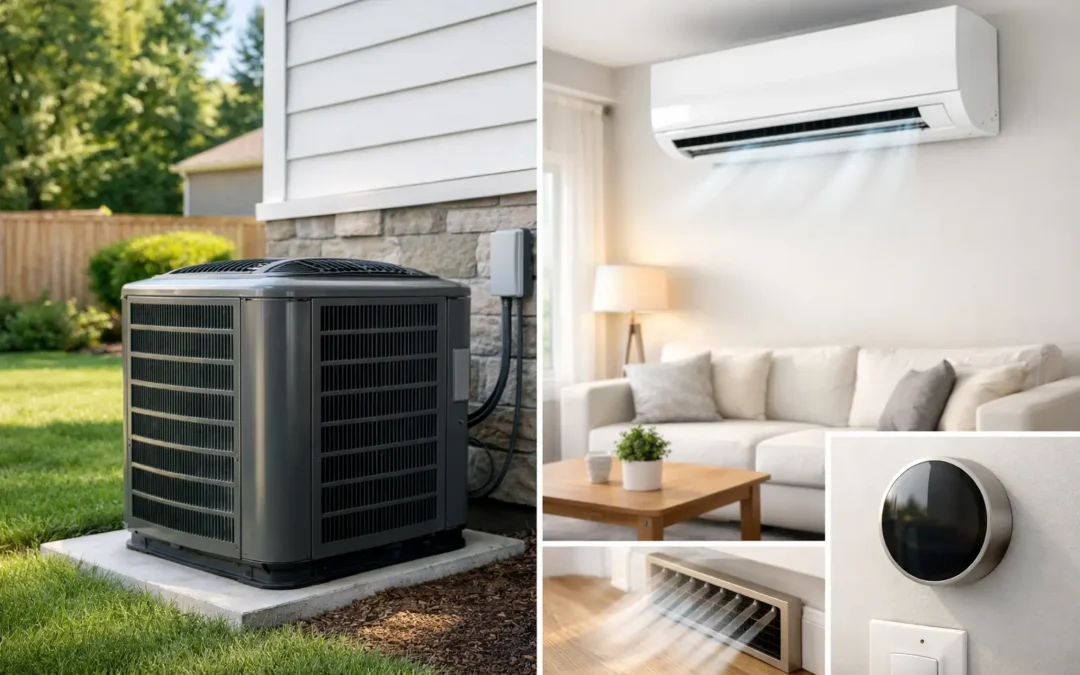
If your AC is struggling through another Northern Virginia summer, choosing from the best ac systems for homes can feel less like a home upgrade and more like a high-stakes decision. The right system affects your comfort, monthly energy bills, indoor air quality, and how often you end up calling for repairs. The wrong one can leave you with uneven cooling, rising costs, and a system that never quite fits your space.
For most homeowners, the best choice is not about buying the most expensive unit or the highest efficiency rating on paper. It is about matching the system to the home, the ductwork, the layout, and how your family actually uses each room. That is where many replacement decisions go off track.
How to choose the best AC systems for homes
A good AC system should do three things well. It should cool evenly, run efficiently, and hold up over time with proper maintenance. But the best fit depends on a few practical factors: the age of the house, whether you already have ducts, how many floors you need to cool, and whether you want heating and cooling from the same equipment.
For example, a two-story home with existing ductwork may be a strong candidate for central air or a heat pump. A home addition, older house, or property with hot and cold spots may benefit more from a ductless mini-split setup. If humidity is a constant issue, system sizing and airflow matter just as much as brand or SEER rating.
That is why a quick online comparison only gets you so far. On-site evaluation matters. A properly sized and installed mid-range system will usually outperform a premium unit that is oversized, poorly installed, or mismatched to the home.
Central air conditioning
Central air remains one of the most common options for single-family homes, especially when ductwork is already in place. It uses an outdoor condenser and an indoor evaporator coil connected to a forced-air system that distributes cool air through vents.
For many homeowners, central air is the simplest path to whole-home cooling. It is familiar, effective, and often more affordable to install than other options when the home is already set up for it. It also pairs well with existing furnaces, which can make replacement straightforward.
The trade-off is that central air depends heavily on the condition of the duct system. If ducts are leaking, undersized, or poorly balanced, comfort problems can follow even with a new unit. Rooms far from the air handler may cool unevenly, and energy waste can add up over time.
A standard single-stage central AC can be a solid fit for budget-conscious households. A two-stage or variable-speed model offers quieter operation, better humidity control, and more consistent temperatures, but at a higher upfront cost.
Heat pumps
Heat pumps have become one of the strongest contenders among the best ac systems for homes because they provide both cooling and heating. In cooling mode, they work much like central air. In heating mode, they reverse the process and move heat into the home.
For homeowners looking to replace aging HVAC equipment, a heat pump can be an efficient all-in-one solution. In a climate like Northern Virginia, modern heat pumps often make sense because winters are cold but not extreme for long stretches. High-efficiency models can handle a large portion of the heating load while delivering excellent summer performance.
The biggest advantage is year-round efficiency. Instead of maintaining separate cooling and heating systems, you get one system designed to do both jobs. That can simplify maintenance and reduce energy use, especially if you are replacing older equipment.
The main consideration is system design. Some homes may still need supplemental heat during the coldest periods, and not every existing setup converts cleanly. If your ductwork is in poor shape, the benefits of a new heat pump can be limited until those airflow issues are addressed.
Ductless mini-split systems
Ductless mini-splits are a smart option when ductwork is missing, damaged, or simply not practical to install. These systems use an outdoor unit connected to one or more indoor air handlers mounted in specific rooms or zones.
They work especially well in older homes, finished basements, garages, additions, and homes with persistent hot or cold areas. Because each indoor unit can be controlled separately, mini-splits offer excellent zoning. That means you can cool occupied areas without wasting energy on empty rooms.
Efficiency is one of their biggest strengths, and installation is often less invasive than adding full ductwork. They also give homeowners more control over room-by-room comfort.
Still, mini-splits are not ideal for every situation. Some homeowners do not love the look of wall-mounted indoor units. In larger homes, a multi-zone setup can become more expensive than expected. And while they are excellent at targeted comfort, designing them for full-home coverage takes careful planning.
Packaged systems and other less common options
Some homes use packaged AC systems, where major components are housed in a single outdoor cabinet, often on the ground or roof. These are more common in certain property types and can be a practical option when indoor space is limited.
They are not usually the first recommendation for the average homeowner, but they can make sense in the right layout. As with any system, service access, insulation, and airflow all affect real-world performance.
There are also hybrid systems that combine a heat pump with a furnace. These can be a strong fit for homeowners who want efficient electric cooling and heating most of the year, with gas backup for colder weather. That option tends to work best when comfort, flexibility, and long-term operating costs are all part of the decision.
What actually makes one system better than another
Brand matters, but not as much as many people think. The installation quality, load calculation, duct design, thermostat setup, and maintenance plan usually have a bigger effect on comfort and reliability than the logo on the equipment.
A few features are worth paying attention to. Variable-speed blowers improve comfort by adjusting airflow gradually instead of cycling at full blast. Two-stage or inverter-driven compressors help maintain steadier temperatures and better humidity control. Higher efficiency ratings can reduce utility costs, but only when the system is properly matched to the home.
It also helps to think beyond cooling alone. The best system for your home may include indoor air quality improvements such as better filtration, humidity control, or ventilation upgrades. If your house feels clammy in summer or stale year-round, solving that problem may take more than swapping out the condenser.
Common mistakes homeowners make
The most common mistake is choosing based on unit size alone. Bigger is not better. An oversized AC cools too quickly, cycles off too soon, and often leaves humidity behind. That can make the home feel cold and damp at the same time.
Another mistake is replacing equipment without looking at the duct system. If airflow problems caused comfort issues with the old unit, those same problems usually do not disappear with a new one. In some cases, they become more obvious.
Homeowners also sometimes focus only on the installation price and ignore operating cost, repair history, and warranty support. A lower upfront quote can cost more over the life of the system if it leads to higher bills or frequent breakdowns.
Which system is right for your home?
If your home already has solid ductwork and you want dependable whole-home cooling, central air is often the most practical choice. If you want both heating and cooling with strong efficiency, a heat pump deserves serious consideration. If your home has no ducts, challenging layouts, or rooms that never stay comfortable, a ductless mini-split may be the better solution.
There is no single winner for every household. The best AC system is the one that fits your square footage, insulation levels, comfort goals, and budget without creating new problems down the road.
That is why professional sizing and installation matter so much. A trustworthy HVAC partner should explain your options clearly, outline the trade-offs, and give you transparent pricing without pushing you into equipment you do not need. At Aircon HVAC Solutions, that is the standard homeowners should expect.
When you are comparing systems, think beyond the box sitting outside the house. Think about how your home feels on the hottest day of the year, how evenly it cools from room to room, and whether the system will still serve you well five or ten years from now. That is usually where the right answer becomes clear.
