

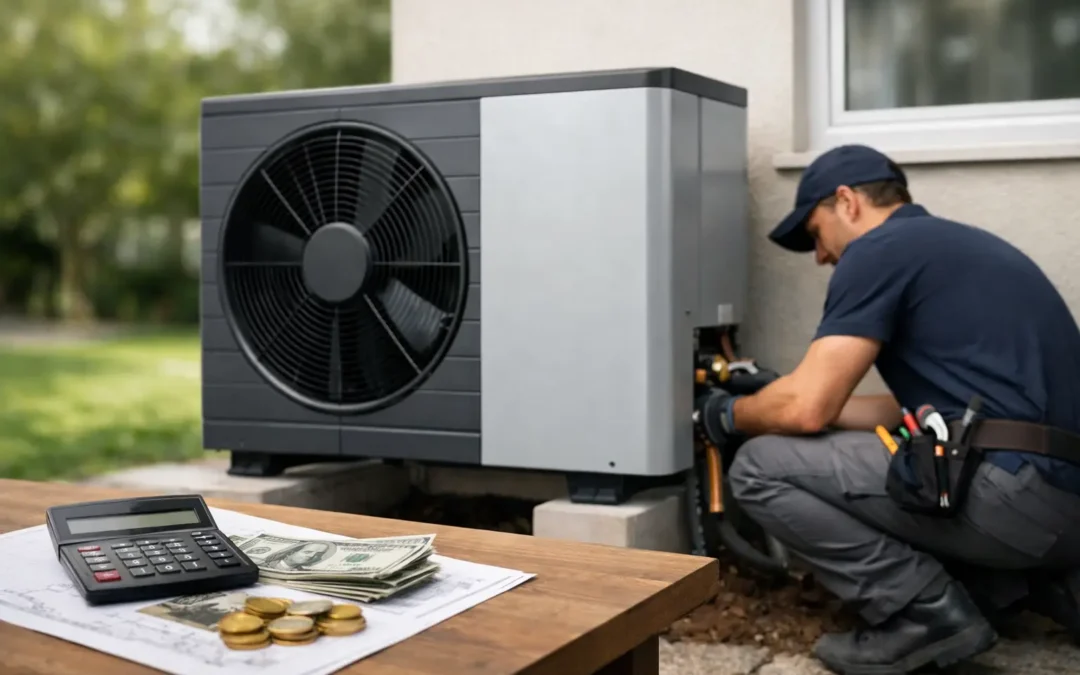
Sticker shock usually happens for one of two reasons: the quote was vague, or the system was never sized and planned correctly to begin with. When homeowners ask about heat pump installation cost, they are usually not just asking for a number. They want to know what they are actually paying for, what will change the price, and how to avoid spending too much on the wrong system.
A heat pump can be an excellent fit for year-round comfort, especially in a climate like Northern Virginia where homes need both dependable cooling and efficient heating. But installation pricing varies more than many people expect. That is not a sign that something is wrong. It usually means the details of the home, the system, and the installation work matter.
What affects heat pump installation cost?
The biggest factor is system type. A ducted central heat pump replacement will be priced differently than a ductless mini-split setup, and both will differ from a dual-fuel system paired with a furnace. Equipment choice changes the price quickly because efficiency level, brand, capacity, and features all affect the total.
System size also matters, but bigger is not automatically better. An oversized unit can short cycle, create uneven temperatures, and wear down faster. An undersized unit may struggle during hot summers or cold winter mornings. Proper load calculations take time, and that planning is part of a quality installation.
Labor is another major part of the cost. A straightforward replacement where existing electrical service, refrigerant lines, and ductwork are in good condition is usually less expensive than a first-time installation or a job that requires system redesign. If technicians need to upgrade the electrical panel, replace line sets, modify supply and return ducts, or correct airflow problems, the quote will reflect that work.
Then there is the condition of the home itself. Older homes often bring surprises. Limited access in attics, crawl spaces, or utility closets can increase labor time. Homes with leaky or undersized ductwork may need improvements before a new heat pump can perform the way it should.
Typical heat pump installation cost ranges
For most homeowners, the simplest answer is a range rather than a fixed number. A basic heat pump replacement with existing ductwork may land on the lower end of the spectrum, while a higher-efficiency system with zoning, controls, duct modifications, or electrical work will cost more.
In many cases, homeowners can expect heat pump installation cost to fall somewhere between several thousand dollars and well into five figures depending on the project scope. That range is wide because one property may only need an equipment swap, while another needs a full comfort system upgrade.
For ductless systems, pricing often depends on the number of indoor units. A single-zone mini-split for one room is very different from a multi-zone system serving several spaces. For central systems, the final price is more likely to be shaped by tonnage, efficiency rating, indoor equipment compatibility, and ductwork condition.
If two quotes are far apart, it is worth asking why. The less expensive option may exclude code upgrades, permit costs, thermostat replacement, disposal of old equipment, or warranty-related labor considerations. A higher quote may include work that protects long-term performance rather than simply getting the system running.
Why installation quality matters as much as equipment
A heat pump is only as good as the installation behind it. This is where many budget comparisons go wrong. Customers sometimes compare one system to another based only on brand or price, when the real difference is in how carefully the job is designed and completed.
Correct refrigerant charging, airflow balancing, duct sealing, drainage setup, thermostat integration, and startup testing all matter. If those steps are rushed or skipped, the system can lose efficiency, struggle with humidity, or wear out sooner than expected. Lower upfront pricing can become expensive if it leads to comfort issues, service calls, or premature replacement.
That is why transparent proposals matter. You should be able to see what work is included, what equipment is being installed, and whether the contractor has accounted for the home rather than offering a one-size-fits-all number.
Hidden costs homeowners should ask about
Not every added expense is truly hidden, but many are overlooked during early conversations. Permits and inspections may be required. Some homes need electrical updates to support the new equipment safely. Others need a new thermostat, condensate pump, pad, disconnect, or refrigerant line replacement.
Ductwork is often the biggest wildcard. If the ducts are leaking, poorly sized, or contaminated, installing a new heat pump without addressing them may leave the home with the same comfort problems it had before. That can be frustrating when the homeowner expected the new system to solve everything.
There may also be costs tied to efficiency upgrades. Variable-speed systems, communicating thermostats, improved filtration, and humidity control features can increase the initial investment. For some households, those upgrades are worth it because they improve comfort and lower operating costs. For others, a more straightforward setup makes more sense.
What makes one heat pump more expensive than another?
Efficiency is one answer, but not the only one. Higher SEER2 and HSPF2 ratings generally cost more upfront. So do inverter-driven systems that modulate output instead of cycling on and off at full power. These systems can be quieter and more consistent, but they are not automatically the best choice for every home or budget.
Cold-weather performance can also affect pricing. Some heat pumps are built to maintain stronger heating performance at lower outdoor temperatures. In this region, that may be valuable, especially for homeowners looking to reduce reliance on backup heat.
Features like smart controls, zoning compatibility, enhanced dehumidification, and quieter operation add value, but they also raise equipment cost. The right choice depends on what the homeowner actually wants from the system. If the goal is simply reliable heating and cooling, there may be no reason to pay for every premium feature available.
How to budget for a heat pump installation
The best first step is not choosing a brand. It is getting a detailed evaluation of the home. A good quote should reflect square footage, insulation, windows, duct layout, comfort complaints, and existing equipment conditions. Without that, pricing is only a rough guess.
Ask whether the proposal includes equipment, labor, disposal, permits, and any needed accessories. Ask what warranty coverage applies to parts and labor. Ask whether the contractor expects any possible additional work once installation begins. Clear answers upfront help prevent last-minute surprises.
It also helps to think beyond the initial invoice. A lower-cost system may cost more to operate over time if efficiency is poor or comfort problems lead to additional service needs. On the other hand, the most expensive system is not always the smartest investment if the home will not benefit from its extra features.
For many property owners, financing options can make a better system more manageable. Rebates or utility incentives may also help offset cost depending on the equipment and timing. Those opportunities change, so they should be verified during the quote process rather than assumed.
When replacing now can save money later
Sometimes a heat pump replacement is planned. Other times it happens after repeated breakdowns, rising utility bills, or rooms that never seem comfortable. Waiting too long can turn a manageable upgrade into an urgent decision made during extreme weather, when comfort is already compromised.
Older systems often lose efficiency gradually, so the cost shows up over time instead of all at once. If repair bills are stacking up and performance is declining, replacement may offer better value than continuing to patch the existing unit. That is especially true when the current system is improperly sized or nearing the end of its service life.
For homeowners and property managers, the goal is not just to lower heat pump installation cost. It is to get dependable comfort, predictable performance, and a system that fits the property correctly. A professional evaluation helps separate necessary work from optional upgrades so the investment is easier to understand.
At Aircon HVAC Solutions, that is the standard customers should expect from any quote: clear pricing, careful workmanship, and recommendations built around the property rather than a sales script. A heat pump is a long-term comfort decision, and the right installation should feel like one from the start.
If you are comparing options, focus on clarity as much as cost. A well-explained quote tells you more than a low number ever will, and it usually leads to better comfort in the seasons ahead.
