

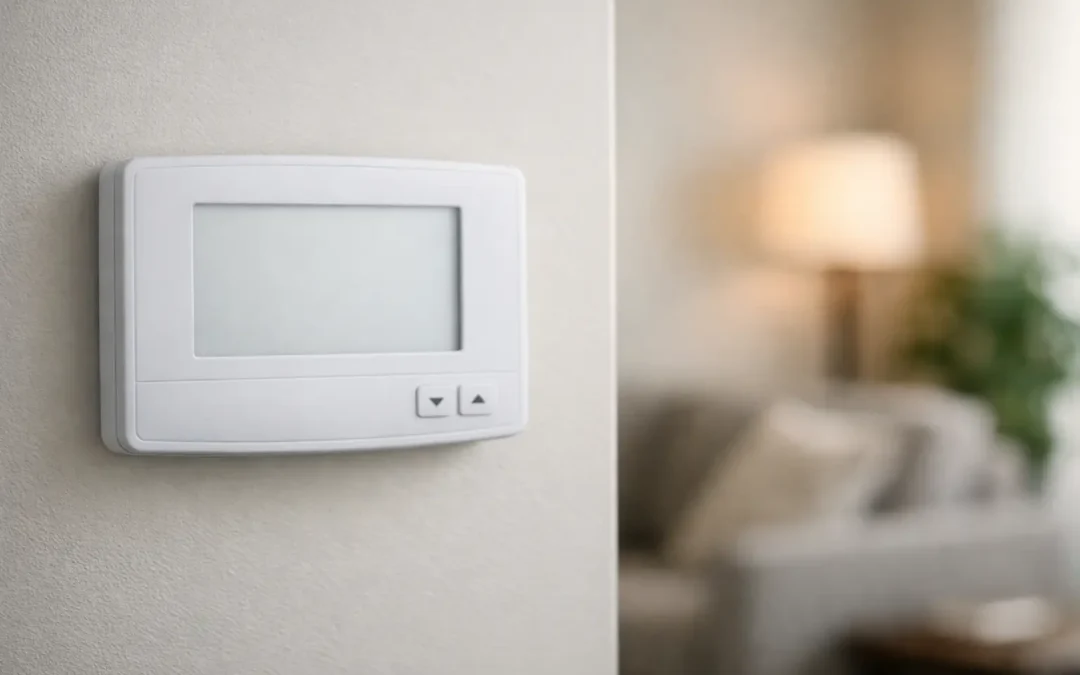
A blank thermostat usually shows up at the worst possible time – right when your home feels too hot, too cold, or your system stops responding altogether. If you’re asking, “why is my thermostat blank,” the good news is that the problem is often straightforward. The less-good news is that a blank screen can point to anything from dead batteries to a power issue at the HVAC equipment itself.
The key is to avoid guessing. A thermostat is the control point for your heating and cooling system, but it also depends on steady power, working wiring, and communication with the equipment. When the display goes dark, the problem may be at the thermostat, or it may be somewhere else in the system.
Why is my thermostat blank? Start with the simplest causes
In many homes, the most common reason for a blank thermostat is also the easiest to fix: the batteries are dead. Not every thermostat uses batteries, but many do, even if they are hardwired. Some models rely on batteries as backup power, while others need them to run the display.
If your thermostat has a battery compartment, replace the batteries with fresh ones and make sure they are installed in the correct direction. Once replaced, give the thermostat a minute to restart. If the screen comes back on, you may be done.
If changing the batteries does nothing, the next thing to check is whether the HVAC system has lost power. A thermostat often gets its power from the indoor unit, so if the furnace, air handler, or heat pump is not receiving power, the thermostat may go blank too.
Check the breaker and system switch
Head to your electrical panel and look for a tripped breaker. Your HVAC system may have more than one breaker, especially if you have separate equipment for heating and cooling. A breaker that is not fully in the ON position may need to be switched all the way off first, then back on.
You should also check the power switch near the indoor unit. It often looks like a regular light switch and can get flipped by accident. If that switch is off, the system may appear completely dead.
If the breaker trips again after reset, stop there. Repeated tripping usually points to an electrical or equipment issue that needs professional service.
A tripped float switch can make the thermostat go blank
This is one of the most overlooked causes, especially during air conditioning season. Many systems have a safety switch connected to the condensate drain line or drain pan. If the drain backs up with water, the switch shuts the system down to help prevent water damage.
When that happens, the thermostat may lose power or stop responding, depending on how the system is wired. So if your thermostat is blank and your AC was running recently, a clogged condensate drain could be the real issue.
Signs this may be the problem include water near the indoor unit, a full drain pan, or recent humidity issues. Some homeowners are comfortable clearing a simple drain clog, but if there is standing water, repeated blockage, or uncertainty about the switch, it is better to have a technician inspect it.
Loose thermostat wiring or a failed thermostat
Sometimes the thermostat itself is the problem. Over time, wiring connections can loosen, terminals can corrode, or the thermostat can simply fail. This is more common in older thermostats, but newer digital models are not immune.
If you remove the thermostat faceplate and notice loose wires, discoloration, or signs of damage, that is a clue. Still, low-voltage wiring should be handled carefully. The issue may look minor but could involve the control board or transformer at the HVAC unit.
A failed thermostat is possible, but it is not always the first thing to replace. Many homeowners assume the thermostat is bad when the real problem is upstream, such as a blown fuse, transformer issue, or safety shutoff.
The low-voltage fuse or transformer may have failed
Most residential HVAC systems use low-voltage power to operate the thermostat. If the fuse on the control board blows or the transformer stops working, the thermostat can go blank even though the main breaker appears fine.
This is where the issue starts to move beyond a basic homeowner check. Accessing the control board usually means opening the furnace or air handler cabinet. If you are experienced and comfortable doing that safely, you may be able to identify a blown fuse. For most people, though, this is the point where a service call makes more sense.
The reason is simple: replacing a fuse without finding out why it blew can lead to the same failure again. A short in the wiring, a damaged contactor, or another electrical fault may be behind it.
Why is my thermostat blank after changing batteries?
If you already replaced the batteries and the thermostat is still blank, the problem is likely not battery-related. That narrows the field to power loss from the HVAC system, a tripped safety switch, wiring trouble, or a failed thermostat.
It can also mean the thermostat was never running primarily on battery power in the first place. Some homeowners expect batteries to solve everything, but many thermostats depend on the common wire from the HVAC system for regular operation. If that 24-volt power is interrupted, the display may stay dark no matter how new the batteries are.
This is one of those cases where it depends on the thermostat model and the way the system was installed. A quick visual check helps, but diagnosis is easier when a technician can test voltage directly.
When a blank thermostat is more urgent
A blank thermostat is not always an emergency, but sometimes it should be treated like one. If outdoor temperatures are extreme, if you have infants, older adults, or medically vulnerable family members at home, or if this is affecting a commercial space that needs reliable climate control, waiting too long can create a bigger problem.
The same applies if you smell something burning, hear unusual noises from the indoor unit, or see water leaking around the equipment. In those situations, it is smart to shut the system off and request professional help right away.
For property managers and business owners, a dark thermostat can also mean tenant complaints, comfort issues, and preventable downtime. Fast diagnosis matters because the thermostat may only be the visible symptom of a larger equipment problem.
What you can safely check before calling
You do not need to take the system apart to do a few useful checks. Replace the thermostat batteries if your model uses them. Confirm the breaker has not tripped. Make sure the indoor unit power switch is on. Look around the air handler or furnace for signs of water around the condensate system.
If the screen stays blank after that, further troubleshooting usually requires tools and electrical testing. At that point, guessing can waste time and sometimes make the repair more expensive.
A professional technician can determine whether the issue is the thermostat, the wiring, the control board, the transformer, or a safety device interrupting power. That matters because the right fix is not always the obvious one.
Preventing the next blank thermostat
Some thermostat failures are sudden, but many are tied to maintenance issues that build up over time. Drain line clogs, aging electrical components, dirty equipment, and overlooked warning signs all increase the odds of a no-power situation.
Routine HVAC maintenance helps catch those issues early. During a service visit, a technician can inspect wiring, test voltage, clear drainage components, and look for wear before it turns into a shutdown. For homeowners in Northern Virginia, that kind of preventive care is often the difference between a quick seasonal tune-up and a no-heat or no-AC call at the worst time.
If your thermostat is blank and basic checks do not restore it, the safest next step is a professional diagnosis. Aircon HVAC Solutions helps homeowners and businesses get answers quickly, with clear recommendations and repairs focused on restoring comfort without unnecessary delays.
When your thermostat goes dark, treat it as a sign to check the simple things first – then let an experienced HVAC technician take it from there if the system still will not come back on.
