

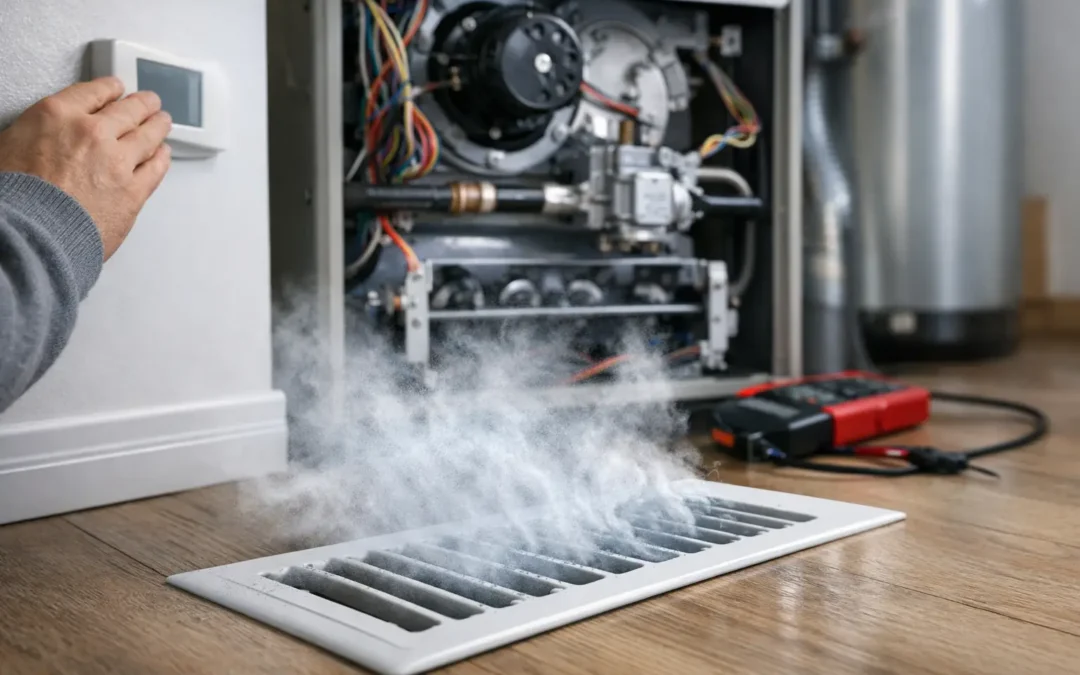
A cold blast from a supply vent is more than an inconvenience on a Northern Virginia winter morning. If you are asking, “why is furnace blowing cold,” the answer may be as simple as a thermostat setting or as urgent as a fuel, ignition, or airflow problem. A few safe checks can help you understand what is happening, but a furnace that will not produce steady heat deserves prompt professional attention.
Why Is Furnace Blowing Cold Instead of Heating?
Your furnace heats air, then its blower sends that air through the ductwork. When any part of that sequence is interrupted, the blower may still run even though the burners are not producing heat. That is why cold air from the vents does not always mean the entire system has failed.
The timing of the problem offers useful clues. Air that feels cool only for the first minute or two after startup can be normal, especially when the ductwork is cold. Air that stays cold, turns cold after a few minutes of warmth, or comes with repeated clicking, unusual smells, or frequent cycling points to a problem that should be diagnosed.
The thermostat is set to Fan “On”
This is one of the most common and easiest issues to correct. Most thermostats have an Auto and an On setting for the fan. When the fan is set to On, it runs continuously, including between heating cycles. During those breaks, it circulates room-temperature or cool air through the vents.
Set the fan to Auto, then make sure the system mode is Heat and the temperature setting is several degrees above the current room temperature. Give the furnace five to 10 minutes to begin a heating cycle. If it still blows cold air, move on to the next checks.
The thermostat is not calling for heat correctly
A thermostat with depleted batteries, a loose wire, incorrect programming, or a poor location can prevent a proper heating call. For example, a thermostat near a sunny window, a kitchen, or a drafty exterior door may read the room inaccurately.
Replace batteries if your model uses them, confirm the clock and schedule are correct, and check that no vacation or energy-saving setting has lowered the temperature. If the screen is blank or the furnace does not respond after these simple checks, avoid removing thermostat wiring yourself. A technician can verify whether the issue is at the thermostat, control board, or furnace.
A dirty air filter is restricting airflow
A clogged filter can cause a surprising number of heating problems. When airflow is restricted, the furnace may overheat. Its safety limit switch can shut down the burners while the blower keeps running to cool the equipment. The result is air that starts warm and then becomes cool.
Check the filter monthly during the heating season and replace it when it looks dirty or according to the manufacturer’s recommended interval. Use the correct size and install it in the direction shown by the airflow arrow. Very high-density filters can also create airflow issues in some systems, so the best filter is not always the most restrictive one.
If replacing the filter restores heat but the furnace continues to shut off and restart, schedule service. Recurring overheating can signal blocked vents, duct restrictions, a dirty blower wheel, or another problem that needs more than a filter change.
The furnace does not have power
A furnace can appear to be running because the thermostat is lit or the blower briefly operates, yet the heating components may not have full power. Check the electrical panel for a tripped breaker and look for the furnace service switch, often mounted nearby and resembling a standard light switch.
Reset a tripped breaker once. If it trips again, leave it off and call for service. Repeated breaker trips can indicate an electrical fault, a failing blower motor, or another condition that should not be ignored.
The gas supply or ignition system has a problem
Gas furnaces need a reliable fuel supply and a properly functioning ignition sequence. Depending on the model, the system may use an electronic igniter, flame sensor, pressure switch, inducer motor, and control board before the burners can stay lit. A failure in any of these components can leave the blower running without heat.
You may hear the furnace attempt to start, click several times, or ignite briefly before shutting down. A dirty flame sensor, for example, can cause burners to light and then turn off within seconds because the system cannot confirm a stable flame. This is a common repair, but it should be handled by a qualified HVAC technician.
If you smell gas, do not try to restart the furnace or inspect its internal parts. Leave the building if the odor is strong, avoid switches and open flames, and contact your gas utility or emergency services from a safe location. Once the immediate safety concern is addressed, an HVAC professional can inspect the furnace.
A blocked vent or condensate issue is interrupting operation
High-efficiency furnaces vent through plastic pipes that lead outdoors. Snow, ice, leaves, nests, or other debris around an exterior intake or exhaust pipe can interfere with safe operation. Condensing furnaces also produce water that must drain through a condensate line. If that line clogs or freezes, a safety switch may prevent the furnace from firing.
From outside, visually check that the vent terminations are clear of obvious snow and debris. Do not insert tools into the pipes, dismantle venting, or modify the installation. Indoor venting and drainage issues require careful inspection because they affect combustion safety as well as heating performance.
The furnace is overheating or short cycling
A furnace that turns on and off every few minutes is short cycling. It may produce a little heat before the burners shut down, then blow cool air as the fan continues. Restricted airflow is a frequent cause, but an oversized furnace, a malfunctioning limit switch, dirty internal components, or ductwork problems can also contribute.
Short cycling raises energy use and adds wear to the system. More importantly, it is not something to solve by repeatedly resetting the equipment. A professional evaluation can identify whether the cause is a straightforward airflow correction or a component that needs repair.
Safe Checks When Your Furnace Blows Cold Air
Before calling for service, there are a few homeowner checks that are reasonable and low-risk. Confirm the thermostat is set to Heat with the fan set to Auto. Replace the filter if it is dirty. Make sure all supply registers and return vents are open and unobstructed by furniture, rugs, or stored items. Then check the breaker and furnace service switch.
For a gas furnace, you can also verify that the gas shutoff valve has not been accidentally turned off. The handle should generally be parallel with the gas pipe when open. If you are uncertain which valve serves the furnace, do not guess. Leave it alone and request professional help.
Avoid opening sealed furnace panels, relighting pilot systems without clear manufacturer instructions, cleaning flame sensors, or bypassing safety switches. Those steps can create safety risks and may turn a smaller repair into a larger one. Never cover outdoor furnace vent pipes to keep out cold air or snow.
When Cold Air From the Furnace Is an Urgent Problem
Call for prompt HVAC service when the furnace cannot maintain heat, repeatedly shuts down, makes banging or grinding noises, leaks water, or displays an error code. A system that starts but cannot keep burners lit also needs attention, particularly during freezing weather when indoor temperatures can fall quickly.
Treat carbon monoxide alarms as an emergency. If an alarm sounds or anyone experiences symptoms such as headache, dizziness, nausea, confusion, or unusual fatigue, move everyone outside immediately and contact emergency services. Do not re-enter until responders say it is safe. Carbon monoxide is odorless, so working alarms near sleeping areas and regular furnace maintenance are essential safeguards.
Property managers and business owners should respond quickly as well. Uneven or missing heat can affect tenants, employees, equipment, and plumbing. Document the symptoms, including when the issue began and whether some areas are warmer than others, so the service visit can be more efficient.
How Professional Furnace Service Restores Reliable Heat
A trained technician does more than replace the part that seems most likely to fail. Proper diagnosis includes checking thermostat signals, electrical connections, airflow, filter condition, safety switches, ignition operation, burner performance, venting, and error codes. For gas equipment, technicians also verify safe combustion and inspect for conditions that could affect carbon monoxide handling.
The right repair depends on the cause. A dirty filter may be a quick correction. A failed igniter, flame sensor, inducer motor, control board, or blower component may require repair or replacement. If a furnace is older and facing a major repair, the decision can depend on its condition, efficiency, repair cost, and how reliably it has heated the property in recent seasons.
Routine maintenance helps prevent many cold-air calls before they happen. Annual service can catch buildup, worn components, drainage problems, and airflow restrictions early, when repairs are often simpler. It also gives homeowners confidence that the system is ready before the first sustained cold spell.
If your furnace is blowing cold air and the basic checks do not restore consistent heat, do not spend the night guessing at the cause. Aircon HVAC Solutions provides responsive furnace diagnostics and repairs for homeowners and businesses across Northern Virginia, with clear recommendations focused on safe, dependable comfort.
