

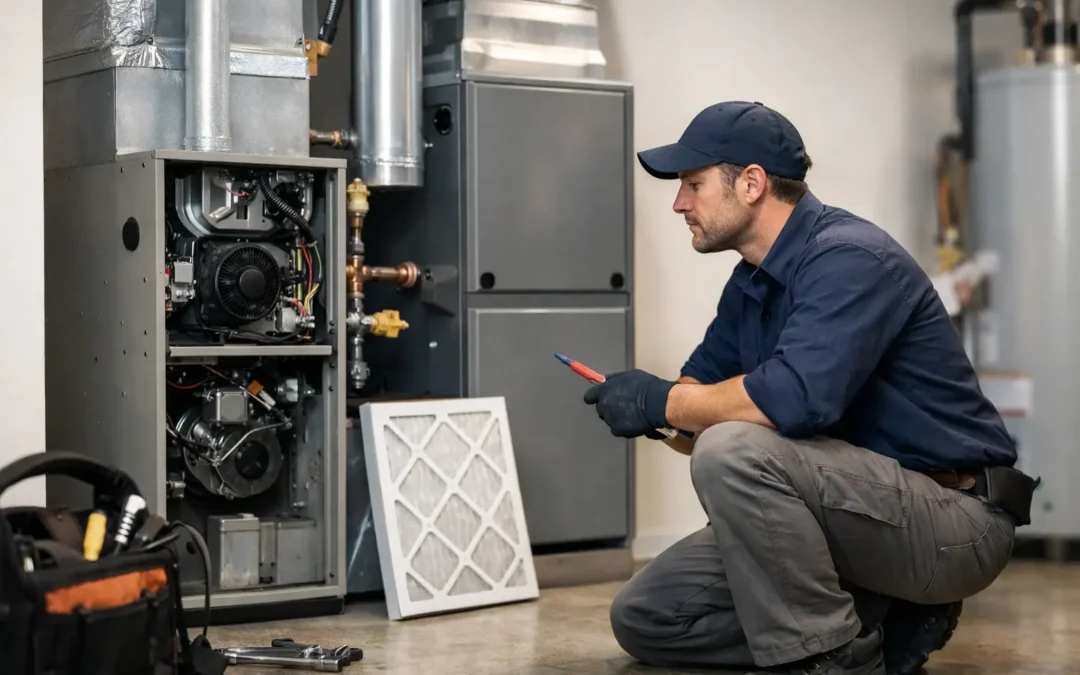
A furnace problem rarely shows up at a convenient time. It usually starts on a cold morning, with rooms heating unevenly, strange noises from the unit, or a system that runs constantly but never seems to catch up. When that happens, the big question is furnace repair or replacement – and the right answer depends on more than just whether the system turns back on.
For homeowners, property managers, and business owners, the goal is not just to restore heat for a day. It is to make a smart decision that protects comfort, controls costs, and avoids repeated breakdowns. Some furnaces are good candidates for a targeted repair. Others are already costing more in service calls, energy use, and disruption than they are worth.
How to decide on furnace repair or replacement
The fastest way to frame the decision is to look at age, performance, repair history, and operating cost together. A single issue on a newer furnace is very different from the same issue on a unit that has been struggling for years.
If your furnace is under 10 years old and has been reliable overall, repair is often the practical choice. Many problems, such as a failed ignitor, worn blower motor component, dirty flame sensor, or faulty thermostat, can be resolved without replacing the entire system. In those cases, a professional repair can restore safe, dependable heat and extend the life of the equipment.
If the furnace is 15 to 20 years old, the conversation changes. Older systems are typically less efficient, more prone to part failures, and closer to the end of their useful life. Even if a repair is possible, it may only buy limited time. That does not mean replacement is automatic, but it does mean the long-term math deserves a closer look.
Signs repair still makes sense
A furnace does not need to be perfect to be worth repairing. It needs to be structurally sound, reasonably efficient for its age, and not showing a pattern of decline.
Repair is often the better option when the issue is isolated. If the heat exchanger is intact, the unit has not needed frequent service, and the repair cost is manageable relative to the system’s value, fixing the furnace can be the most cost-effective move. This is especially true when the rest of the HVAC system is in good shape and the building’s heating demands are being met.
Another good sign is consistent performance before the breakdown. If your furnace has been heating evenly, cycling normally, and keeping utility bills fairly stable, one mechanical failure does not necessarily point to a larger system problem. In that situation, a quality repair may restore the system to normal operation without much risk.
For commercial spaces and rental properties, repair can also make sense when downtime needs to be minimized immediately. A prompt service call may stabilize the situation while you plan for a future upgrade on your timeline rather than during an emergency.
Common issues that may not require replacement
Many furnace problems sound serious to the customer because the system has stopped heating, but the underlying repair may be straightforward. Ignition problems, clogged filters, bad capacitors, worn belts, control board issues, or thermostat malfunctions can all interrupt operation without meaning the furnace itself is done.
That is why inspection matters. Replacing a furnace too early can waste money, but waiting too long can create repeat failures and comfort problems that become more expensive over time.
When furnace replacement is the smarter investment
There is a point where another repair stops being the responsible recommendation. If the furnace is aging, inefficient, and breaking down regularly, replacement often provides better value than keeping the old unit alive one part at a time.
One major red flag is frequent repair history. If you have had multiple service calls within the last year or two, that pattern usually means components are wearing out across the system. A repair might solve today’s problem, but another one may be right behind it.
Rising energy bills are another clue. Older furnaces lose efficiency as they age, and that decline can be gradual enough that many people do not notice it right away. If your heating costs have been climbing without a major rate change or obvious weather-related reason, the furnace may be working harder to produce less comfort.
Uneven heating can also point toward replacement, especially when it persists after maintenance and minor repairs. If some rooms stay cold, the system struggles to recover after temperature setbacks, or the unit runs longer than it should, the problem may be tied to declining furnace performance rather than a single fixable part.
Safety and reliability matter more than squeezing out one more season
If a furnace has a cracked heat exchanger, persistent combustion issues, or signs of unsafe operation, replacement is usually the right move. Safety concerns should not be treated as a short-term inconvenience. They require immediate professional attention and a clear recommendation based on the condition of the equipment.
Reliability matters too. For a family home, losing heat in the middle of winter is stressful. For a commercial property, it can affect tenants, staff, customers, and business operations. If your current system creates uncertainty every cold season, replacement may save more than money. It can reduce disruption and give you confidence that the building will stay comfortable when it matters most.
Cost is important, but so is value
It is natural to focus on the price of repair versus the price of a new system. The challenge is that the lowest immediate cost is not always the better financial decision.
A repair is usually less expensive up front, but it should be weighed against how much useful life remains in the furnace. Spending a moderate amount on a repair for a system with several good years left can be sensible. Spending a large amount on a furnace that may fail again next season is different.
One helpful rule is to consider the age of the furnace alongside the repair cost. If the repair is substantial and the unit is already well into its expected lifespan, replacement deserves serious consideration. You should also factor in energy savings, warranty coverage, and the reduced likelihood of emergency service calls with a newer system.
For many property owners, predictability is part of the value. A planned replacement with transparent pricing is often easier to manage than multiple surprise repairs during peak heating season.
What a professional assessment should tell you
A trustworthy furnace evaluation should give you more than a yes-or-no answer. It should explain what failed, whether the issue is isolated or part of a broader pattern, how safe the system is to operate, and what you can realistically expect if you repair it.
That kind of assessment is especially important in Northern Virginia, where winter temperatures can put real demand on heating equipment. A furnace that is barely getting by in mild weather may not perform well when colder conditions settle in.
A professional should also walk you through your options clearly. That includes repair cost, replacement considerations, expected efficiency differences, and any related issues such as airflow, filtration, thermostat performance, or ductwork concerns. Good service is not about pushing the most expensive option. It is about giving you a reliable recommendation you can act on with confidence.
Repair or replace based on your goals
The right choice is not always purely mechanical. It also depends on your plans for the property.
If you expect to stay in the home or keep the building long term, replacement may make more sense once the furnace starts showing its age. You get better efficiency, stronger reliability, and fewer surprises. If you only need a shorter-term solution and the system can be repaired safely, a targeted fix may be reasonable.
The same goes for comfort expectations. Some customers simply want heat restored as fast as possible. Others are tired of high utility bills, uneven temperatures, and worrying every winter. Both goals are valid, but they may lead to different decisions.
Aircon HVAC Solutions approaches furnace decisions the same way customers do – by looking at comfort, cost, timing, and long-term peace of mind. The best outcome is not just a working furnace. It is a heating solution you can trust.
If you are facing the question of furnace repair or replacement, do not guess based on age alone or wait until a minor issue turns into a complete outage. A clear professional evaluation can save you time, money, and a lot of frustration when the temperature drops.
