

A new outdoor unit can look impressive on a quote, but the air handler is often what determines whether your home actually feels evenly cooled, properly dehumidified, and quietly comfortable. The best air handler brands offer dependable equipment, but the right choice still depends on your existing system, ductwork, comfort goals, and budget.
For Northern Virginia homeowners and property managers, that distinction matters. Our summer humidity puts real pressure on cooling systems, while heat pump systems rely on the air handler for reliable heating through cooler months. A properly selected and installed unit can improve airflow room to room, support better indoor air quality, and help the system operate as designed.
What an Air Handler Does for Your Comfort
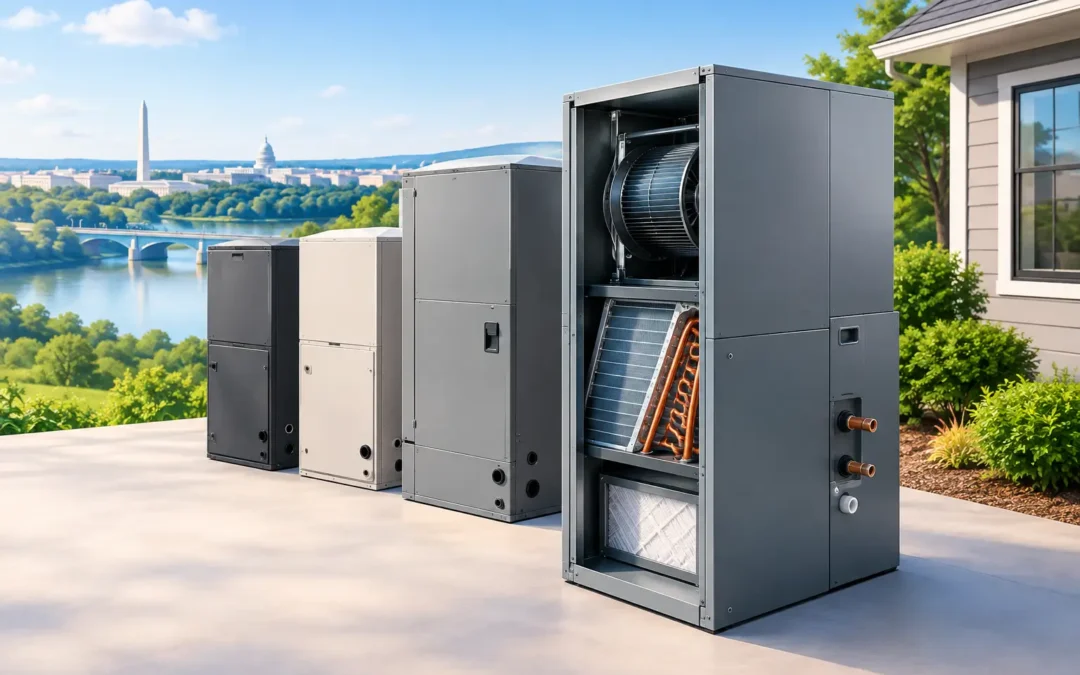
An air handler is the indoor component that circulates conditioned air through your ducts. In many heat pump systems, it contains the indoor coil, blower motor, electrical controls, and often auxiliary electric heat. It works with the outdoor heat pump to cool your home in summer and provide heat in winter.
This is not the same as a gas furnace, although both move air through the duct system. If your home uses a heat pump with an indoor air handler, replacing only one component without confirming compatibility can create efficiency, performance, or warranty concerns. That is why brand selection should come after a technician reviews the complete system.
Best Air Handler Brands to Consider
Several manufacturers produce quality air handlers. The best fit is less about a logo on the cabinet and more about finding a properly matched model with the features your property needs.
Carrier
Carrier is a familiar choice for homeowners looking for a broad range of equipment options. Its air handlers are available in configurations that pair with standard and high-efficiency heat pumps, including models with variable-speed blowers. Variable-speed equipment can run at lower speeds for longer periods, which may help provide steadier temperatures and better moisture removal when the system is correctly designed.
Carrier can be a strong option for homeowners prioritizing comfort features and access to a well-established equipment line. The trade-off is that premium configurations can raise the initial investment. The value is strongest when the rest of the system, including ductwork and thermostat controls, can support those features.
Trane
Trane air handlers are often considered by customers who place a high priority on durable construction and premium system performance. The brand offers matched systems with advanced blower and communication options designed to work with compatible outdoor equipment.
A Trane system may be a good fit when replacing an aging matched system or when upgrading a home where consistent room temperatures have been difficult to achieve. It is usually not the lowest-cost route, and not every home needs its most advanced equipment. A careful load calculation and equipment match matter more than choosing the highest tier available.
Lennox
Lennox offers air handlers across a wide efficiency and comfort range, including options that pair with variable-capacity heat pumps. For homeowners focused on quieter operation, more precise temperature control, or high-efficiency upgrades, Lennox may deserve consideration.
As with other premium equipment, replacement parts, model availability, and service support should be part of the conversation before deciding. The best choice is one a qualified local HVAC team can install, maintain, and service confidently over the long term.
Rheem and Ruud
Rheem and Ruud are closely related brands known for offering practical, dependable HVAC equipment at several price points. Their air handlers can be a sensible option for homeowners who want reliable heat pump performance without paying for every premium feature.
These brands are especially worth considering for straightforward replacements, rental properties, and budget-conscious upgrades where correct sizing and installation quality are the main priorities. They also offer higher-end options, so choosing Rheem or Ruud does not automatically mean settling for basic comfort controls.
Goodman and Amana
Goodman and Amana air handlers are frequently considered when upfront value is a major factor. Both provide equipment that can serve many residential applications well when it is properly matched and installed. Amana often includes more premium product choices and warranty structures, while Goodman is commonly recognized for accessible system options.
The key consideration is avoiding a decision based on price alone. An oversized air handler can short-cycle, create uneven temperatures, and remove less humidity. A lower-cost unit installed with poor duct connections or incorrect airflow settings will not deliver the comfort you expect.
Daikin
Daikin provides both conventional ducted air handler options and ductless or ducted inverter solutions. It can be a compelling choice for homes with comfort issues in additions, upper floors, renovated spaces, or areas where traditional ductwork is difficult to modify.
Daikin equipment may also be appropriate for customers interested in variable-speed technology and more flexible zoning possibilities. However, these systems should be designed around the home rather than selected as a one-size-fits-all upgrade. The layout, insulation, electrical capacity, and existing duct system all affect whether the investment makes sense.
How to Choose Between Air Handler Brands
Brand reputation is useful, but it should not be the deciding factor by itself. A well-installed midrange air handler is often a better investment than an improperly installed premium model. Before recommending equipment, a qualified technician should assess the home or building, calculate heating and cooling loads, inspect duct condition, and verify the requirements of the outdoor unit.
Start with system compatibility. Air handlers and heat pumps are engineered to work together as matched combinations. Mixing equipment may be possible in some cases, but it can affect rated efficiency, communication features, and warranty coverage. If only the indoor unit is being replaced, the technician should confirm what combinations are approved for the existing outdoor equipment.
Next, consider blower performance. Standard multi-speed blowers can work well in many homes. Variable-speed models cost more but can offer quieter operation, longer low-speed circulation, and improved humidity control. For a Northern Virginia home that feels clammy in summer or has hot and cold spots, those benefits may be worth the added cost.
Ductwork deserves equal attention. Leaks, poor insulation, undersized returns, and restricted supply vents can make even the best equipment perform poorly. If airflow problems have been ongoing, replacing the air handler without addressing the duct system may leave the original problem unresolved.
Finally, look at serviceability and warranty terms. Equipment warranties vary by model, registration, and installation conditions. Ask what parts are covered, what labor coverage is included, and whether replacement parts are readily supported. A clear answer is more valuable than a broad promise that one brand never has problems.
When Replacement Makes More Sense Than Repair
An air handler does not always need to be replaced because the outdoor unit has a problem. In some cases, a repair to the blower motor, control board, drain system, or coil may be the practical choice. Replacement becomes more reasonable when repairs are frequent, the indoor coil is leaking, parts are difficult to source, or the existing unit cannot properly match a new heat pump.
Age matters, but condition matters more. A well-maintained unit may have useful life remaining, while a younger system with repeated moisture, electrical, or airflow issues may justify a more complete upgrade. For commercial properties, downtime, tenant comfort, and the cost of recurring service calls should also be considered.
A Better Way to Make the Final Decision
The best air handler brands are the ones that can be correctly sized, properly matched, and professionally supported for your specific property. Equipment should serve your comfort needs, not force your home or business into a package that looks good only on paper.
If you are comparing options in Bristow, Manassas, Gainesville, or nearby Northern Virginia communities, Aircon HVAC Solutions can evaluate your current system, explain the practical trade-offs, and provide clear recommendations. The goal is not simply to install an air handler. It is to give you dependable airflow, balanced comfort, and a system you can rely on when the weather turns.
