

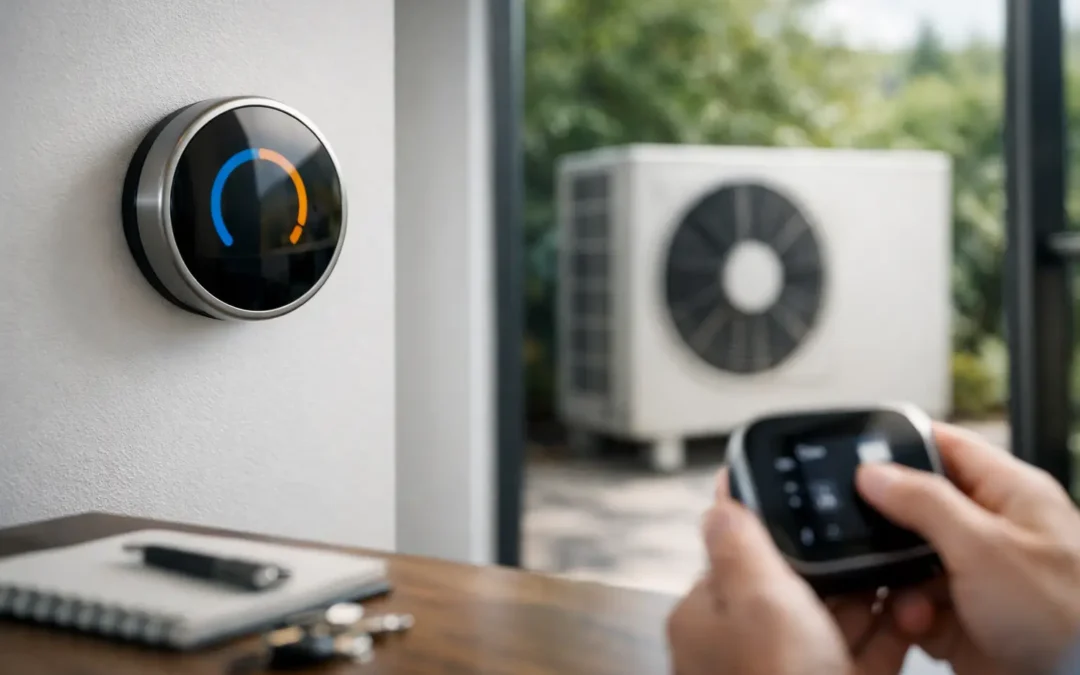
A heat pump can only perform as well as the controls telling it when to heat, cool, or call on backup heat. That is why the best thermostat for heat pumps is not always the most expensive smart model on the shelf. It is the one that matches your equipment, supports its heating stages, and helps your home stay comfortable through Northern Virginia’s changing weather.
Choosing the wrong thermostat can create frustrating problems: rooms that feel too cool in winter, higher utility bills, frequent cycling, or electric auxiliary heat running more often than it should. A compatible thermostat, correctly installed and configured, protects both comfort and system efficiency.
Start With Heat Pump Compatibility
Before comparing screens, apps, and voice controls, confirm what type of heat pump system you have. Most homes have either a conventional split-system heat pump with an outdoor unit and indoor air handler or furnace, or a ductless mini-split system. These systems do not all use the same controls.
A thermostat for a conventional heat pump must be rated for heat pump use. Standard thermostats designed only for conventional furnaces and air conditioners may not manage the reversing valve, heating stages, or auxiliary heat correctly. Look for a model identified as compatible with heat pumps, then verify its support for your specific setup.
The key details are the number of heating and cooling stages and whether your home has auxiliary or emergency heat. A common configuration is called 2H/1C, meaning two heating stages and one cooling stage. The first heating stage is the heat pump itself. The second is often electric heat strips, sometimes called auxiliary heat. Larger systems may require more stages.
If your heat pump uses a gas furnace as backup heat, it is a dual-fuel system. It needs a thermostat capable of managing both heat sources without allowing them to operate in conflict. This configuration can save energy, but only when the changeover settings are correct.
What Makes a Thermostat a Good Fit?
The right thermostat should make your equipment easier to operate, not add complexity to your day. For many homeowners, a dependable programmable thermostat is enough. For others, a smart thermostat can provide useful scheduling, remote access, and energy-use insights.
Accurate auxiliary heat control
Auxiliary heat is valuable when outdoor temperatures are low or your home needs to recover from a large temperature setback. It is also more expensive to operate when it relies on electric heat strips. A well-matched thermostat limits unnecessary auxiliary heat calls while still keeping your home comfortable.
This is one reason dramatic overnight setbacks are not always ideal for heat pump homes. If you lower the temperature several degrees and ask the system to recover quickly in the morning, the thermostat may bring on auxiliary heat. A compatible smart or programmable thermostat can use gentler recovery settings that better suit a heat pump.
Adjustable temperature differentials and staging
Some thermostats offer settings that control how far the indoor temperature can drift before heating or cooling starts. They may also allow installers to determine when auxiliary heat is permitted. These settings should be handled carefully. Aggressive settings may reduce comfort, while settings that call for backup heat too quickly can increase operating costs.
For homeowners, the benefit is simple: the thermostat should support stable, even temperatures without constantly cycling the system on and off.
Wi-Fi features that serve a purpose
Wi-Fi thermostats let you adjust your home temperature from a phone, receive maintenance reminders, and create schedules. These features are especially helpful for busy households, second homes, and property managers overseeing multiple spaces.
However, smart features are not a substitute for compatibility. A basic thermostat configured correctly will outperform a feature-heavy model that does not recognize your system’s stages or backup heat. If you prefer straightforward controls and do not need app access, a quality programmable thermostat may be the better value.
A C-wire or power solution
Many smart thermostats need a common wire, commonly called a C-wire, for consistent power. Some advertise alternatives, such as power extenders or battery-assisted operation. Those options can work in the right application, but the wiring at the thermostat is only part of the picture.
Older systems may have unused wires in the wall, missing conductors, or control boards that require a different solution. A technician can inspect the wiring and recommend a clean installation instead of relying on a workaround that may cause intermittent power or connectivity issues.
Smart Thermostat or Programmable Thermostat?
A smart thermostat is often a strong choice for homeowners who want convenient control and are willing to use the app. Models from established thermostat manufacturers commonly offer scheduling, humidity displays, filter reminders, geofencing, and system alerts. Some can also use local weather data to fine-tune operation.
For a heat pump, pay close attention to the equipment compatibility list rather than selecting by brand alone. Confirm that the model supports your number of heating stages, cooling stages, auxiliary heat, and dual-fuel operation if applicable. Also ask whether the thermostat can manage a whole-home humidifier, dehumidifier, or ventilator if your system includes one.
A programmable thermostat remains a practical choice when reliability and simple operation are the priority. It can hold a consistent schedule without requiring Wi-Fi, account registration, or software updates. This is often a sensible solution for rental properties, commercial spaces with predictable hours, or homeowners who simply want clear buttons and dependable temperature control.
Features Worth Paying For
The best choice depends on your equipment and household, but a few features consistently provide real value for heat pump owners.
A large, easy-to-read display is more useful than it sounds, especially when you need to see whether the system is in regular heat, auxiliary heat, or emergency heat. Scheduling is valuable when it is easy to override. Vacation mode can prevent wasted energy while protecting your home during cold weather. Indoor humidity readings can also help identify comfort issues that temperature alone will not explain.
For dual-fuel systems, outdoor temperature lockout controls deserve special attention. These settings help determine when the system should use the heat pump and when it should switch to furnace heat. The correct balance depends on the equipment, energy prices, home insulation, and outdoor conditions. It should be set based on your home, not guessed from a generic recommendation.
Avoid paying extra for features you will never use. Built-in room sensors can help homes with uneven temperatures, for example, but they may not solve a comfort issue caused by poor ductwork, insufficient insulation, an oversized system, or a heat pump that needs service.
Common Thermostat Mistakes With Heat Pumps
The most common issue is replacing a thermostat without checking the system configuration. A thermostat may power on and appear to work while still being programmed incorrectly. Reversing valve settings can be wrong, heat stages can be mislabeled, or auxiliary heat can be left unavailable when it is needed.
Another mistake is using emergency heat as a daily heating setting. Emergency heat generally bypasses the outdoor heat pump and relies on backup heat. It is intended for circumstances such as an outdoor-unit failure or a service diagnosis, not ordinary winter operation. Running it unnecessarily can raise electric bills quickly.
Homeowners also sometimes assume that a thermostat will fix every hot or cold room. Thermostats can improve scheduling and control, but they cannot correct airflow restrictions, leaky ducts, dirty filters, refrigerant issues, or failing equipment. If your heat pump struggles to maintain temperature, runs continuously, or switches to auxiliary heat too often, the system should be inspected.
Professional Installation Protects Your Comfort
Thermostat installation looks simple until low-voltage wiring, equipment staging, and control-board settings enter the picture. A professional installation includes more than mounting a new device. The technician verifies wiring, configures the thermostat for the heat pump, tests heating and cooling operation, confirms auxiliary heat response, and explains how to use the settings.
That process matters most for dual-fuel systems, multi-stage heat pumps, communicating equipment, and homes with indoor air quality accessories. It is also worthwhile when replacing an older thermostat whose wiring has never been clearly identified.
At Aircon HVAC Solutions, our technicians can help you select a thermostat that fits your heat pump and your comfort goals, then install and configure it with the attention your system deserves. Whether you want simple, dependable controls or a smart thermostat with remote access, the right setup can make everyday comfort easier to manage.
A thermostat should give you confidence that your heat pump is responding the right way when the weather changes. If you are unsure what your current system needs, a professional compatibility check is a practical first step before making a purchase.
