

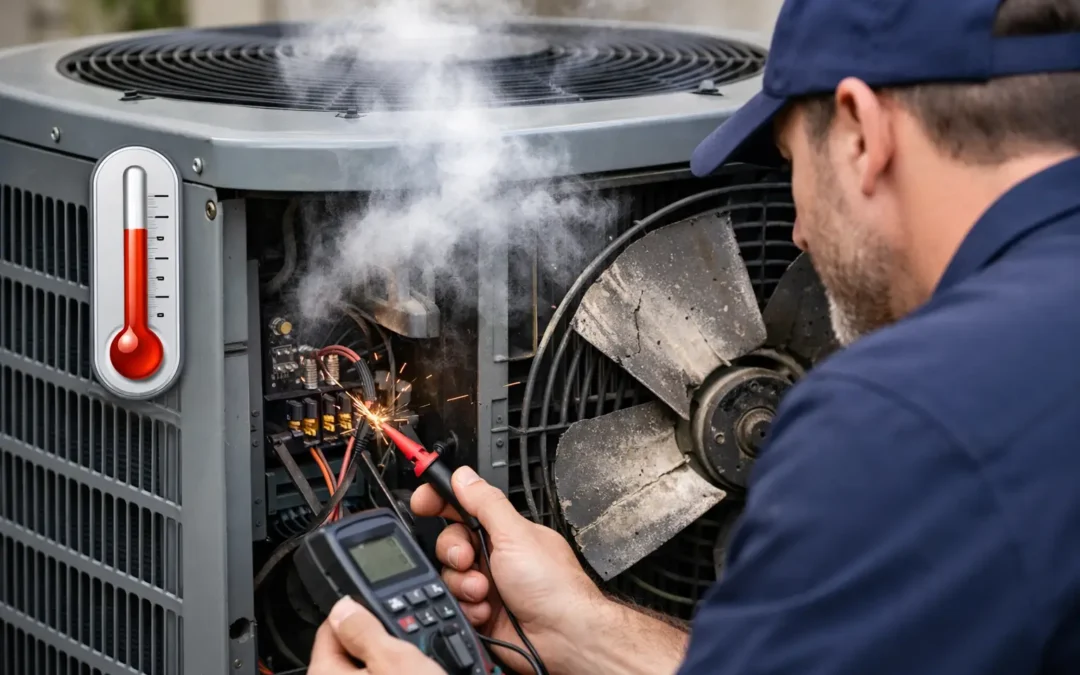
A heat pump rarely stops working without giving you a few clues first. Recognizing heat pump repair warning signs can help you avoid a cold house in winter, uncomfortable indoor temperatures in summer, and a repair that becomes more expensive than it needed to be. For homeowners and property managers, the goal is not to diagnose the system yourself. It is to know when a change in performance deserves prompt professional attention.
10 Heat Pump Repair Warning Signs to Watch
1. Your home is not reaching the thermostat setting
If your thermostat is set to 70 degrees but your rooms remain noticeably colder or warmer, your heat pump may be struggling to keep up. This can happen for simple reasons, such as a dirty air filter or blocked supply vents. It can also point to more involved issues with refrigerant levels, airflow, electrical components, or the outdoor unit.
Pay attention to how long the system runs. A heat pump may run for longer cycles during very cold Northern Virginia weather, especially if the home has heat loss or limited insulation. But if it runs almost constantly and comfort still does not improve, it is time to schedule service.
2. Airflow from vents feels weak
Weak airflow makes every room harder to heat or cool, no matter how well the thermostat appears to be working. Start with the basics: replace a clogged filter, confirm that vents are open, and make sure furniture or curtains are not blocking returns.
If airflow remains low, the issue may involve a blower motor, ductwork, evaporator coil, or control problem. In a commercial space, weak airflow can affect employee comfort, customer experience, and equipment performance. A technician can determine whether the problem is inside the air handler, the duct system, or another part of the heat pump.
3. The outdoor unit is covered in ice
A light coating of frost on the outdoor coil can be normal during heating season. Heat pumps periodically enter a defrost cycle to clear that frost, and you may briefly see steam rising from the unit. That is usually expected.
Thick ice that remains on the coil, fan, or cabinet is different. It may indicate a failed defrost control, a sensor issue, restricted airflow, low refrigerant, or a drainage problem. Do not chip away at ice with a sharp tool or pour hot water on the unit. Turn the system off if the ice is severe and arrange a professional inspection to prevent further damage.
4. You hear new or persistent noises
Heat pumps make ordinary operating sounds, including a low hum, airflow, and an occasional change in sound when the system switches modes. New noises deserve attention, especially if they are loud, repeated, or getting worse.
Grinding can suggest a motor or bearing concern. Rattling may come from loose panels, debris, or worn components. Squealing may point to a belt or motor issue in certain indoor systems, while buzzing can signal an electrical problem. A single brief sound may not be urgent, but a persistent noise should not be ignored.
5. Your energy bills rise without a clear reason
Utility bills naturally change with outdoor temperatures, occupancy, and thermostat habits. A sudden increase that does not match those changes can be one of the more useful heat pump repair warning signs. When a system loses efficiency, it often runs longer to produce the same level of comfort.
The cause may be as manageable as a dirty filter or neglected maintenance. It can also involve refrigerant loss, failing capacitors, a worn compressor, duct leakage, or a problem with auxiliary heat operation. Comparing bills from the same season last year can help you spot a pattern worth investigating.
6. The system turns on and off too often
Short cycling means the heat pump starts, runs briefly, shuts down, and repeats the pattern before completing a normal comfort cycle. This frequent cycling puts extra strain on components and can leave rooms unevenly heated or cooled.
Sometimes a thermostat location is the problem. A thermostat near a kitchen, sunny window, supply vent, or drafty exterior door can receive misleading temperature readings. Other causes include an oversized system, restricted airflow, refrigerant issues, or electrical faults. Because repeated cycling can shorten equipment life, it is best to have it checked sooner rather than later.
7. The thermostat is unresponsive or inaccurate
A thermostat that will not turn on, loses settings, shows an incorrect temperature, or does not respond to adjustments can make it seem as if the heat pump has failed. Check the batteries if your model uses them, and verify that the breaker has not tripped.
If those basics do not solve the issue, the thermostat wiring, control board, sensor, or system communication may need attention. Smart thermostats can also be affected by incorrect setup or compatibility issues. Professional testing helps prevent replacing a thermostat when the actual problem is elsewhere.
8. You notice water leaks or moisture around the system
In cooling mode, a heat pump removes humidity from indoor air, so the condensate drain system has an important job. Water near the indoor air handler can indicate a clogged drain line, damaged drain pan, frozen coil, or installation issue. Left alone, even a small leak can damage ceilings, flooring, insulation, or nearby belongings.
Water around the outdoor unit may be normal during a defrost cycle, but standing water that does not drain away can create problems. Keep the area around the outdoor unit clear of leaves, mulch, and other debris so it can drain and breathe properly.
9. The system blows cool air in heating mode or warm air in cooling mode
A heat pump reverses the flow of refrigerant to provide both heating and cooling. If it delivers the wrong type of air, the issue may involve the reversing valve, thermostat controls, refrigerant charge, or another mechanical component.
Before calling, confirm that the thermostat is set to the correct mode and that the temperature setting is reasonable. If the settings are correct and the air still feels wrong, avoid repeatedly changing modes in hopes that the system will reset itself. A technician can test the equipment safely and identify the cause.
10. You smell burning, electrical odors, or mildew
A mild dusty smell when heating starts for the first time after a long break can be normal. A burning plastic smell, strong electrical odor, or smoke is not. Turn the system off at the thermostat and breaker if it is safe to do so, then request urgent service.
Musty odors may be less immediate, but they still deserve attention. They can be linked to moisture in ductwork, a dirty coil, a clogged drain, or indoor air quality concerns. Addressing the source can improve comfort and help protect the condition of the system.
When to Call for Heat Pump Repair
Some warning signs allow time for a regular service appointment. Reduced efficiency, minor airflow changes, and uneven room temperatures should be addressed before they become disruptive. Other situations need a faster response: electrical smells, smoke, breaker trips, severe icing, water leaks, or a total loss of heating or cooling.
If your heat pump is running but not keeping your home or business comfortable, do not assume it simply needs to work harder. Continued operation can increase wear and raise utility costs. A qualified technician can inspect the system, explain what is happening in clear terms, and provide transparent repair options based on the condition of your equipment.
A Little Maintenance Can Prevent Bigger Repairs
Regular maintenance cannot prevent every repair, but it can catch wear before it becomes a breakdown. Changing filters on schedule, keeping outdoor equipment clear, checking for unusual sounds, and scheduling seasonal service all support better performance.
For many heat pumps, preventive care also helps maintain efficiency during the weather swings common across Bristow, Manassas, Gainesville, Centreville, Chantilly, Fairfax, Herndon, McLean, and Reston. The right service plan depends on the age of the equipment, how heavily it is used, and whether it serves a home, rental property, or commercial building.
When something about your heat pump feels different, trust that observation. Prompt attention to a small change can protect your comfort now and give your system a better chance of serving you reliably through the next season.
