

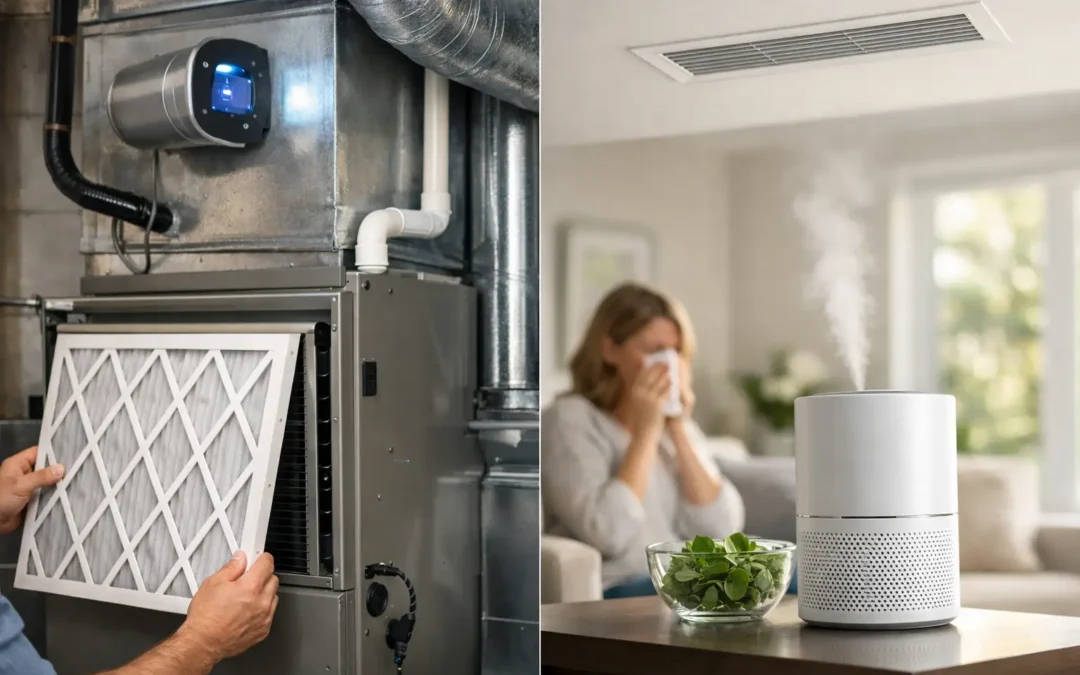
If allergy symptoms get worse after you come indoors, the problem may not be the pollen outside. Your HVAC system can either help remove airborne irritants or circulate them through every room. The best HVAC upgrades for allergies improve how your home filters particles, manages moisture, and brings in fresh air without sacrificing comfort or system performance.
For homeowners and property managers, the right solution is rarely a single product. A filter change may make a noticeable difference in one building, while another needs better humidity control, duct sealing, or a whole-home air cleaner. The most effective plan starts with the causes of your symptoms and the condition of the equipment already in place.
Why HVAC performance affects allergy symptoms
Your heating and cooling system moves a large volume of air every day. Along with that air can come pollen, pet dander, dust, mold spores, and other fine particles that trigger coughing, sneezing, itchy eyes, or congestion. Standard HVAC filters protect the equipment from larger debris, but they may not capture enough of the smaller particles that matter most to allergy sufferers.
Moisture is another concern. Northern Virginia’s humid summers can create favorable conditions for dust mites and mold, especially in basements, bathrooms, and homes with oversized or poorly maintained cooling equipment. On the other hand, very dry winter air can irritate nasal passages and make allergy symptoms feel more severe.
A well-designed indoor air quality upgrade addresses the air your family actually breathes, not just the temperature shown on the thermostat.
Best HVAC upgrades for allergies: What works best
Upgrade to the right high-efficiency filter
A higher-efficiency HVAC filter is often the most practical starting point. Filters are commonly rated by MERV, or Minimum Efficiency Reporting Value. In general, a filter in the MERV 11 to MERV 13 range can capture more pollen, pet dander, dust, and other airborne particles than a basic fiberglass filter.
Higher is not automatically better, however. A very dense filter can restrict airflow if your system is not designed for it. Restricted airflow may reduce heating and cooling performance, increase energy use, and put unnecessary strain on the blower motor. Before moving to a higher MERV rating, have a qualified technician confirm that the filter cabinet, return air system, and equipment can handle it.
The filter also has to be changed on schedule. A quality filter left in place too long becomes a barrier to airflow rather than a solution for cleaner air. Homes with pets, frequent cooking, construction nearby, or severe allergies may need more frequent filter checks.
Add a whole-home air cleaner
A whole-home air cleaner is installed as part of the HVAC system, usually near the return duct or air handler. Unlike a portable room unit, it treats air as it circulates throughout the home. Depending on the model, these systems can use enhanced media filtration, electronic collection, or other technologies to capture fine airborne particles.
This can be a strong option for households dealing with pet dander, recurring seasonal allergies, or dust that returns quickly after cleaning. It is also useful when family members spend time in multiple rooms rather than staying near one portable purifier.
Not every air cleaner works the same way, and maintenance requirements vary. Some need replacement media, while others require regular cleaning. The best choice depends on your system layout, the size of the home, and whether your main concern is particles, odors, or both. Clear maintenance expectations matter because an air cleaner only helps when it is kept in working condition.
Control humidity with a whole-home dehumidifier
Humidity control is one of the most overlooked allergy upgrades. When indoor humidity stays high, dust mites thrive and mold growth becomes more likely. A whole-home dehumidifier removes moisture from the air across the house, helping maintain a more comfortable environment even when the air conditioner is not running enough to manage humidity on its own.
Many homes feel clammy during spring and summer even though the thermostat is set correctly. This can happen when an air conditioner cools the home quickly but does not run long enough to remove adequate moisture. A dedicated dehumidifier can solve that comfort issue while reducing conditions that support common allergens.
For most homes, an indoor relative humidity level around 35% to 50% is a sensible target. The ideal setting can depend on your home, outdoor weather, and any existing moisture concerns. If there is an active leak, visible mold, or water damage, humidity equipment should be paired with correcting the source of the moisture.
Improve ventilation without inviting more pollen inside
Fresh air is valuable, but opening windows during high-pollen days is not always the answer. Mechanical ventilation can provide more controlled air exchange, particularly in tightly sealed homes, offices, and multi-family properties. Energy recovery ventilators and other ventilation solutions can help bring in outdoor air while limiting energy loss.
The trade-off is that outdoor air must be managed carefully. Ventilation equipment should include appropriate filtration and be sized correctly for the building. A system that brings in too much unfiltered outdoor air can worsen allergy symptoms during peak pollen seasons. The goal is balanced ventilation, not simply more outside air.
Seal and repair leaky ductwork
Duct leaks can pull dusty, unconditioned air from attics, crawl spaces, garages, or wall cavities into the HVAC system. That air may carry insulation fibers, mold spores, dust, and other irritants before it reaches your living space. Leaky ducts also reduce efficiency and make some rooms harder to heat or cool.
Professional duct sealing helps keep the air path controlled. It is particularly worthwhile when certain rooms are consistently dusty, there are hot or cold spots, or utility costs seem high without a clear explanation. Duct cleaning may be appropriate in specific cases, such as after renovation work or when there is confirmed contamination, but sealing leaks and maintaining filtration generally deliver more lasting results than cleaning alone.
Do not overlook maintenance and equipment sizing
Even the best indoor air quality upgrades cannot perform well in a neglected system. Dirty evaporator coils, clogged condensate drains, worn blower components, and damaged duct insulation can all affect air quality and humidity control. Routine maintenance gives a technician the opportunity to spot these issues before they become a larger comfort or health concern.
System sizing matters too. An oversized air conditioner can short-cycle, cooling the house quickly while leaving excess moisture behind. An undersized system may run constantly, struggle to maintain comfort, and accumulate wear faster. If allergies are paired with uneven temperatures, high humidity, or frequent breakdowns, it may be time to evaluate the system as a whole rather than adding one accessory.
How to prioritize upgrades for your home or property
Start with the simplest, most likely causes. If your current filter is low-efficiency or overdue for replacement, upgrading the filter and confirming proper airflow is the logical first move. If the home feels damp, smells musty, or has a history of basement moisture, humidity control deserves immediate attention.
For persistent symptoms throughout the home, a whole-home air cleaner and duct inspection may offer more value than several portable units. For a single bedroom or office, a portable purifier can still be helpful as a supplemental measure, but it does not address air quality in the rest of the building.
Commercial properties need a similar, but broader, assessment. Occupancy levels, operating hours, outdoor air requirements, and maintenance access all influence the right solution. A restaurant, office, daycare, and rental property can each have very different indoor air quality needs, even if occupants report the same allergy complaints.
Get recommendations based on your actual system
Allergy-focused HVAC improvements work best when they are matched to your equipment, airflow, and home conditions. A professional assessment can identify whether a higher-rated filter is safe for your system, whether humidity is outside the healthy range, and whether duct leaks or ventilation problems are bringing irritants indoors.
Aircon HVAC Solutions helps Northern Virginia homeowners and businesses evaluate practical indoor air quality upgrades with clear recommendations and dependable service. The goal is not to sell every available add-on. It is to create a cleaner, more comfortable indoor environment that your HVAC system can support for the long term.
When allergy season arrives, comfort should not depend on shutting every window and hoping for the best. A few well-chosen HVAC improvements can make the air inside your home feel like the place where you finally get relief.
