

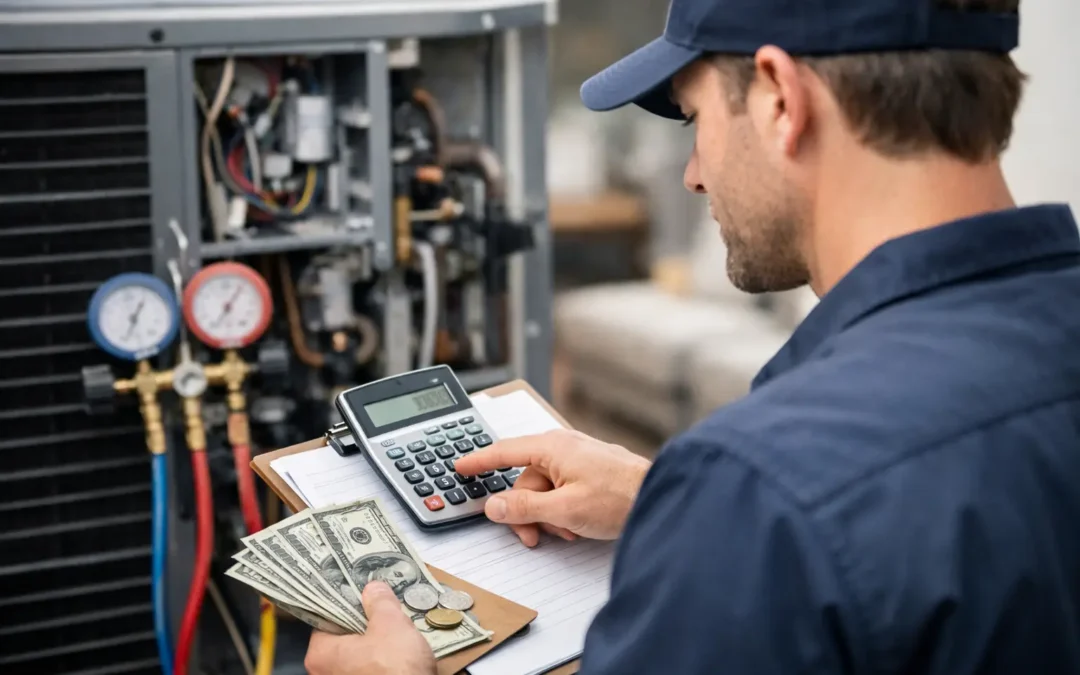
If your AC stops blowing cold air on a 90-degree afternoon or your furnace quits during a cold snap, the first question is usually not technical – it’s financial. Homeowners and property managers want to know how much does HVAC repair cost before they approve service, and the honest answer is that the price can vary quite a bit depending on the issue, the system, and how quickly the repair is needed.
A minor fix may cost less than a routine household appliance repair. A major component failure can run much higher, especially if the system is older or the parts are harder to source. The key is understanding what drives the cost so you can make a confident decision instead of guessing under pressure.
How much does HVAC repair cost on average?
In many cases, HVAC repair costs fall somewhere between $150 and $1,500. That is a broad range, but it reflects reality. A clogged condensate drain, faulty capacitor, or thermostat issue is usually on the lower end. Problems involving a blower motor, control board, refrigerant leak, or compressor are often much more expensive.
For many homeowners, the final invoice includes two parts: the service call or diagnostic fee and the repair itself. A diagnostic visit often ranges from about $75 to $200, depending on the company, time of day, and whether emergency service is involved. Once the issue is identified, labor and parts are added based on the actual repair.
Commercial HVAC repair can be higher because the systems are larger, more complex, and sometimes harder to access. Roof-mounted units, zoning issues, and business-hours scheduling can all add cost.
What affects HVAC repair cost?
The biggest factor is the part that failed. Replacing a small electrical component is usually straightforward. Replacing a major mechanical part is more labor-intensive and typically more expensive. If the repair involves refrigerant, the cost may rise further because leak testing, sealing the issue, and recharging the system all take time.
System type also matters. Central air systems, furnaces, heat pumps, ductless mini-splits, and packaged rooftop units each have different components and repair demands. Heat pumps, for example, handle both heating and cooling, so diagnosing performance issues can be more involved than with a single-purpose system.
Age plays a role too. Older systems often cost more to repair because parts may be discontinued, worn components may create multiple failures at once, and labor can take longer. In some cases, one repair reveals another issue waiting behind it.
Timing matters as well. Emergency evening, weekend, and peak-season service can carry a premium. If your system fails during the first heat wave of summer or the coldest week of winter, availability and urgency can affect pricing.
Common HVAC repairs and typical price ranges
Some repairs are relatively simple and affordable. Thermostat replacement often falls around $150 to $500, depending on whether you are installing a basic model or a smart thermostat. Capacitor replacement commonly ranges from $150 to $400. Contactor issues may land in a similar range.
Drain line clogs and minor electrical problems often cost a few hundred dollars rather than many hundreds. These are the kinds of issues that can shut a system down without meaning the whole unit is in bad shape.
Mid-range repairs tend to involve motors, relays, igniters, or control components. Blower motor repairs or replacement can range from roughly $300 to $900 or more, depending on the equipment. Control board replacement may fall between $400 and $1,000.
Higher-cost repairs usually involve refrigerant leaks, evaporator coils, condenser coils, or compressors. Refrigerant leak detection and repair may range from $300 to well over $1,500, depending on where the leak is and how much refrigerant is needed afterward. Compressor replacement can climb into the $1,200 to $2,500 range or more on some systems.
Those numbers are general benchmarks, not guaranteed pricing. The right way to look at them is as planning ranges, not promises.
Why the same repair can cost different amounts
Two homeowners can have the same symptom and receive very different quotes. That is because the symptom is not the repair. Warm air from vents could mean a thermostat problem, a capacitor failure, a refrigerant issue, an airflow restriction, or a compressor problem. One is relatively simple. Another may be close to replacement territory.
Brand and model also influence cost. Some manufacturers use proprietary parts or systems that take longer to service. Accessibility matters too. An indoor unit in a tight attic is harder to work on than one in an open utility room. A rooftop commercial unit may require additional labor and safety precautions.
The quality of the repair also matters. A low quote is not always a better value if it skips proper diagnosis, uses poor-quality replacement parts, or treats the symptom without fixing the root cause. Transparent pricing should tell you what failed, what is being replaced, and what you can expect afterward.
Repair or replace?
This is where cost becomes a decision, not just a number. If your repair is minor and the system is in otherwise good shape, fixing it is usually the smart move. But if the unit is older and the repair is expensive, replacement may be the better long-term investment.
A common rule of thumb is to think harder about replacement when a repair approaches 30 to 50 percent of the value of a new system, especially if the equipment is over 10 to 15 years old. That does not mean replacement is automatic. It means you should weigh repair cost against energy efficiency, reliability, warranty status, and the likelihood of future breakdowns.
For example, replacing a capacitor on an 8-year-old AC system is usually easy to justify. Replacing a compressor on a 15-year-old unit with a history of refrigerant issues is a different conversation.
How to keep HVAC repair costs from getting worse
The cheapest repair is often the one that never turns into an emergency. Many major failures start with smaller warning signs: weak airflow, unusual noises, short cycling, rising utility bills, musty odors, inconsistent temperatures, or water near the unit. Waiting can turn a manageable fix into a larger repair.
Routine maintenance helps catch these issues early. A seasonal tune-up can identify worn electrical parts, dirty coils, airflow restrictions, drainage problems, or low refrigerant signs before they create a full shutdown. It also helps your system run more efficiently, which reduces stress on major components.
Filter changes matter more than many people realize. Restricted airflow can strain the blower, reduce comfort, and contribute to icing or overheating. It is a small maintenance task that can help prevent larger service calls.
What to ask before approving a repair
If you are comparing quotes, ask what the diagnostic found, what part failed, whether there are any related issues, and whether the repair includes warranty coverage on parts or labor. You should also ask whether the technician sees the repair as a one-time fix or a sign of a bigger system problem.
For homeowners in Northern Virginia, where seasonal demand can hit hard in both summer and winter, response time matters almost as much as price. Fast service is valuable, but so is clear communication. A dependable contractor should be able to explain the repair in plain language and give you realistic options.
That is especially important for property managers and business owners. A comfort problem in one residence or tenant space can quickly become a scheduling, occupancy, or customer-service issue. In those cases, speed, workmanship, and transparency all have real value.
When a low quote is a red flag
Not every cheap repair is bad, but unusually low pricing can be a warning sign. If a company is not licensed, insured, or thorough in its diagnosis, you may end up paying twice – once for the quick fix and again for the proper repair later.
Professional HVAC service should include more than swapping parts until something works. It should involve identifying the cause, checking system performance, and making sure the repair actually restores safe and reliable operation. That is particularly important with gas furnaces, electrical components, and refrigerant-related work.
When comfort systems fail, most people want two things: a fair price and confidence that the problem is truly handled. That is why clear estimates, certified technicians, and responsive service matter as much as the number on the invoice.
If you are wondering how much does HVAC repair cost for your specific system, the most useful answer will always come from a proper diagnosis. General price ranges help you prepare, but an expert evaluation gives you something better – a clear path back to reliable comfort without unnecessary surprises.
