

A puddle near your indoor AC equipment, a musty smell from a vent, or an air conditioner that suddenly shuts off can all point to one small but essential component: the condensate drain. Knowing how to clean condensate line buildup can help prevent water damage and inconvenient cooling interruptions, especially during a humid Northern Virginia summer.
Your air conditioner removes moisture from indoor air as it cools. That water collects in a drain pan and flows through a PVC condensate line to the outside or an approved plumbing drain. Over time, algae, mildew, dust, and sludge can restrict that path. A little preventative care goes a long way, but a stubborn blockage should be handled before it creates a larger problem.
What a Condensate Line Does for Your AC
Condensation is a normal part of air conditioning. As warm, humid household air passes over the cold indoor evaporator coil, moisture turns into water. In summer, a working system may produce several gallons of water each day.
The condensate line carries that water away from the air handler or furnace cabinet. If the line clogs, water can back up into the drain pan, overflow onto nearby flooring or ceilings, and sometimes trigger a safety float switch that turns the AC off. That shutdown is protective, but it is never convenient when your home is already getting warm.
Many homeowners first notice a clog when water appears around the indoor unit. Others see water dripping from an emergency drain pipe near a roofline or porch. If your system is installed in an attic, garage, utility closet, or finished basement, acting quickly can limit damage to drywall, insulation, or flooring.
Signs Your Condensate Drain May Be Clogged
A drain line does not always fail without warning. Watch for water around the indoor unit, persistent musty odors when cooling runs, an AC system that starts but does not continue operating, or visible water coming from a secondary drain outlet.
You may also notice that the drain pan is full when you inspect the equipment. Do not ignore this, even if the water has not overflowed yet. A pan that repeatedly fills indicates the line is draining too slowly or not at all.
Not every water issue is a drain clog. Frozen evaporator coils, a damaged drain pan, an improperly sloped line, or a failed condensate pump can produce similar symptoms. If you are unsure of the cause, a professional diagnosis is safer than repeatedly pouring cleaner into the system.
How to Clean Condensate Line Safely
A basic cleaning is appropriate when you can access the indoor drain connection and the outdoor drain termination safely. Before you begin, turn the thermostat to Off. For added protection, switch off power to the indoor HVAC equipment at the breaker or service switch. Water, electrical components, and guesswork are not a good combination.
You will typically need a wet/dry vacuum, distilled white vinegar, a funnel, a clean rag, and gloves. Avoid using bleach or harsh drain chemicals. They can create strong fumes, damage some components, and do not solve every type of blockage. Never force a rigid wire or high-pressure air into the line, as it can disconnect PVC fittings or damage the drain system inside a wall.
Find the drain access point
Look near the indoor air handler or furnace for a white PVC pipe connected to the drain pan area. Many systems have a capped vertical section or tee fitting that provides access for cleaning. This is usually the best place to add vinegar.
If there is no obvious access point, do not remove piping at random. Some drain assemblies include traps, vents, safety switches, or multiple lines. Improper reassembly can allow water leaks or prevent the system from draining correctly.
Remove standing water if possible
Check the drain pan and the access opening for standing water. If water is near electrical wiring or the unit cabinet, stop and arrange service. If it is contained in an accessible pan, use a wet/dry vacuum carefully to remove it.
Next, locate the exterior end of the condensate line. It is often a small PVC pipe near the outdoor condenser, foundation, or another low point outside the home. Keep in mind that it may not be the only pipe in that area. Confirm you are working with the HVAC drain before using the vacuum.
Use a wet/dry vacuum at the outdoor drain outlet
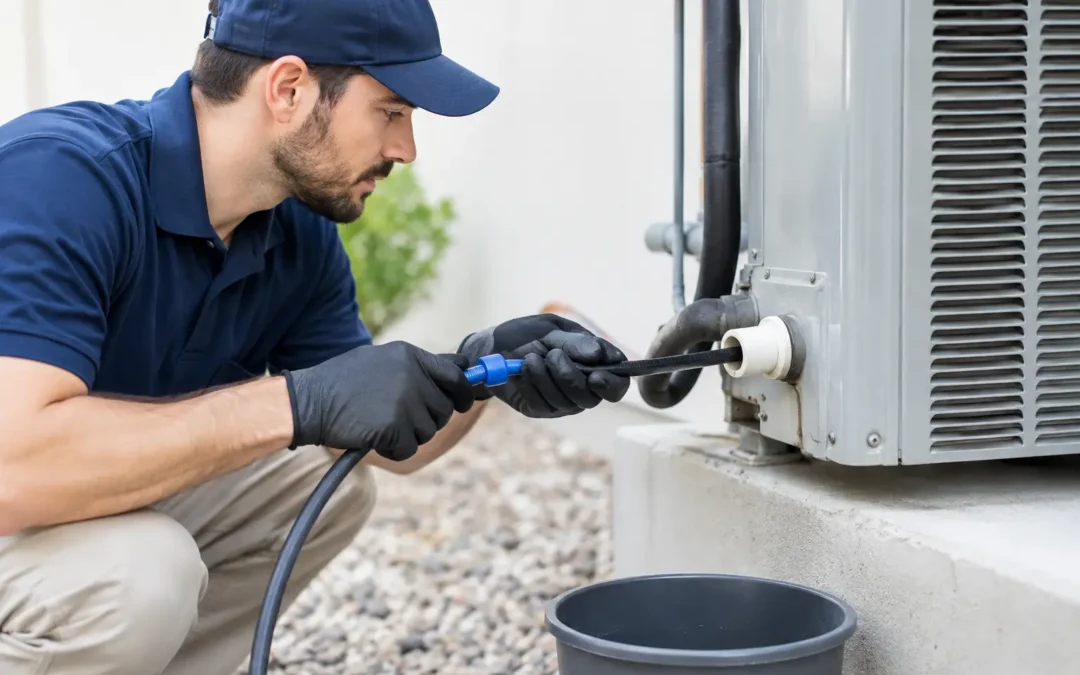
Place the vacuum hose over the end of the drain pipe and create a tight seal with a rag. Run the vacuum for one to two minutes. This can pull out algae, sludge, and loose debris without pushing a clog deeper into the line.
You may see dirty water or gelatin-like buildup in the vacuum. That is common and confirms the line needed attention. If nothing comes through but the indoor pan remains full, the blockage may be more severe, or the problem may be a disconnected line, failed pump, or frozen coil.
Flush the line from indoors
After vacuuming from outside, return to the indoor access tee. Slowly pour about one cup of distilled white vinegar into the line using a funnel. Vinegar helps break down light biological growth and reduces odor without the harshness of chemical drain cleaners.
Let it sit for about 30 minutes, then flush with a small amount of clean water. Do not overfill the drain opening. Watch the exterior outlet to confirm water flows freely. If it drains normally, replace the cap securely and restore power to the system.
For a line that was only lightly restricted, this simple process may restore normal drainage. If water backs up again during the flush, stop there. Continuing to add water can cause an overflow inside your home.
When DIY Cleaning Is Not the Right Fix
Cleaning a condensate line is maintenance, not a cure-all. Schedule HVAC service if the clog returns quickly, the line will not clear with vacuuming, the drain pan is cracked, or your AC keeps shutting down after the line appears clear.
You should also call for help if you see ice on refrigerant lines or the indoor coil, hear the condensate pump running continuously, or find water damage around the equipment. A frozen coil may be caused by airflow or refrigerant issues, and pouring vinegar into the drain will not correct either one.
Commercial systems and homes with attic air handlers deserve additional caution. Their drain configurations can be more complex, and a small leak can cause extensive damage before anyone notices it. Property managers should include drain inspections in seasonal maintenance rather than waiting for an overflow complaint.
Prevent Condensate Line Clogs Before They Start
For most homes, checking the condensate drain at the start of cooling season and again during the most humid part of summer is a practical routine. Homes with pets, heavy indoor dust, high humidity, or long AC run times may need more frequent attention.
A clean air filter helps more than indoor air quality. It reduces the dust that can accumulate on the evaporator coil and eventually make its way into the condensate system. Replace filters on the schedule recommended for your system and household conditions, rather than waiting until they look visibly dirty.
Annual professional maintenance provides a more complete check. A technician can inspect the drain pan, flush the line, test the float switch, verify the condensate pump if you have one, and look for the underlying causes of excess moisture or repeated clogs. This is particularly valuable before Virginia’s humid weather puts your cooling system under steady demand.
A Clear Drain Line Protects More Than Comfort
The goal is not just to get water moving again. A properly draining AC protects your equipment, your home, and the comfort your family depends on. If your drain line is overflowing, your cooling system will not stay on, or the cause is unclear, Aircon HVAC Solutions can provide prompt, professional help. A quick inspection now can keep a small drain issue from becoming a water-damage repair later.
