

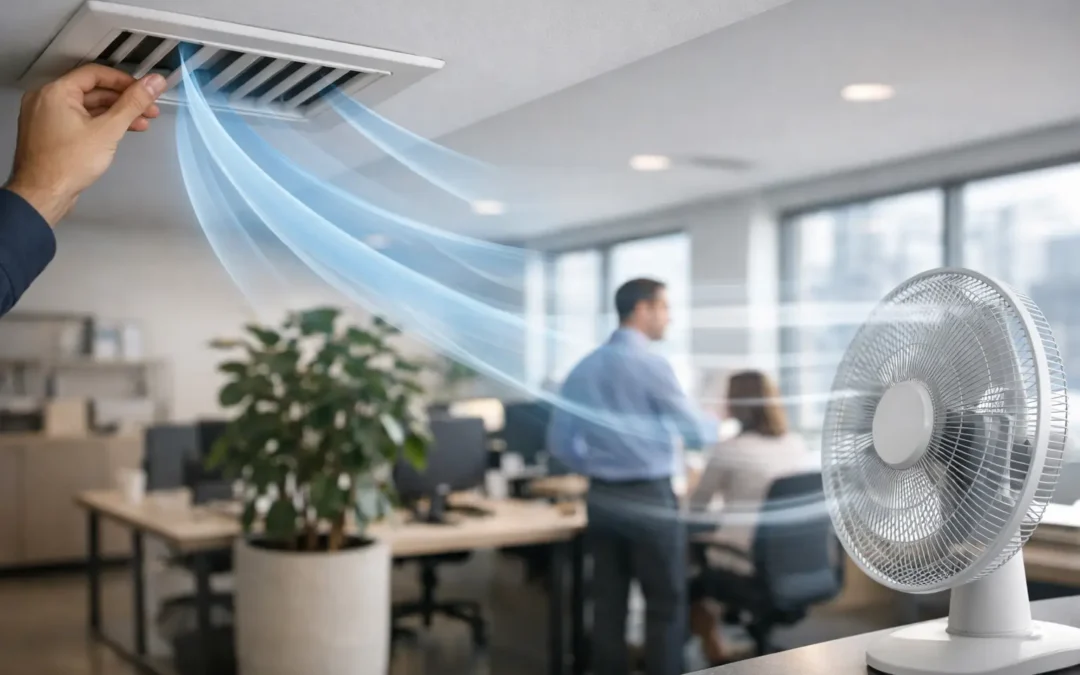
A bedroom that feels stale by morning, a second floor that stays warm while the first floor feels chilly, or a conference room that becomes stuffy before lunch can all point to the same issue: air is not moving where it needs to go. Knowing how to improve indoor airflow helps create more consistent comfort, supports better indoor air quality, and can reduce the strain on your heating and cooling equipment.
The right fix depends on why airflow is restricted. Sometimes the answer is as simple as replacing a clogged filter or moving furniture away from a return grille. Other times, the issue is hidden in the ductwork, equipment settings, or a ventilation system that needs professional attention.
How to Improve Indoor Airflow: Start With the Basics
Before changing equipment or adding accessories, check the areas that commonly restrict air movement. These small corrections can make a meaningful difference, especially if the problem developed gradually.
First, inspect your HVAC filter. A dirty filter makes it harder for the system to pull air through the return ducts. That can leave rooms feeling stuffy, reduce heating and cooling performance, and increase wear on the blower motor. Most homes need a filter check every month and a replacement every one to three months, although the right schedule depends on the filter type, pets, allergies, and how often the system runs.
Next, make sure supply vents and return grilles are open and unobstructed. Supply vents deliver conditioned air into a room. Return grilles pull air back to the HVAC system to be heated or cooled again. Both need clear space. Rugs, curtains, sofas, bookcases, and storage boxes can quietly interfere with circulation.
Closing vents in unused rooms may seem like a smart way to direct more air elsewhere, but it can create pressure problems in systems not designed for zoning. In many cases, keeping most vents open gives the system a more balanced path for airflow. If certain rooms consistently receive too much or too little air, the better answer may be professional balancing rather than shutting vents.
Help Air Move Between Rooms
Conditioned air needs a complete path: into the room, through the room, and back to the return side of the system. A room with a closed door and no easy return-air path can become uncomfortable even when its supply vent is working properly.
Keep interior doors open when practical, particularly in rooms that tend to feel warmer or cooler than the rest of the building. If privacy requires closed doors, check whether there is enough clearance beneath the door for air to move. Some homes also benefit from transfer grilles, jumper ducts, or dedicated return vents. These solutions are more involved, but they can solve persistent pressure and temperature issues without overworking the HVAC system.
Ceiling fans can help as well. In summer, set the fan to rotate counterclockwise to create a gentle downward breeze. In winter, reverse the direction to clockwise at a low speed, which helps circulate warm air that gathers near the ceiling. A fan does not lower or raise the room temperature on its own, but it can make the space feel more comfortable and help reduce hot or cold pockets.
Look for Problems in Ducts and Registers
When one or two rooms have poor airflow while others are comfortable, ductwork deserves a closer look. Flexible ducts can become kinked, crushed, or disconnected. Older duct systems may have leaks that release conditioned air into an attic, crawlspace, utility area, or ceiling cavity before it reaches the room.
Visible dust around registers, whistling sounds, weak airflow from a single vent, and rooms that never match the thermostat setting are all useful clues. So are high utility bills with no clear explanation. Duct leaks and restrictions are not always visible from the living space, which is why a professional inspection can be valuable.
A technician can measure airflow, inspect accessible duct runs, evaluate static pressure, and identify whether the blower, duct design, or register placement is causing the problem. This matters because adding a stronger HVAC unit to undersized or poorly designed ductwork can make comfort problems worse, not better.
Do Not Ignore Return-Air Problems
Many property owners focus only on the vents blowing air into a room. Return airflow is just as important. If return grilles are too small, blocked, dirty, or poorly located, the HVAC system cannot circulate air efficiently.
A large home, finished basement, addition, or renovated commercial space may need additional returns to support the new layout. This is especially common where walls, doors, or built-in features have changed how air moves through the building. A qualified HVAC professional can determine whether an added return, duct modification, or balancing adjustment is appropriate.
Use Ventilation to Bring in Fresh Air Safely
Airflow and ventilation are related, but they are not exactly the same. Your HVAC system circulates indoor air. Ventilation replaces some stale indoor air with fresh outdoor air and exhausts pollutants, moisture, and odors.
Bathrooms, kitchens, laundry areas, and commercial restrooms rely on exhaust fans for this reason. Run bathroom fans during showers and for about 15 to 20 minutes afterward to help control humidity. Use the kitchen exhaust fan when cooking, especially when boiling, frying, or using a gas range. If these fans are noisy, weak, or vent into an attic rather than outdoors, they may not be doing their job.
Opening windows can improve fresh-air exchange on mild days, but it is not always the best answer in Northern Virginia. Summer humidity, pollen, wildfire smoke, outdoor odors, and extreme temperatures can make open windows less helpful. Controlled ventilation options, such as energy recovery ventilators or properly designed fresh-air systems, can provide outside air while limiting energy loss and excessive humidity.
Manage Humidity Along With Airflow
A space can feel stuffy even when the vents are moving plenty of air. High humidity is often the reason. Humid air makes summer temperatures feel warmer and can encourage musty odors, condensation, and mold growth. In winter, excessive indoor humidity can collect on cold windows and contribute to moisture damage.
Your air conditioner removes some humidity while it runs, but an oversized system may cool the home too quickly and shut off before it has removed enough moisture. A standalone dehumidifier can help in a damp basement or a localized problem area. For whole-home concerns, a professionally sized dehumidifier integrated with the HVAC system is often the more reliable solution.
Low humidity can also affect comfort during heating season, causing dry skin, scratchy throats, and static electricity. The goal is not simply more or less moisture. It is balanced humidity that supports comfort without creating conditions for condensation or biological growth.
When Airflow Problems Need Professional Service
Call for HVAC service if airflow suddenly drops, the system makes unusual noises, some rooms are consistently uncomfortable, or the equipment runs for long periods without reaching the thermostat setting. Burning smells, water around equipment, ice on refrigerant lines, and repeated breaker trips need prompt attention.
For property managers and business owners, uneven airflow can also affect employee comfort, tenant satisfaction, equipment reliability, and operating costs. Larger spaces may need air balancing, zoning controls, duct modifications, or ventilation upgrades that account for occupancy and room use.
Aircon HVAC Solutions helps homeowners and businesses identify the source of airflow problems rather than applying a one-size-fits-all fix. A clear assessment can show whether the solution is routine maintenance, duct repair, filtration changes, humidity control, or a system improvement designed for the building.
Comfort should not depend on which room you are standing in. Start with clear vents, a clean filter, and sensible fan use, then get experienced help when the problem points beyond the basics. The result is air that feels fresher, rooms that stay more even, and an HVAC system that can do its job with less effort.
