

A Northern Virginia summer afternoon is a bad time to discover that your AC is only moving warm air. Air conditioner repair is often less disruptive and less costly when you act on early warning signs instead of waiting for a complete system failure. Whether you manage a home, rental property, office, or retail space, knowing what to watch for can protect your comfort, equipment, and budget.
When Air Conditioner Repair Is the Right Call
An AC system does not need to stop completely before it needs professional attention. Many problems begin as small changes in performance: longer cooling cycles, uneven temperatures, unusual sounds, or a utility bill that rises without a clear reason.
If your system is still cooling but struggling to keep up, scheduling service promptly can prevent additional strain on key components. A clogged drain line, weak capacitor, worn contactor, refrigerant issue, dirty coil, or failing blower motor can all affect cooling performance. The cause matters because the correct repair for one issue may do nothing for another.
A qualified technician should inspect the full system rather than replace parts based on a symptom alone. That means checking airflow, electrical connections, refrigerant operation, drainage, thermostat communication, and the condition of indoor and outdoor components. Clear diagnosis helps you make a confident decision before approving work.
Signs Your AC Needs Professional Attention
Some warning signs call for a service visit soon, while others require a faster response. If the system is running but your home or business feels humid, stuffy, or unevenly cooled, it is worth addressing before the next heat wave pushes the equipment harder.
Pay attention when you notice four or more of these issues:
- Warm air coming from supply vents when the thermostat is set to cool
- Weak airflow in one room or throughout the building
- Grinding, buzzing, rattling, screeching, or repeated clicking sounds
- Water around the indoor unit or signs of a clogged condensate drain
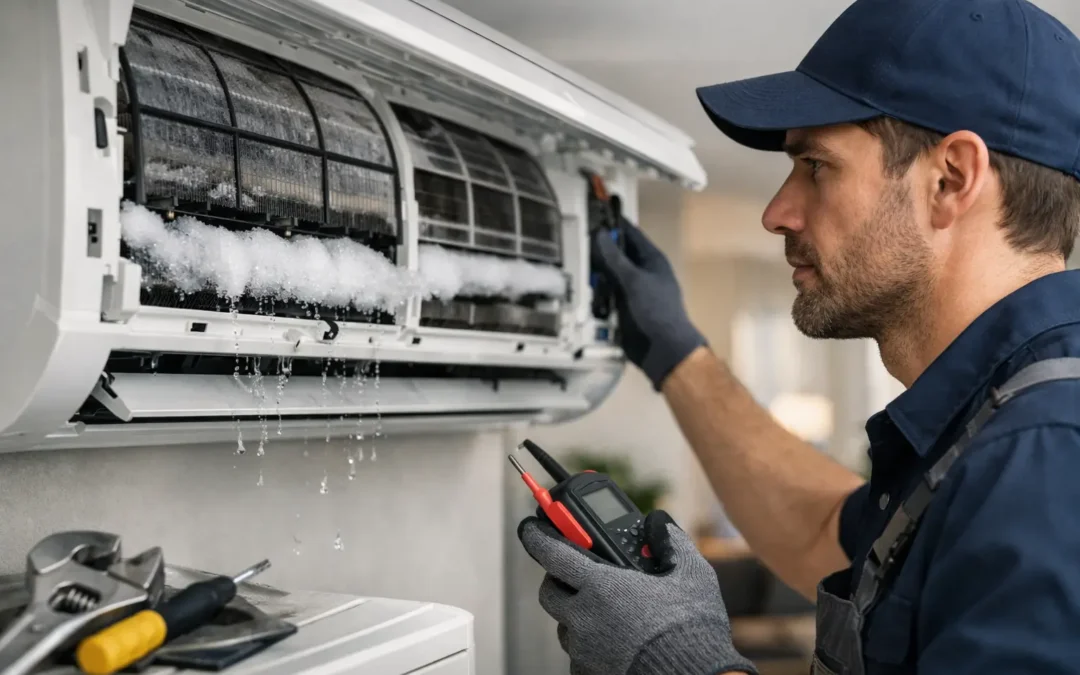
- Ice on refrigerant lines, the indoor coil, or outdoor equipment
- Frequent cycling, where the system turns on and off repeatedly
- Unusual odors, including musty smells or a burning electrical odor
- A sudden increase in energy costs without a change in usage
A burning smell, electrical buzzing, tripped breakers, or visible smoke should be treated as urgent. Turn the system off if it is safe to do so, and request professional help. Continuing to run equipment with an electrical problem can cause further damage and create a safety concern.
What You Can Check Before Calling
A few basic checks may solve a simple comfort issue, but they should not replace professional service when the system is not operating normally. Start with the thermostat. Confirm it is set to Cool, the temperature setting is below the current indoor temperature, and the batteries are working if your thermostat uses them.
Next, inspect the air filter. A heavily loaded filter restricts airflow and can make your AC run longer than it should. Replace a disposable filter with the correct size and rating, or clean a reusable filter according to the manufacturer’s instructions. If you recently changed the filter, make sure it was installed in the right direction.
Check that indoor supply vents are open and not blocked by furniture, rugs, or boxes. Outside, keep leaves, grass clippings, and stored items away from the outdoor condenser. The unit needs space to release heat efficiently.
Do not attempt to open electrical panels, add refrigerant, chip ice off coils, or repair wiring yourself. Those tasks require proper tools, training, and safety procedures. If you see ice, turn cooling off and contact a technician. Running an iced system can damage the compressor, which is one of the most expensive AC components to replace.
Why AC Problems Often Get Worse in Hot Weather
Air conditioning systems work hardest when outdoor temperatures are high and demand is constant. A part that was barely functioning during mild weather may fail after hours of continuous operation. Low airflow, dirty coils, electrical wear, and refrigerant problems become more noticeable because the system has less room to compensate.
This is also why a repair can seem sudden even when the underlying issue has been developing for weeks. Your AC may have been using extra energy to maintain the thermostat setting, then finally reaches the point where it cannot keep up.
For property managers and business owners, delayed repairs can create larger issues than an uncomfortable room. Excess humidity can affect indoor air quality, encourage musty odors, and make tenants, employees, or customers uncomfortable. Quick attention protects both the equipment and the people who rely on it.
Repair or Replace: How to Make the Better Decision
Not every service call leads to a replacement recommendation. Many AC problems can be repaired effectively, especially when the system has been maintained and the issue is isolated. A capacitor, fan motor, drain line, thermostat, or electrical component repair may restore dependable cooling without requiring a new unit.
Replacement may make more sense when a system is older, has repeated breakdowns, uses outdated refrigerant, or needs a major component repair. The right choice depends on more than equipment age. Consider repair history, cooling performance, energy use, available warranty coverage, and how long you plan to own or manage the property.
A trusted HVAC professional should explain the findings in plain language and give you options. The lowest immediate cost is not always the best long-term value, but neither is replacement automatically the answer. Transparent pricing and an honest assessment give you the information to choose what fits your property and budget.
What to Expect From a Professional Air Conditioner Repair Visit
A productive service visit starts with listening. Let the technician know when the problem began, whether it happens at certain times of day, what sounds or odors you noticed, and whether the system has recently needed repairs. Those details can shorten the diagnostic process.
The technician should inspect the equipment, identify the likely cause, and communicate recommended repairs before work begins. If more than one option is available, ask about the expected benefits, limitations, and cost of each. You deserve to understand what is being repaired and why.
After the repair, the system should be tested for normal operation. That may include verifying temperature change, airflow, electrical readings, drainage, and cycling. If a part is replaced, ask what maintenance habits can help protect the new component and reduce unnecessary strain on the system.
Aircon HVAC Solutions provides certified, insured service for homeowners and businesses that need responsive AC support across Northern Virginia. The goal is not simply to get the unit running again. It is to restore reliable comfort with careful workmanship, clear communication, and repairs that address the actual problem.
Maintenance Helps Reduce Surprise Breakdowns
Maintenance cannot prevent every failure, especially as components age, but it gives small problems a chance to be found early. Seasonal service typically includes inspecting electrical parts, checking refrigerant performance, cleaning components as needed, confirming safe drainage, and evaluating overall system operation.
Homeowners can support that work by changing filters regularly and keeping the outdoor unit clear. Commercial properties may need a more structured maintenance schedule because longer operating hours, higher occupancy, and multiple zones place greater demands on equipment.
If your AC is making new noises, failing to cool consistently, leaking water, or driving up energy costs, do not wait for the next extreme-temperature day. A timely evaluation can help you understand the problem, avoid preventable damage, and get back to the steady comfort your property needs.
