

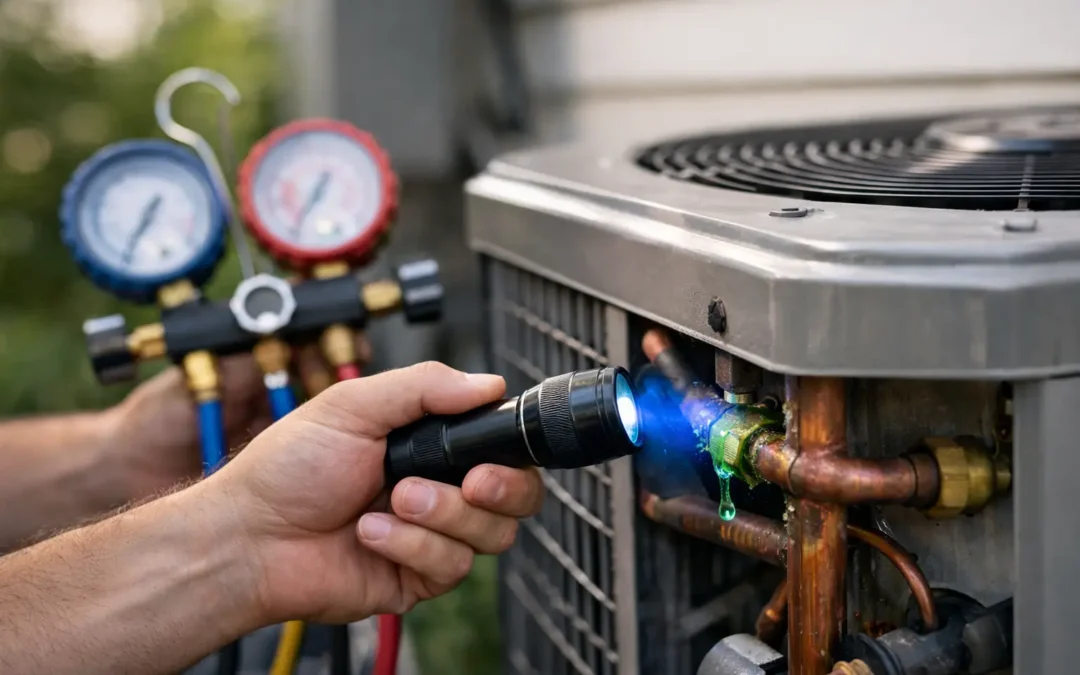
When your AC runs for hours but the house still feels warm, the problem may not be your thermostat or the summer heat. Learning how to spot refrigerant leak symptoms can help you act before a struggling system turns into a costly compressor repair or a complete cooling failure.
Refrigerant is the fluid that carries heat out of your home. Your air conditioner does not normally use it up, so a low refrigerant level almost always points to a leak. The leak itself may be small and hidden, but its effects often show up in your comfort, energy bills, and equipment performance.
How to Spot a Refrigerant Leak Before AC Failure
A refrigerant leak rarely announces itself with one obvious sign. More often, homeowners notice a few changes that get worse over several days or weeks. Paying attention to those changes gives you a better chance of scheduling service before the system is under serious strain.
Your home is not cooling like it used to
A low refrigerant charge limits your AC’s ability to absorb heat indoors. You may set the thermostat to 72 degrees, hear the equipment running normally, and still find rooms stuck in the upper 70s. Some rooms may feel comfortable while others stay warm, especially if the system is already working hard during a Northern Virginia heat wave.
Poor cooling can also come from a dirty air filter, ductwork issues, or an undersized system. That is why a professional diagnosis matters. Still, cooling that steadily declines without an obvious reason is a common refrigerant leak warning sign.
The system runs longer and your energy bill rises
An air conditioner with the correct refrigerant charge can move heat efficiently. When refrigerant escapes, the unit must run longer to reach the thermostat setting, if it can reach it at all. That extended runtime puts more wear on the equipment and can create a noticeable jump in monthly utility costs.
Look for a pattern rather than one unusually high bill. A heat wave can increase usage for any household, but consistently longer cooling cycles combined with weaker airflow or warmer indoor temperatures deserve attention.
Ice forms on refrigerant lines or the indoor coil
It may seem strange, but ice on AC components can indicate a refrigerant problem. Low refrigerant can cause the evaporator coil inside your indoor unit to become too cold. Moisture in the air then freezes on the coil, and ice may eventually appear on the larger insulated copper line outside near the condenser.
Turn the cooling system off if you see ice. Continuing to operate it can damage the compressor. Let the equipment thaw naturally, switch the thermostat fan setting to “On” if needed to circulate air, and arrange a professional inspection. Do not chip at ice or use sharp tools around the coil or refrigerant lines.
You hear hissing or bubbling near the equipment
A larger leak may create a faint hissing sound as pressurized refrigerant escapes. Bubbling or gurgling can also occur when refrigerant moves through the line set with air or moisture present. These sounds are not always easy to hear, and a noisy outdoor unit can hide them.
If a new hiss or bubbling sound appears alongside weak cooling, treat it as a reason to call for service. Do not try to tighten fittings, open panels, or handle refrigerant lines yourself.
Indoor air feels humid or uneven
Your AC does more than lower the temperature. It also removes humidity as warm indoor air passes over the cold evaporator coil. When refrigerant is low, the system may cool poorly and leave the home feeling sticky, even when the thermostat says the temperature is close to your setting.
You might notice clammy bedrooms, a musty feeling in lower levels, or a greater need to lower the thermostat just to feel comfortable. High outdoor humidity, drainage issues, and ventilation problems can contribute too, but refrigerant level should be checked when these comfort changes occur with other AC symptoms.
What You Can Check Safely
Homeowners and property managers do not need to diagnose a leak on their own. A few simple observations can give your HVAC technician useful information and help rule out basic airflow concerns.
First, check the thermostat. Confirm it is set to Cool, the desired temperature is lower than the current room temperature, and the batteries are working if your thermostat uses them. Next, inspect the air filter. A severely clogged filter restricts airflow and can also cause coil icing, so replace it if it is dirty.
Then, look at the outdoor unit from a safe distance. Clear away leaves, grass clippings, and other debris that block the condenser. Note whether the fan is running and whether you see frost on the insulated refrigerant line. Inside, listen for unusual sounds and pay attention to whether air from supply vents is weaker or warmer than usual.
For commercial properties, document the affected zones, operating hours, thermostat readings, and any visible icing. This information can help identify whether the concern is isolated to one system or affecting multiple areas of the building.
Avoid these do-it-yourself steps:
- Do not add refrigerant from a store-bought kit.
- Do not use leak sealants or chemical additives.
- Do not open electrical panels or remove sealed equipment covers.
- Do not keep running a frozen air conditioner to “see if it clears up.”
Adding refrigerant without finding the leak only provides a temporary result, and the incorrect charge can reduce efficiency or harm the system. Refrigerant handling and leak repairs require trained, properly equipped HVAC professionals.
Why a Leak Needs More Than a Refrigerant Recharge
A common mistake is to think low refrigerant simply means the system needs a refill. In a properly operating air conditioner, refrigerant remains in a closed loop. If the charge is low, it escaped somewhere.
A qualified technician will inspect the system, measure operating pressures, and use appropriate leak-detection methods to identify the source. Leaks can develop at line connections, service valves, coils, or damaged sections of copper tubing. The right repair depends on the leak location, the condition and age of the unit, and the type of refrigerant it uses.
In some cases, repairing a small accessible leak and recharging the system is a practical solution. In other cases, a badly corroded evaporator coil or aging system may make replacement the better long-term value. A dependable technician should explain the findings clearly, outline the available options, and provide transparent pricing before work begins.
When to Call for HVAC Service Right Away
Schedule service promptly if your AC is blowing warm air, freezing up, cycling continuously, or failing to maintain a safe indoor temperature. This is especially urgent for older adults, young children, pets, and businesses where heat can affect customers, staff, inventory, or equipment.
You should also call if you smell a sharp chemical odor near the unit, hear a persistent hissing sound, or see oil residue around refrigerant line connections. While many leaks are gradual, a more significant loss of refrigerant can cause the compressor to overheat. The compressor is one of the most expensive components in an air conditioning system, so early service can protect both comfort and your budget.
Aircon HVAC Solutions provides professional AC diagnostics and repair for homeowners and businesses throughout Northern Virginia. A trained technician can determine whether refrigerant is truly the issue, locate the cause, and recommend a repair that supports dependable cooling rather than a short-lived fix.
Can Regular Maintenance Prevent Refrigerant Leaks?
Maintenance cannot prevent every leak. Age, vibration, corrosion, and wear can affect refrigerant lines and coils over time. However, routine service can catch performance changes early, keep coils clean, confirm proper airflow, and identify developing concerns before they become an emergency.
For homeowners, changing filters on schedule and keeping the outdoor unit clear are simple ways to reduce unnecessary strain. For property managers and commercial clients, planned maintenance makes it easier to track each system’s performance and address concerns before tenants or customers lose cooling.
If your AC has started cooling less effectively, do not wait for the hottest day of the season to find out why. A timely inspection can restore comfort, protect your equipment, and give you clear answers before a small refrigerant issue becomes a much bigger interruption.
