

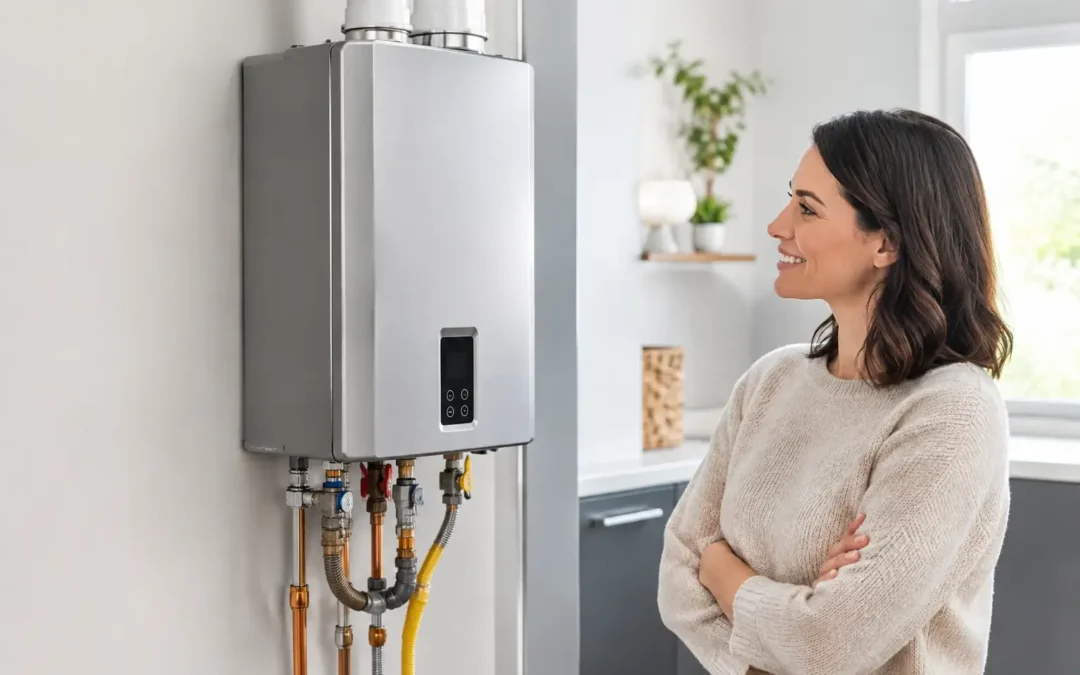
A morning shower should not turn cold because someone started the dishwasher downstairs. For households with growing families, busy schedules, or frequent guests, a tankless water heater Centreville homeowners install can provide a more dependable way to meet daily hot water demand. The right system delivers hot water as it is needed, but the right size and installation matter far more than the label on the unit.
Tankless water heaters are a smart fit for many Northern Virginia homes and businesses. They are not automatically the best fit for every property, though. Understanding how they work, what affects performance, and when a traditional tank water heater may still make sense helps you make a confident decision.
How a tankless water heater changes daily comfort
A traditional water heater stores and heats a set volume of water, commonly 40 to 75 gallons. Once that stored supply is used, the tank needs time to recover. A tankless model heats cold water as it passes through the unit. When a hot-water fixture opens, the system detects the flow and activates its heat exchanger.
The main benefit is not truly unlimited hot water under every condition. It is continuous hot water within the unit’s rated capacity. If the system is properly sized, you can run showers, faucets, and appliances with far less risk of exhausting a tank. If too many fixtures demand hot water at once, even a tankless unit can be pushed beyond its flow-rate limit.
For many Centreville homeowners, that distinction matters. A household that regularly has two showers running while a washing machine or dishwasher is operating needs equipment selected for peak demand, not average use. Professional sizing protects the comfort that makes the upgrade worthwhile.
Why homeowners consider tankless water heater service in Centreville
The space savings are immediate. A wall-mounted tankless unit can free up room in a utility area, garage, or mechanical closet. That can be especially valuable in homes where every square foot has a purpose.
Efficiency is another reason people consider the change. Because a tankless water heater does not keep a large tank of water hot around the clock, it can reduce standby energy losses. Actual savings depend on your hot water habits, fuel source, existing equipment, and the model selected. Homes with consistent hot water use often see the strongest value over time.
Tankless systems also have a longer potential service life than many conventional tank heaters when they are installed correctly and maintained on schedule. There is no storage tank to corrode and eventually leak, although internal components still need care. Mineral scale, ignition parts, venting, water connections, and system settings all deserve professional attention.
A tankless system can also be a practical option for small commercial spaces, offices, salons, and rental properties where reliable hot water and efficient use of mechanical-room space are priorities. Commercial demand requires careful calculations, since a system that works well for a home may not meet the needs of multiple restrooms or service areas.
Sizing is the decision that matters most
Tankless water heater sizing is based largely on two numbers: the gallons per minute needed during peak use and the temperature rise required to heat incoming water. The colder the incoming water, the more work the heater must do to deliver your preferred outlet temperature.
A simple fixture count is not enough. Showerheads vary in flow rate, dishwashers and washing machines use hot water differently, and household routines often create short periods of high demand. A technician should ask when hot water is used, how many bathrooms are active at once, and whether the home has high-flow fixtures or a soaking tub.
Fuel supply also affects sizing. Gas tankless units may require a larger gas line than the existing water heater uses. Electric tankless models can require substantial electrical capacity and dedicated circuits. Venting requirements, condensate drainage for high-efficiency gas units, and the placement of the equipment must be evaluated before installation begins.
Choosing a lower-capacity model to reduce the upfront price can lead to inconsistent temperatures and frustration. Oversizing can also add unnecessary cost. The goal is a system matched to your property, your usage, and local installation requirements.
What installation may involve
Replacing a traditional water heater with a tankless model is more involved than swapping one appliance for another. The existing location may work, or a different placement may provide better access, venting, and serviceability. Outdoor installations are possible in some situations, but Northern Virginia winters require careful freeze protection and manufacturer-approved installation practices.
For gas units, installation may include modifying the gas piping, adding new intake and exhaust venting, and setting up a condensate line. For electric units, the electrical panel must have enough capacity for the added load. Water lines may need updates, particularly if shutoff valves, isolation valves, or pressure-control components are missing or outdated.
Permits and code compliance are part of doing the work correctly. They are not paperwork to overlook. Proper installation protects system performance, supports manufacturer warranty requirements, and helps prevent safety issues involving combustion, venting, gas connections, or electrical service.
At Aircon HVAC Solutions, the process starts with an assessment of the home or building rather than a one-size-fits-all recommendation. Clear pricing and a direct explanation of the work help customers understand what the installation requires before the project moves forward.
The maintenance that keeps performance steady
Tankless water heaters need maintenance, especially in areas with mineral-heavy water. Scale can build up inside the heat exchanger, restricting water flow and forcing the unit to work harder. Over time, that can affect efficiency, temperature consistency, and component life.
Most systems benefit from periodic flushing, with the appropriate interval depending on water quality, system use, and manufacturer guidance. During maintenance, a technician can also inspect the venting, combustion components, water and gas connections, filters, error codes, and condensate system where applicable.
Do not wait for an error code or a sudden temperature issue to think about maintenance. Preventive service is usually simpler and less disruptive than addressing a system that has already lost performance. It also gives homeowners and property managers a chance to identify developing concerns before a no-hot-water situation interrupts the day.
When a conventional tank may be the better choice
Tankless water heaters offer meaningful benefits, but they are not the only reliable option. A conventional water heater may be the better choice when a property has modest hot water needs, limited budget for gas-line, venting, or electrical upgrades, or a layout that makes tankless installation impractical.
A high-quality tank heater can provide dependable service when sized correctly and maintained. In some replacement situations, it may also be the faster and more cost-effective solution. The best decision should account for upfront installation cost, anticipated operating cost, long-term maintenance, household demand, and the condition of your existing infrastructure.
If your current tank is leaking, producing rusty water, making unusual noises, or failing to hold a steady temperature, prompt service matters. A technician can help determine whether repair is reasonable or whether replacement will better protect your comfort and property.
Choosing the right local installer
The equipment is only one part of a successful tankless upgrade. Look for an installer who evaluates demand instead of relying on assumptions, explains the scope of any gas, electrical, venting, or plumbing changes, and provides transparent pricing. Ask how the system will be sized, what maintenance it will need, and how service support will be handled after installation.
A well-planned tankless water heater can make busy mornings, laundry days, and guest weekends easier to manage. Schedule a professional assessment before choosing a model, and you can move forward with a system designed for the hot water your property actually needs.
