

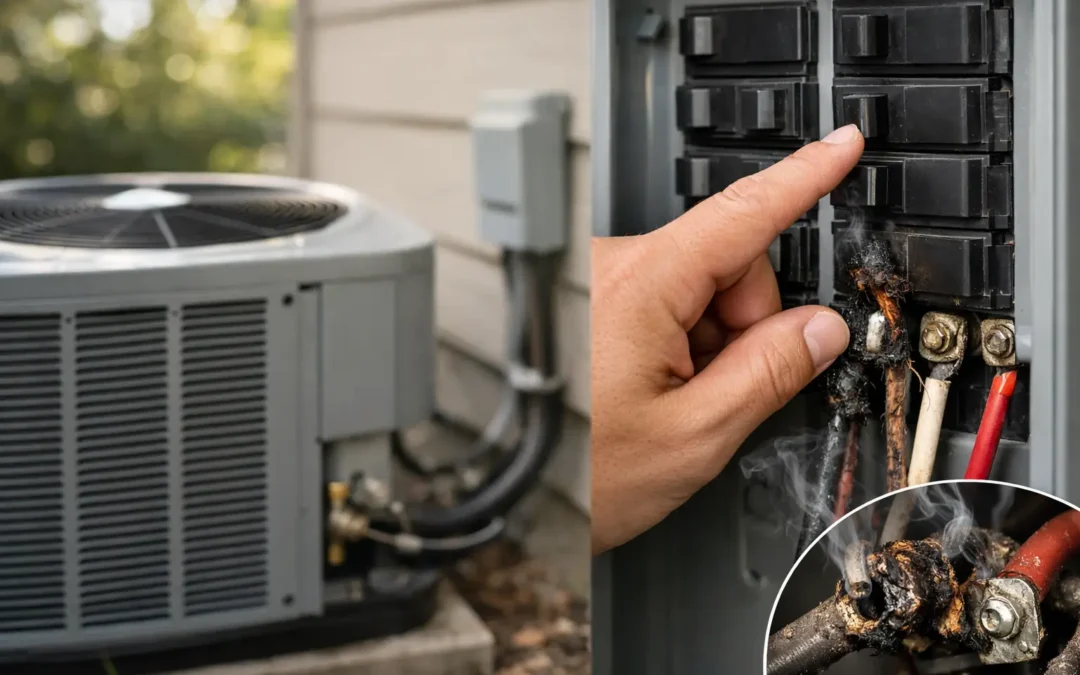
A breaker that trips when your air conditioner starts is more than an inconvenience on a hot Northern Virginia afternoon. If you are asking, “why does AC breaker trip,” the short answer is that the electrical circuit is detecting a condition it is designed to stop before wires, equipment, or people are harmed. The longer answer is that the source may be anything from a clogged air filter to a failing compressor.
Resetting the breaker might restore cooling temporarily, but repeated trips are a signal to pause and find the cause. A dependable repair starts with identifying whether the problem is in the AC equipment, the wiring, or the electrical circuit that serves it.
What an AC Breaker Is Designed to Do
Your air conditioner draws a significant amount of power, especially when the outdoor unit starts. The dedicated breaker in your electrical panel protects that circuit from excessive current, overheating, and certain electrical faults. When the system pulls more electricity than the circuit can safely handle, the breaker opens and cuts power.
That protective action does not automatically mean your AC needs replacement. Some issues are relatively straightforward to correct. Others require prompt professional service because continuing to reset the breaker can damage expensive components or create an electrical safety risk.
A breaker that trips once during an unusual event may not be cause for alarm. A breaker that trips every time the AC turns on, trips after running for a few minutes, or will not stay reset needs attention.
Why Does an AC Breaker Trip? The Most Common Causes
The timing of the trip gives a technician useful clues. Does it happen immediately when you turn the system on? Does cooling run for a while before power cuts out? Is the indoor unit operating while the outdoor condenser remains off? Each pattern can point toward a different issue.
A dirty filter or restricted airflow
A severely clogged return-air filter can restrict airflow across the indoor evaporator coil. Over time, the coil can freeze, forcing the system to work harder and sometimes causing components to overheat. Dirty coils, closed supply vents, blocked return grilles, and blower motor problems can contribute to the same strain.
Changing a dirty filter is a reasonable homeowner task. Use the filter size and type recommended for your system, and avoid assuming that the most restrictive filter is always best. A very high-density filter may reduce airflow if your system is not designed for it. If the breaker continues to trip after replacing a visibly dirty filter, the issue likely extends beyond routine maintenance.
A failing capacitor or hard-starting compressor
The outdoor unit needs a strong electrical surge to start the compressor and fan. A weak run capacitor can make starting more difficult, while a worn compressor may draw unusually high current at startup. This is often called a hard-start condition.
You may notice a humming sound from the outdoor unit, followed by a trip, or hear the unit attempt to start several times without running. Because capacitors retain electrical charge and the condenser contains high-voltage parts, this is not a safe do-it-yourself repair. A qualified HVAC technician can test the electrical readings and determine whether a component replacement will resolve the problem.
Dirty outdoor coils or a failing condenser fan
Your outdoor condenser releases heat from the home. When its coil is covered with dirt, grass clippings, leaves, or cottonwood debris, heat cannot escape efficiently. The AC runs longer and hotter, increasing stress on the compressor and electrical components.
A condenser fan that is not turning, turns slowly, or makes grinding noises can produce a similar result. The system may run until it overheats and trips the breaker. Homeowners can keep vegetation trimmed back and gently clear loose debris from around the unit with the power off. Coil cleaning and fan diagnosis are better left to a service professional, who can avoid damaging delicate coil fins or electrical connections.
A short circuit or damaged wiring
Damaged insulation, loose connections, worn contactors, water intrusion, and rodent damage can create a short circuit or ground fault. In these cases, the breaker may trip immediately when the AC attempts to start. You might notice a burning odor, buzzing, scorch marks, or a breaker that will not remain in the ON position.
Turn the system off and do not continue resetting the breaker if you see or smell signs of electrical damage. Electrical faults require careful diagnosis at the panel, disconnect box, and HVAC equipment. This is a situation where fast, professional service protects both your comfort and your property.
An overloaded or improperly sized circuit
Central air conditioning should generally operate on its own correctly sized circuit. If other heavy electrical loads have been added to the same circuit, or if a breaker, wire, or disconnect was incorrectly sized during installation or a previous repair, the circuit may trip even when the AC itself is operating normally.
The solution is not to install a larger breaker. Oversizing a breaker without verifying the wire size and equipment requirements can allow wiring to overheat before the breaker trips. An HVAC technician and, when needed, a licensed electrician should confirm the equipment’s electrical specifications and the condition of the circuit.
Low refrigerant or a mechanical system problem
Low refrigerant is often described as an AC “needing a recharge,” but refrigerant does not get used up like fuel. A low charge usually means there is a leak. Low refrigerant, a restricted metering device, or internal compressor wear can make the unit run inefficiently and overheat.
These problems may cause the breaker to trip after the system has operated for several minutes rather than immediately. Weak cooling, ice on refrigerant lines, hissing sounds, and higher indoor humidity are additional warning signs. Proper repair involves finding and correcting the underlying issue, not simply adding refrigerant.
What to Do When Your AC Breaker Trips
Start by turning the thermostat to OFF. Go to the electrical panel and locate the dedicated AC breaker. A tripped breaker may sit between ON and OFF, so move it fully to OFF before resetting it to ON.
You may reset it once after checking for obvious concerns such as a dirty filter, a blocked outdoor unit, or a thermostat setting that is calling for cooling. Then wait a few minutes and restart the system. If it trips again, leave it off.
Do not repeatedly reset the breaker to force the AC to run. Do not hold the breaker in position, replace it with a larger one, or attempt to bypass it. Those actions remove the safety protection that is warning you about a real electrical or mechanical problem.
When to Call for AC Repair Right Away
Some situations should not wait for a convenient maintenance visit. Arrange professional help promptly if the breaker trips more than once, the breaker will not reset, or the outdoor unit hums but does not start. Burning smells, smoke, sparking, melted insulation, unusual buzzing, or a hot electrical panel are urgent warning signs. Shut off the AC and seek immediate qualified assistance.
For property managers and commercial building operators, a repeatedly tripping AC breaker can also affect tenants, inventory, equipment rooms, and daily operations. Early diagnosis is usually less disruptive than allowing a strained system to fail during peak summer demand.
How Preventive Maintenance Helps Avoid Breaker Trips
Not every breaker trip is preventable, but regular service reduces many of the conditions that lead to one. Seasonal AC maintenance gives a technician the opportunity to inspect wiring, measure electrical draw, test capacitors and contactors, clean coils, confirm airflow, and identify wear before it becomes a no-cooling call.
Between visits, replace filters on schedule, keep supply and return vents open, and maintain clear space around the outdoor condenser. If your system has started cooling unevenly, running longer than usual, or making new noises, schedule service before the first breaker trip turns into a complete shutdown.
A tripping AC breaker is your system asking for attention, not a problem to work around. Leaving the unit off after a repeat trip and having the cause diagnosed protects your home, your equipment, and the comfort you depend on when the heat arrives.
