

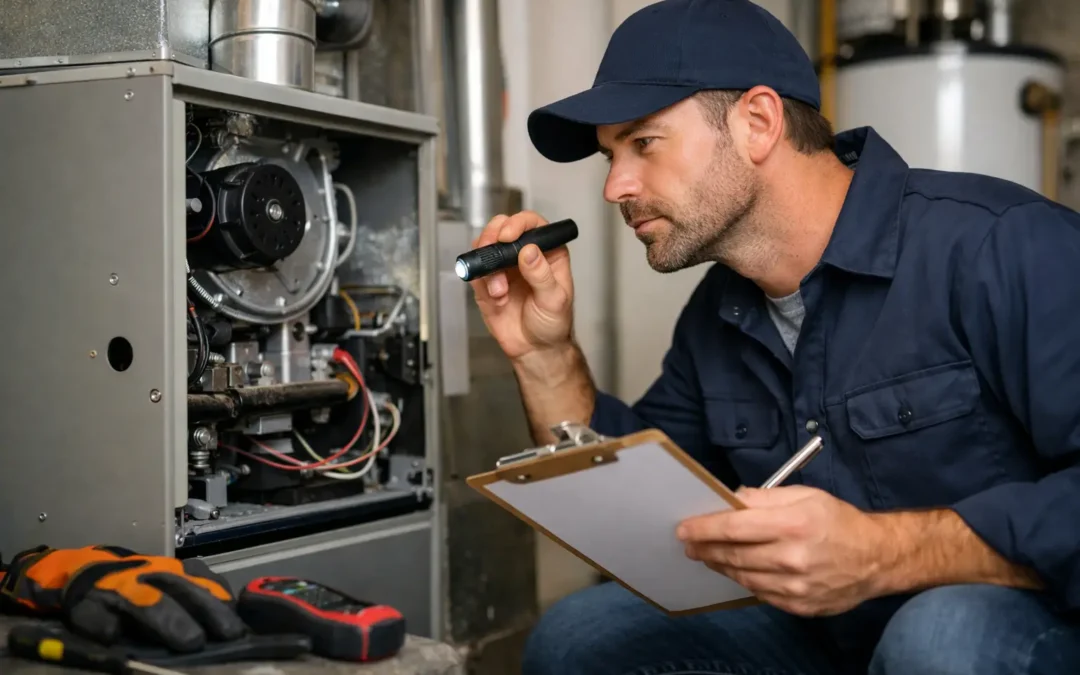
A cold house at 6 a.m. usually gets your attention fast. Before you assume the worst, a solid furnace repair checklist homeowners can follow often helps rule out simple problems, avoid unnecessary stress, and make a service call more productive if you do need one.
This is not a guide to taking apart your heating system. It is a practical way to check the basics safely, protect your comfort, and know where the line is between a quick fix and a repair that needs a licensed HVAC technician.
Why a furnace stops working in the first place
Most furnace problems fall into a few categories. The thermostat may not be calling for heat correctly. Power or gas supply may be interrupted. Airflow may be restricted by a dirty filter or blocked vents. In other cases, the issue is mechanical, such as a failing igniter, flame sensor, blower motor, or control board.
For homeowners, that distinction matters. A thermostat setting or clogged filter is often easy to correct. An ignition problem or repeated shutdown is different. That is where safety, warranty protection, and long-term system reliability become more important than trying to push through a DIY repair.
Furnace repair checklist for homeowners: Start with the safest checks
Begin with the items that are easiest to verify and least invasive. If your furnace is completely unresponsive, first confirm the thermostat is set to Heat and the temperature is set a few degrees above the current room temperature. It sounds obvious, but thermostat settings, dead batteries, and scheduling errors cause more no-heat calls than many people expect.
Next, check whether the furnace has power. Look at the service switch near the unit, which can resemble a regular light switch, and make sure it is on. Then check your electrical panel for a tripped breaker. If the breaker has tripped once, resetting it may restore operation. If it trips again, stop there. Repeated breaker trips point to an electrical problem that should be diagnosed professionally.
If you have a gas furnace, verify the gas shutoff valve is open. If other gas appliances are also not working, the issue may be broader than the furnace itself. What you should not do is attempt to relight modern furnace burners or disassemble gas components. If you smell gas, leave the area and follow emergency safety procedures right away.
Check airflow before assuming a major repair
Restricted airflow is one of the most common reasons a furnace struggles, overheats, or shuts down. Start with the air filter. If it looks packed with dust, replace it. A severely clogged filter can limit airflow enough to trigger safety shutdowns and put strain on the blower.
Then walk through the house and make sure supply vents and return grilles are open and not blocked by furniture, rugs, or boxes. Closing too many vents can throw off system balance and reduce performance. Homeowners sometimes do this in unused rooms to save energy, but the trade-off is that it can create pressure and airflow issues the system was not designed to handle.
If the furnace turns on but shuts off before the house reaches the set temperature, a dirty filter and poor airflow are especially worth checking. Short cycling can have several causes, but airflow restrictions are one of the first things to rule out.
Listen and look for clues
A furnace usually gives some warning signs before it fails completely. Pay attention to what the system is doing when it tries to start. If the thermostat clicks but nothing happens, that suggests one path of diagnosis. If the blower runs but no warm air comes out, that suggests another. If the unit starts, then shuts down quickly, that points somewhere else.
Unusual sounds matter too. Banging can indicate delayed ignition or duct expansion. Squealing may point to a belt or motor issue, depending on the system. Rattling can be as minor as a loose panel, but it can also signal internal wear. The goal is not to diagnose every sound on your own. It is to notice the pattern so you can describe it clearly if service is needed.
Also look for the condition of the furnace area. Water around a high-efficiency furnace can mean a condensate drainage issue. A dirty burner area, visible soot, or scorch marks are signs to stop troubleshooting and schedule professional service.
A furnace repair checklist homeowners should use for warning signs
Some symptoms mean you should skip the basic checklist and call for service sooner rather than later. A burning smell that does not clear shortly after startup, repeated system resets, cold air during a heat call, or a yellow burner flame instead of a steady blue one all deserve attention.
Carbon monoxide concerns are in a separate category. If your carbon monoxide detector goes off, treat that as an emergency. Turn off the system if it is safe to do so, leave the home, and seek immediate help. Furnaces are built with safety controls, but no heating issue is worth taking a chance on.
Age also changes the decision. If your furnace is older and needs frequent repairs, the issue may not be one isolated component. At a certain point, repeated service calls become more expensive and less dependable than addressing the larger system condition. That does not always mean replacement is necessary right away, but it does mean repair decisions should be made with the full picture in mind.
What you can try, and what you should leave alone
Homeowners can safely check settings, replace filters, open vents, inspect breakers, and confirm the furnace switch is on. Those steps are useful because they solve simple issues without putting your safety at risk.
Beyond that, caution is the right approach. Removing access panels, bypassing safety switches, cleaning flame sensors without knowing the proper method, or attempting repairs on igniters, gas valves, or wiring can create bigger problems. Even when a video makes it look straightforward, the real issue is often misdiagnosed.
That is where working with a qualified HVAC company saves time. A trained technician is not just replacing a failed part. They are checking why it failed, whether other components were affected, and whether the furnace is operating safely when the repair is complete.
How to make a service call faster and more effective
If your basic checks do not restore heat, a little preparation can help speed up the visit. Make note of the furnace brand and model if it is easy to access. Write down what the thermostat is doing, when the issue started, and whether the furnace is making noises, blowing cool air, or shutting off after a short run cycle.
If your thermostat displays an error code or the furnace flashes a status light, record that too. You do not need to interpret it yourself. Just having that information available can help narrow the issue faster.
It also helps to mention any recent changes, such as a power outage, a filter replacement, remodeling dust, or thermostat adjustments. Sometimes the timing of the problem is one of the best clues.
Preventive steps that reduce repair risk
The best furnace repair call is the one you do not need during the coldest week of the year. Replacing filters on schedule, keeping vents clear, and booking routine heating maintenance before winter all lower the chance of a mid-season breakdown.
Maintenance is not just about cleaning. It gives a technician the chance to inspect ignition components, test safety controls, verify airflow, check temperature rise, and catch wear before it turns into a no-heat emergency. For homeowners who value reliability, that is usually a better strategy than waiting for a failure.
In Northern Virginia, where winter temperatures can swing and systems often run hard when cold snaps hit, preseason service is especially practical. A furnace that seemed fine in mild weather may show hidden problems once demand increases.
When repairs are needed, transparent pricing and clear recommendations matter just as much as speed. A dependable service partner should explain whether the issue is minor, whether more than one part is involved, and whether repair still makes financial sense based on the age and condition of the system. That is the approach Aircon HVAC Solutions brings to heating service calls – straightforward guidance, professional workmanship, and support focused on long-term comfort.
A furnace problem does not always mean a major repair, but it does deserve a careful response. Start with safe basics, pay attention to warning signs, and do not push past the point where expert service is the smarter choice. Heat matters most when you suddenly do not have it, and a calm, informed next step makes all the difference.
