

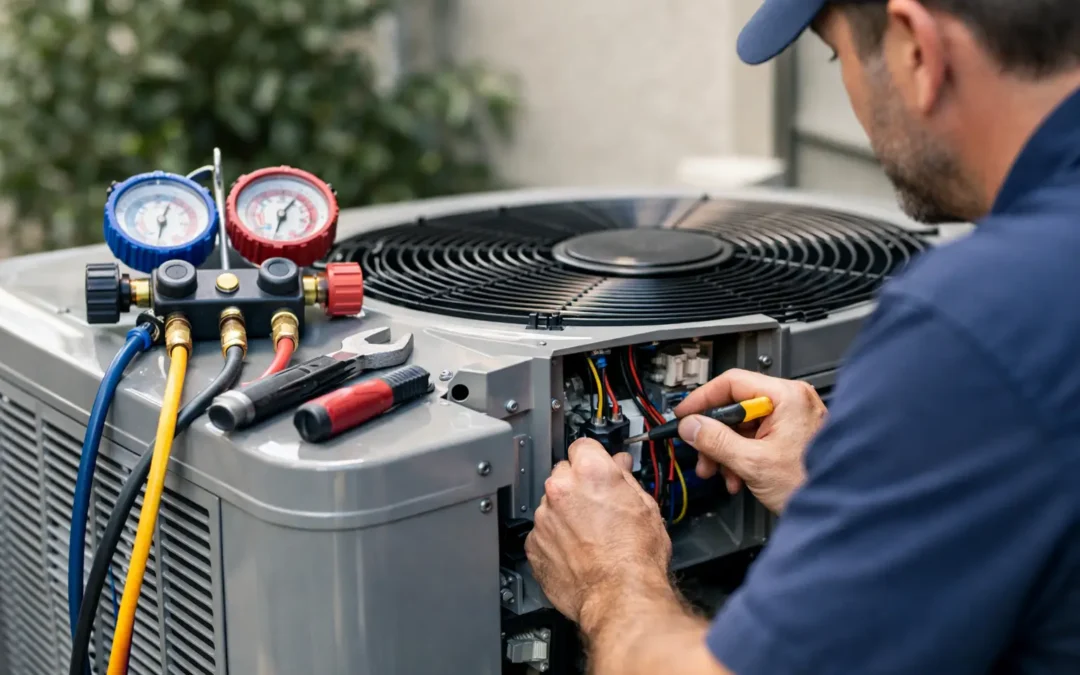
A failing air conditioner during a Northern Virginia heat wave is more than an inconvenience. High indoor temperatures can put children, older adults, pets, and employees at risk, while a system that keeps running with a serious fault can sustain more damage. The best emergency AC repair tips start with protecting people, preventing avoidable harm to the equipment, and getting clear information to a qualified technician.
First, Decide Whether It Is an AC Emergency
Not every comfort issue needs an after-hours visit, but some problems should not wait. Treat the situation as urgent if the AC has stopped working and indoor temperatures are rising quickly, especially when someone in the building is heat-sensitive. A total loss of cooling can also be more serious in a business that stores temperature-sensitive products, houses servers, or serves customers in a hot indoor environment.
Call for emergency service right away if you smell burning, see smoke, hear loud banging or grinding, notice water near electrical components, or see a refrigerant line with heavy ice buildup. Turn the system off before calling if it is safe to do so. These signs can point to electrical trouble, a failing motor, a mechanical issue, or restricted airflow that needs professional attention.
A system that is cooling somewhat but cannot quite reach the thermostat setting may not require an emergency repair. It could be dealing with extreme outdoor heat, a dirty filter, or a thermostat setting problem. Still, it deserves prompt attention if performance keeps declining, energy bills spike, or the equipment runs constantly without improving comfort.
Shut Down the System When Warning Signs Are Serious
If you notice an electrical burning smell, smoke, repeated tripped breakers, or harsh mechanical noises, turn the thermostat to Off. If necessary, switch off the AC breaker only if you can do so safely and it is clearly labeled. Do not keep resetting a breaker that trips again. A breaker is designed to protect the equipment and the building from an electrical fault, not to be overridden.
Water leaks require a more measured response. Turn the thermostat off if water is pooling near the indoor air handler, furnace, electrical panel, or finished flooring. A clogged condensate drain can sometimes be the cause, but water may also result from a frozen evaporator coil or a larger drainage problem. Continuing to run the unit can create water damage and make the original repair more complicated.
If the outdoor unit is making a loud metallic sound, shutting it down can prevent further damage to the compressor or fan assembly. Avoid removing panels or reaching into the unit. Even when the thermostat is off, HVAC equipment can retain electrical hazards.
Try the Safe Checks Before You Request Repair
A few quick checks can resolve simple interruptions and help your technician arrive with better information. Start at the thermostat. Confirm it is set to Cool, the desired temperature is below the current indoor temperature, and the fan is set to Auto rather than On. A fan set to On can keep moving room-temperature air even when the cooling cycle has stopped, making the problem feel worse.
Next, check the air filter. A heavily clogged filter restricts airflow and can contribute to a frozen coil, weak cooling, and unnecessary strain on the system. Replace it if it is visibly dirty and you have the correct size on hand. Do not run the system without a filter, and do not force a filter that does not fit properly.
Look at the electrical panel for a tripped AC breaker. You may reset it one time if there are no burning smells, water concerns, or obvious equipment damage. If it trips again, leave it off and call for service. Repeated resets can damage components and create a safety concern.
Finally, walk outside and make sure the outdoor unit has room to breathe. Remove loose leaves, grass clippings, or other debris around it, but do not use a pressure washer or insert objects through the grille. The unit needs clear airflow around all sides to release heat effectively.
What to Do When the Evaporator Coil Freezes
Ice on the refrigerant line, indoor coil, or outdoor unit is a clear sign to stop cooling mode. Running a frozen system can lead to compressor damage, and simply lowering the thermostat will not solve it. Turn the thermostat from Cool to Off, then set the fan to On if the system allows it. The circulating air can help the ice thaw.
Place towels near the indoor equipment if you expect melting ice to produce water. Do not chip ice away with tools, pour hot water on the coil, or try to open the sealed refrigerant system. Frozen coils can result from a dirty filter or blocked airflow, but they may also signal low refrigerant, a blower issue, or a faulty metering component. Those causes require a trained technician to diagnose accurately.
Once the ice has fully melted, you may replace a dirty filter and test the system. If it freezes again, turn it off and schedule repair rather than repeating the cycle. A recurring freeze-up is not a normal summer nuisance.
Keep People Comfortable While You Wait
Your immediate goal is to reduce heat exposure, not force the AC to recover. Close blinds and curtains on sun-facing windows, limit oven and dryer use, and use ceiling or portable fans to improve comfort. Fans do not lower the room temperature, but they can help the body cool through evaporation.
Drink water regularly and check on children, older adults, and anyone with medical conditions affected by heat. If indoor temperatures become unsafe, move to a cooler location such as a family member’s home, a public cooling center, or another air-conditioned space. For commercial properties, consider whether employees, customers, tenants, or equipment need to be relocated temporarily.
Opening windows can help during cooler evening hours, but it depends on outdoor humidity and security. On a humid afternoon, open windows may make a home feel stickier and increase the cooling load once the system is repaired.
Information That Helps an Emergency Technician
A fast repair starts before the technician arrives. Note when the problem began, what you heard or smelled, whether the system was cooling at all, and whether the breaker tripped. If you see an error code on the thermostat or indoor unit, write it down or take a photo from a safe distance.
Be ready to share the system’s approximate age, the last time the filter was changed, and any recent service or power outages. Property managers can also help by ensuring access to mechanical rooms, rooftops, utility closets, and electrical panels. Clear access saves time when every hour of lost cooling matters.
When speaking with an HVAC provider, ask what the diagnostic visit includes, how repair options will be explained, and whether approval is required before work begins. Clear pricing and clear communication matter most when a breakdown happens at the worst possible time.
Avoid These Common Emergency AC Mistakes
The most costly mistake is continuing to run equipment that is making alarming noises, tripping breakers, or freezing over. Another is assuming that adding refrigerant is a universal fix. Refrigerant operates in a sealed system, so low levels often mean there is a leak that should be found and repaired rather than repeatedly topped off.
Avoid covering the outdoor unit to protect it from heat. Covers restrict airflow and can cause the unit to overheat. It is also wise to skip quick internet fixes involving exposed wiring, capacitors, or refrigerant lines. These components can be dangerous even for experienced homeowners.
Portable air conditioners may offer temporary relief in one room, but use them according to the manufacturer instructions and avoid overloading extension cords or outlets. A safe temporary measure should never introduce an electrical or fire risk.
Prevent the Next After-Hours Breakdown
Many AC emergencies begin as smaller warning signs: longer cooling cycles, uneven temperatures, unusual sounds, water around the equipment, or a filter that has not been changed in months. Seasonal maintenance gives a technician the opportunity to inspect electrical connections, clean key components, check drainage, measure performance, and catch developing issues before the hottest day of the year.
For homeowners and property managers in Bristow, Manassas, Gainesville, Centreville, Chantilly, Fairfax, Herndon, McLean, and Reston, a dependable service relationship also makes emergency decisions easier. You know who to call, what information to provide, and that your comfort concern will be handled with professional care.
When your AC fails, stay calm, protect the system from further damage, and focus on keeping people cool. The right response now can make the repair simpler and help restore the comfort your home or business depends on.
