

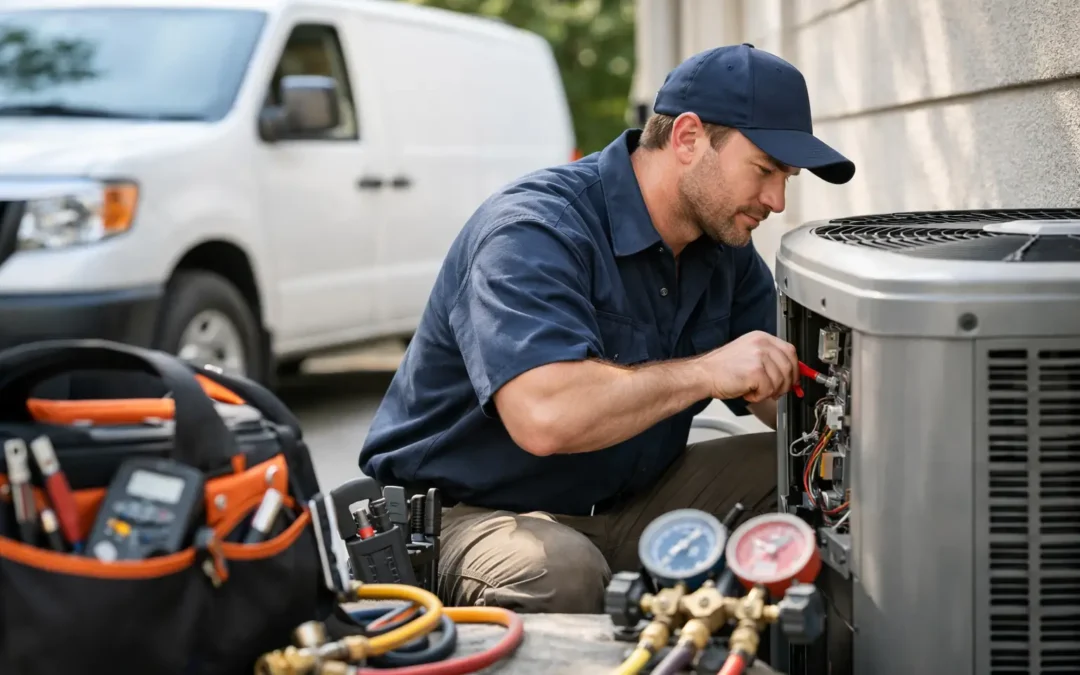
When your AC quits during a humid Virginia afternoon or your heat cuts out on a freezing night, searching for emergency HVAC repair near me is not about convenience. It is about getting your home or building safe, comfortable, and functional again as quickly as possible. In those moments, the right response can protect your equipment, reduce damage, and help you avoid a much larger repair bill.
A true HVAC emergency is not always dramatic, but it is always disruptive. Sometimes it is a complete system failure. Other times it is warm air from the vents in July, a furnace that will not stay on, water leaking around the indoor unit, or unusual electrical smells that make you shut the system off immediately. Knowing what counts as urgent, and what to do before a technician arrives, can save time and stress.
When emergency HVAC repair near me is the right call
Not every HVAC issue needs after-hours service, but some problems should not wait until the next business day. If your system has completely stopped working during extreme temperatures, that is a strong reason to call right away. The same goes for burning odors, smoke, tripped breakers that keep tripping again, loud banging or screeching, or any leak that is actively damaging walls, ceilings, or floors.
For households with young children, older adults, medical needs, or pets, the threshold for an emergency may be lower. A cooling failure during a heat wave or a heating outage in winter can turn serious fast. Commercial properties have their own urgency. A restaurant, office, retail space, or managed property may need immediate service to protect occupants, inventory, equipment, or lease obligations.
There are also issues that feel urgent but may not require middle-of-the-night service. Weak airflow, slightly uneven temperatures, or a system that runs longer than usual can often wait until the next available appointment unless conditions inside the building are becoming unsafe. That distinction matters because emergency service should be used when speed truly changes the outcome.
What to do before the technician arrives
Start with the basics, because simple issues do happen. Check the thermostat settings and make sure the system is set to heat or cool, not just fan. Replace the batteries if the thermostat screen is blank or acting erratically. Then check your breaker panel. If the HVAC breaker has tripped once, reset it once. If it trips again, leave it off and call for service. Repeated resets can point to an electrical problem, and that is not something to force.
Next, look at the air filter. A severely clogged filter can restrict airflow enough to cause freezing, shutdowns, and poor performance. If it is visibly dirty, replace it. If your AC system has frozen over, turn it off and let the ice melt. Running a frozen system can strain the compressor and worsen the problem.
If you see water around the unit, try to limit damage without taking the system apart. Shut the system down if needed, move nearby items out of the way, and note where the water appears to be coming from. If you smell something burning, hear electrical buzzing, or see smoke, turn the unit off immediately and do not try to restart it.
These steps are not a substitute for professional repair. They are simply the fastest way to rule out minor issues and prevent extra damage while help is on the way.
What a good emergency HVAC visit should look like
Fast response matters, but speed alone is not enough. An emergency repair should still be handled with the same care and precision as any scheduled service call. That means a technician arrives prepared to diagnose the issue clearly, explain what failed, and walk you through the recommended fix without unnecessary confusion.
You should expect transparent communication from the start. That includes arrival updates, a straightforward assessment, and pricing that is explained before work begins. In an emergency, nobody wants surprises. A dependable service company understands that the customer is already dealing with enough disruption.
The repair itself may be immediate, temporary, or part of a larger plan. That depends on the condition of the system and whether the failed component is the only issue. Sometimes the right move is a same-day repair that fully restores service. In other cases, especially with older equipment or major parts failures, a temporary solution may keep the system running safely until the final repair or replacement can be completed. The honest answer is that it depends on parts availability, system age, and the cause of the breakdown.
Why local service makes a real difference
When people search emergency HVAC repair near me, they are usually looking for one thing above all else – someone nearby who can respond quickly and get it right. Local service matters because travel time affects response time, and familiarity with the area often means better scheduling, faster dispatch, and more practical recommendations for local weather conditions.
That is especially relevant in Northern Virginia, where weather can swing from heavy summer humidity to bitter winter cold. HVAC systems work hard here, and emergency issues often happen when the equipment is already under peak demand. A local team that regularly serves homes and businesses in places like Manassas, Fairfax, Reston, and surrounding communities is better positioned to respond with urgency and understand what customers are dealing with in that moment.
There is also a trust factor. When you are inviting a technician into your home or relying on a company to restore comfort to a commercial property, you want licensed, insured professionals who communicate well and stand behind their work. Local reputation is earned one service call at a time.
Repair or replace during an HVAC emergency?
This is one of the most common questions during urgent service, and the answer is rarely one-size-fits-all. If your system is relatively new and the repair is straightforward, fixing it is usually the practical choice. If the equipment is older, breaking down repeatedly, or facing a major component failure, replacement may be the better long-term investment.
The emergency itself can make that decision feel rushed, but it should still be guided by facts. How old is the system? How expensive is the repair compared to the unit’s remaining lifespan? Has comfort been inconsistent for a while? Are energy bills rising? A trustworthy technician will explain the trade-offs clearly instead of pushing one option by default.
In many cases, homeowners and property managers want the fastest path back to comfort today and the smartest financial decision for the next several years. Those are not always the same thing. A temporary repair might buy time to plan a replacement properly, while a full repair may make perfect sense if the rest of the system is in solid shape.
How to reduce the odds of another emergency
Most HVAC emergencies do not come out of nowhere. Systems often show warning signs first: unusual sounds, short cycling, weak airflow, inconsistent temperatures, higher utility costs, or excess humidity indoors. The problem is that these signs are easy to ignore until the system finally stops.
Routine maintenance lowers that risk. Seasonal tune-ups help catch worn components, refrigerant issues, drainage problems, dirty coils, ignition concerns, and airflow restrictions before they become urgent failures. Maintenance also gives you a clearer picture of system condition, which makes emergency decisions easier if something does go wrong later.
Filter changes matter too, more than many people realize. A neglected filter affects airflow, efficiency, and overall system stress. It is one of the simplest ways to protect both comfort and equipment life.
For homes and commercial spaces with indoor air quality concerns, ventilation and filtration upgrades can also support HVAC performance. If the system is constantly fighting airflow problems, humidity imbalance, or excessive dust buildup, those underlying conditions can contribute to wear over time.
Choosing a company when time is tight
During an HVAC emergency, most people are not reading ten pages of technical content. They want reassurance that the company will answer the phone, show up promptly, explain the problem, and do quality work. That is reasonable.
Look for a provider that offers emergency support, employs certified and insured technicians, and is upfront about pricing. Clear communication matters just as much as technical skill. So does service range. If the same company can handle heating, cooling, indoor air quality, and even related comfort systems like water heaters, you are more likely to build a long-term relationship instead of starting from scratch every time something fails.
That customer-first approach is what many Northern Virginia homeowners and businesses want from a service partner. Aircon HVAC Solutions is built around that model – responsive service, professional workmanship, and practical guidance that helps customers make confident decisions under pressure.
When your system goes down, the goal is simple: restore comfort safely, without guesswork. The best next step is not to wait and hope it corrects itself. If conditions are unsafe or the outage cannot wait, call for help, protect the system from further strain, and let an experienced local technician take it from there.
