

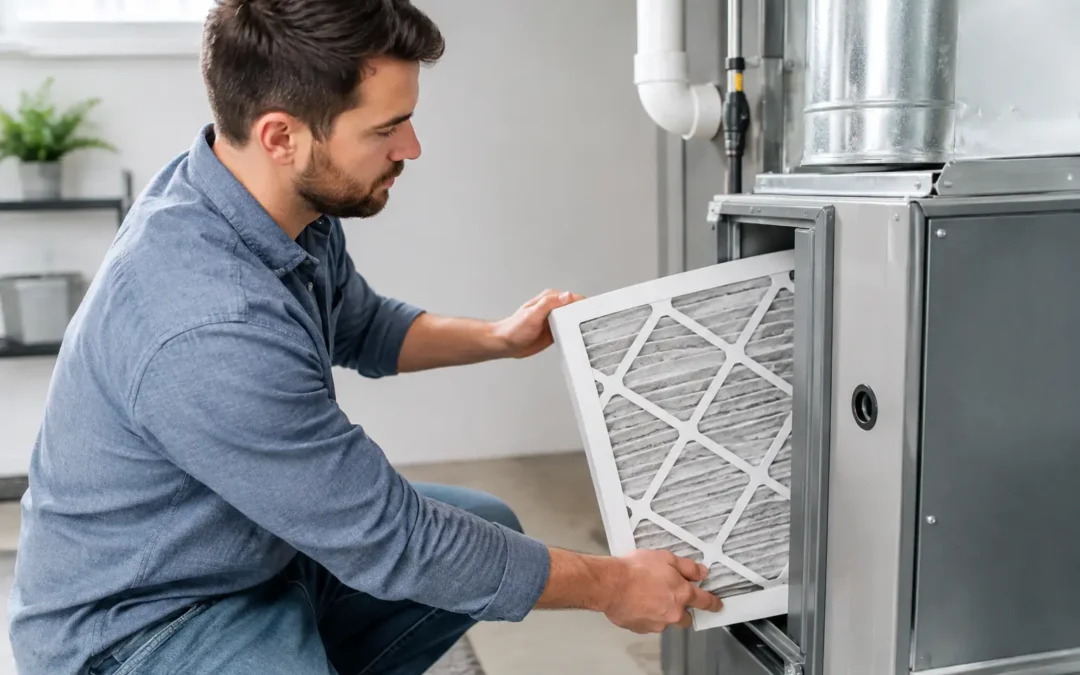
A furnace filter is easy to overlook because it does its job quietly. But a missed furnace filter replacement schedule can restrict airflow, make rooms feel unevenly heated, increase energy use, and put unnecessary strain on equipment that should be serving your home for years. The right timing is not always the date printed on the filter box. It depends on your home, the filter you use, and what is moving through your air every day.
A Practical Furnace Filter Replacement Schedule
For many Northern Virginia homes, checking the filter once a month is the best starting habit. That does not mean every filter needs to be replaced monthly. It means you can catch buildup before it affects comfort or turns a small maintenance task into a service call.
A basic 1-inch fiberglass filter may need replacement every 30 days. Pleated 1-inch filters often last one to three months, depending on their quality and your household conditions. Thicker 4-inch or 5-inch media filters can commonly last six to 12 months, but only when they are properly sized and the system is operating as designed.
The box is a useful guideline, not a guarantee. A filter rated for 90 days may become clogged in 30 days in a busy household with pets, renovations, heavy allergy concerns, or frequent heating and cooling use. On the other hand, a lightly occupied home with a higher-capacity media filter may not need a change nearly as often.
The simplest rule is this: inspect your filter monthly and replace it when it looks visibly loaded with dust and debris or when airflow begins to suffer. A clean filter should still allow light and air to pass through it. If its surface is gray, matted, or covered in pet hair, it is time for a replacement.
What Changes Your Replacement Timing?
Your home does not operate under laboratory conditions, and neither does your HVAC system. Several everyday factors can shorten or extend the life of a furnace filter.
Pets, allergies, and household activity
Dogs and cats shed hair and dander that collect quickly in filters. A home with one or more pets may need filter changes every 30 to 60 days, especially with a standard 1-inch filter. Households managing allergies, asthma, or other respiratory sensitivities may also choose more frequent changes to help reduce airborne particles.
Cooking, candles, fireplaces, and open windows can add fine particles to indoor air. So can an active household with children coming in and out, particularly during pollen season. More activity usually means more frequent inspections.
Construction, remodeling, and dust-producing work
Drywall dust, sawdust, and renovation debris can clog a filter far faster than normal household dust. During a project, check the filter every two to three weeks. If contractors are working inside the home, replacing the filter before and after the project is often worthwhile.
Do not assume a filter will protect the system from every kind of construction dust. If work is extensive, closing supply and return vents in the affected area when appropriate and discussing system protection with an HVAC professional can help prevent unnecessary contamination.
Filter thickness and MERV rating
Filter size matters. A deeper media filter has more surface area, so it can generally hold more particles before replacement. A 4-inch filter often lasts longer than a 1-inch filter, provided it is the correct fit for the cabinet.
MERV ratings matter as well. Higher-MERV filters capture smaller particles, which can be beneficial for indoor air quality. However, a filter that is too restrictive for your equipment can reduce airflow. Higher filtration is not automatically better if your system was not designed to handle it.
For many homes, a MERV rating in the 8 to 11 range provides a reasonable balance of particle capture and airflow. Homes with significant allergy concerns may benefit from a different approach, but that decision should consider the blower, ductwork, and overall system design. The goal is cleaner air without making your furnace work harder than it should.
How often your system runs
Your filter collects particles only while air moves through the system. During a Northern Virginia winter, a furnace may run frequently through cold stretches. During the rest of the year, the same filter may also serve the air conditioner or heat pump. If your HVAC system operates nearly year-round, expect to change the filter more often than a calendar-only schedule suggests.
Signs You Should Replace the Filter Now
You do not need to wait for a scheduled date if the system is telling you something has changed. Reduced airflow from supply vents is one of the clearest warning signs. You might also notice that certain rooms take longer to warm up, the furnace cycles more often, or dust seems to build up more quickly around the home.
A dirty filter can also contribute to unusual noises, a whistling return grille, and higher utility bills. These symptoms do not always point to the filter alone. Duct restrictions, blower problems, thermostat issues, and equipment faults can create similar concerns. Still, replacing a clogged filter is the fastest and least expensive place to start.
If you install a new filter and airflow does not improve, avoid repeatedly changing filters or selecting a thinner filter to force more air through. That can mask a larger issue. A qualified technician can identify whether the problem is related to the system, ductwork, or an improperly selected filter.
How to Change a Furnace Filter Correctly
Changing a filter takes only a few minutes, but correct installation matters. First, turn off the furnace or HVAC system at the thermostat. Locate the filter slot, which may be beside the furnace, inside a return-air grille, or in an air handler cabinet.
Before removing the old filter, look for the airflow arrow printed on its frame. The arrow should point in the direction air travels, toward the furnace or air handler. Installing a filter backward can reduce its effectiveness and may create added resistance.
Match the replacement filter to the size printed on the old frame or the filter rack. Nominal sizes, such as 16 x 25 x 1, are common, but actual dimensions can vary slightly between brands. A loose-fitting filter allows air and dust to bypass it, while an oversized filter may bend or fail to seat properly.
Once the new filter is installed, write the date on the frame or set a phone reminder for the next monthly check. Property managers can make this part of a regular unit or building maintenance routine, especially in properties with tenant turnover, pets, or shared HVAC equipment.
Don’t Let a Filter Problem Become a Furnace Problem
A clean filter supports airflow, but it cannot correct every heating concern. If your furnace shuts off unexpectedly, produces burning smells that do not go away, makes loud new noises, or cannot maintain a comfortable temperature, professional service is the safer next step. The same is true if filters become dirty unusually fast, which can signal return-air leaks, duct issues, or excessive indoor particle sources.
Routine maintenance gives a technician the opportunity to inspect the filter setup, blower components, electrical connections, and heating performance before winter demand exposes a weak point. For homeowners and commercial property managers, that kind of attention helps prevent avoidable disruptions when reliable heat matters most.
Aircon HVAC Solutions helps customers throughout Northern Virginia make practical decisions about filters, furnace maintenance, and indoor air quality without unnecessary complexity. A filter change is a small task, but it is one of the most dependable ways to protect comfort between professional visits. Check it monthly, replace it based on its condition and your household needs, and ask for help when the system shows signs that something more is going on.
