

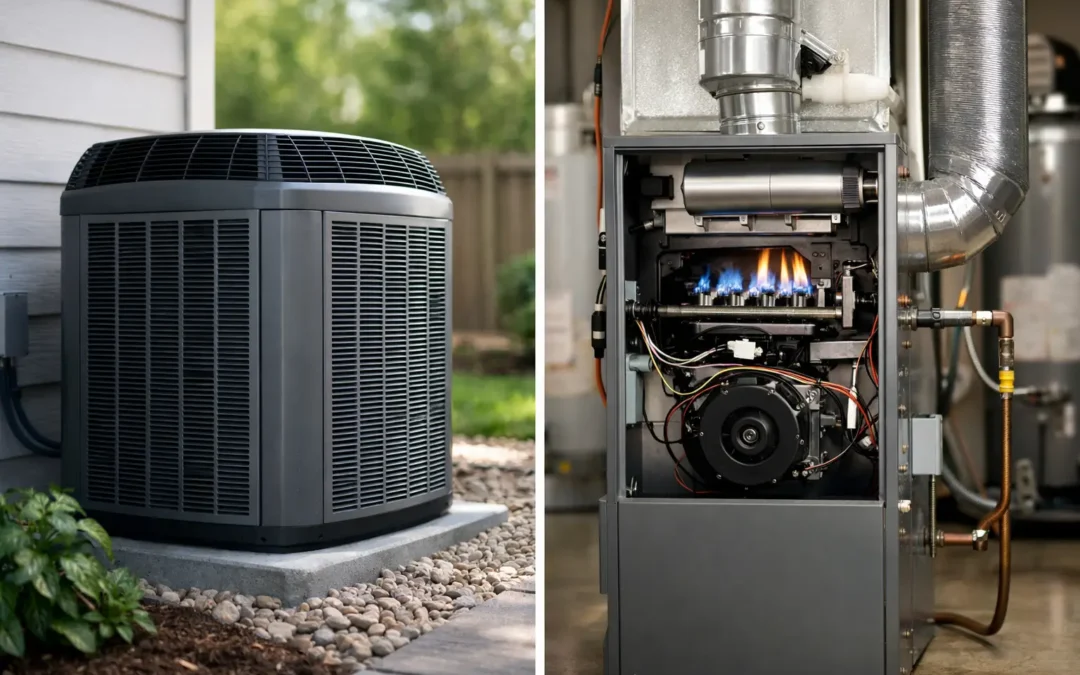
When your heating system starts struggling on a cold January morning, the question usually gets practical fast: repair what you have, or replace it with something better? That is where heat pump vs furnace efficiency becomes more than a technical comparison. It directly affects your monthly utility bills, indoor comfort, and how well your system handles Northern Virginia weather.
For many property owners, the answer is not as simple as picking the unit with the highest advertised rating. Efficiency depends on outdoor temperature, your fuel source, the condition of your ductwork, insulation levels, and how you actually use the building. A system that looks better on paper does not always deliver the best real-world value in your home or commercial space.
Heat pump vs furnace efficiency: the basic difference
A heat pump does not create heat in the same way a furnace does. Instead, it transfers heat from outside air into your home. Because it moves heat rather than generating it, it can deliver more heating energy than the electricity it consumes under the right conditions.
A furnace creates heat directly, usually by burning natural gas or propane, or by using electric resistance heat. That process is straightforward and reliable, especially in colder weather, but it works differently from a heat pump and is measured differently too.
This is why comparing the two can get confusing. Heat pumps are often discussed in terms of HSPF2 and COP, while furnaces are rated by AFUE. Those ratings matter, but what most owners really want to know is simpler: which system costs less to run and keeps the space comfortable when temperatures drop?
Why a heat pump can be more efficient
In mild to cool weather, a heat pump is often the efficiency winner. Because it transfers heat instead of producing it through combustion, it can operate at efficiencies that would be impossible for a conventional furnace to match in direct energy-use terms.
That does not mean every heat pump is automatically cheaper to operate. Electricity rates matter. So does the specific model, the quality of installation, and whether your home holds heat well. Still, in a climate with many moderate winter days, a heat pump can be a strong option for lowering energy use.
This is one reason heat pumps have become more popular in this region. Northern Virginia winters can be cold, but they are not consistently severe in the way they are farther north. That gives modern heat pumps more opportunities to run in their sweet spot.
Where heat pumps lose ground
As outdoor temperatures fall, a heat pump has to work harder to pull heat from the air. Older or lower-efficiency models can lose performance in very cold weather. When that happens, the system may rely on backup electric resistance heat, which is much more expensive to run.
This is where some homeowners get surprised. They install a heat pump expecting lower bills across the board, then hit a cold stretch and see costs spike. The issue is not that heat pumps are inefficient overall. It is that cold-weather performance varies, and system design matters.
Why a furnace can still be the better fit
A high-efficiency gas furnace can be an excellent heating solution, especially if your property already has natural gas service. Furnaces provide strong, steady heat and are often better at maintaining indoor comfort during very cold weather.
AFUE ratings for modern furnaces can reach 95 percent or higher, meaning most of the fuel consumed is converted into usable heat. While that does not make a furnace more energy-efficient than a heat pump in every scenario, it does make it highly dependable and cost-effective in the right setup.
Furnaces also tend to deliver warmer supply air at the vents. Some homeowners simply prefer that feeling. A heat pump usually blows air that feels cooler than furnace air, even when the room is heating properly. It is not necessarily a performance problem, but it can affect comfort expectations.
The fuel cost question matters
If you are comparing heat pump vs furnace efficiency, utility rates are just as important as equipment ratings. A heat pump runs on electricity. A furnace may run on gas, propane, or electricity. In many cases, a gas furnace can be cheaper to operate during colder months if gas prices are favorable and the home already has the right infrastructure.
That is why there is no one-size-fits-all answer. Two homes on the same street can get different results depending on insulation, thermostat habits, square footage, and utility pricing.
Installation quality changes the result
This is the part many buyers overlook. Even the most efficient equipment can underperform if it is sized incorrectly or installed poorly.
An oversized furnace may short cycle, wasting energy and causing uneven temperatures. An undersized heat pump may run too long and struggle on the coldest days. Leaky ductwork, weak airflow, poor refrigerant charge, or an unbalanced system can all reduce efficiency.
For that reason, equipment comparisons should never happen in isolation. The right question is not only which system is more efficient in general. It is which system will be more efficient in your building, with your layout, insulation, ductwork, and usage patterns.
Comfort, maintenance, and long-term value
Efficiency is important, but it is only part of the ownership experience. Heat pumps and furnaces also differ in how they feel, how they are maintained, and what long-term costs may look like.
A heat pump provides both heating and cooling in one system, which can simplify equipment planning. That can be especially appealing if your current air conditioner and heater are both aging. Replacing both functions with one coordinated system may make sense from a budgeting and maintenance standpoint.
A furnace, on the other hand, is only one part of a heating and cooling setup. You will still need an air conditioner for summer. That can mean more equipment overall, though many owners like the specialized performance that comes with a separate furnace and AC system.
Maintenance needs differ too. Heat pumps run year-round, so they experience more continuous wear. Furnaces only operate in the heating season, but they still require regular inspection for safe and efficient operation. In either case, seasonal maintenance is one of the simplest ways to protect efficiency and avoid preventable breakdowns.
Which system makes more sense in Northern Virginia?
For many homes in Northern Virginia, a modern heat pump works well because winters are mixed. There are plenty of cool days when heat pumps operate efficiently, and newer cold-climate models perform much better than older generations.
That said, a gas furnace still makes strong sense for properties that already have natural gas service and need reliable heating during colder snaps. Homeowners who prioritize hotter supply air or have concerns about electric backup costs may feel more confident with a furnace.
There is also a middle-ground option: a dual-fuel system. This setup uses a heat pump for milder conditions and switches to a furnace when temperatures drop. It can offer a strong balance of efficiency and cold-weather performance, though upfront costs are usually higher.
How to make the right decision
If your current system is nearing the end of its life, the smartest move is to compare operating cost, comfort goals, and installation conditions together. Start with the basics: what fuel sources are available, how old the ductwork is, whether your building has hot or cold spots, and how much efficiency matters relative to upfront price.
Then look at the bigger picture. If you plan to stay in the property for years, a higher-efficiency system may be worth the investment. If you need the lowest replacement cost today, your decision may be different. If you manage a commercial property, reliability and service response may matter just as much as rated efficiency.
This is where working with an experienced local HVAC team helps. A proper load calculation, equipment match, and honest explanation of operating costs can prevent an expensive guess. Aircon HVAC Solutions works with homeowners and businesses that need clear recommendations, transparent pricing, and systems built for dependable comfort, not just brochure numbers.
The best heating system is the one that fits your building, your budget, and the way you live or work. Efficiency matters, but comfort that holds up through the season matters just as much.
