

A furnace that suddenly stops heating can make a Northern Virginia home uncomfortable fast, especially during a cold evening. Knowing how to reset furnace equipment safely may restore heat after a minor interruption, but a reset is not a cure for a recurring problem. The goal is to restart the system once, watch how it performs, and know when to stop troubleshooting and call for professional help.
When Resetting a Furnace Makes Sense
A furnace reset can help after a brief power outage, a tripped safety switch, a thermostat setting change, or an isolated ignition interruption. It is most useful when the furnace was operating normally before it stopped and there are no signs of a gas leak, electrical burning, water damage, or repeated shutdowns.
Before touching the furnace, check the simple items that can prevent it from starting. Make sure the thermostat is set to Heat, the temperature setting is several degrees above the current room temperature, and the batteries are working if your thermostat uses them. Confirm that the furnace access panel is fully closed and that the circuit breaker has not tripped.
If you smell gas, hear a loud boom or grinding sound, see smoke, or notice a burning electrical odor, do not attempt a reset. Leave the area if necessary, avoid switches and open flames, and contact your gas utility or an HVAC professional right away.
How to Reset Furnace Equipment Safely
Most modern gas furnaces do not have one universal reset button. They use electronic controls and safety systems that may reset when power is briefly turned off. The process below is a safe approach for many residential systems.
1. Turn the Thermostat Off
Set the thermostat mode to Off. This prevents the furnace from trying to start while you are cycling power. Give the system a minute to fully stop.
2. Check the Furnace Power Switch and Breaker
Look near the furnace for a service switch that resembles a standard light switch. Verify that it is in the On position. If it was accidentally switched off, turn it on, then return to the thermostat and test the system.
Next, check your electrical panel. A furnace breaker can look as though it is on even when it has tripped. Move the breaker firmly all the way to Off, then back to On. Do this only once. If the breaker trips again, leave it off and arrange service. Repeated trips can point to an electrical fault, a failing blower motor, a damaged capacitor, or another issue that needs diagnosis.
3. Cycle Power to the Furnace
If the breaker is on and the furnace still will not start, turn off power using the furnace service switch. Wait about 30 seconds, then turn it back on. This allows the control board to clear certain temporary lockouts.
Do not remove electrical panels or handle exposed wiring. The furnace cabinet contains high-voltage components even in a gas-fired system.
4. Restore the Thermostat Setting
Set the thermostat back to Heat and raise the temperature several degrees above room temperature. A healthy furnace usually begins its startup sequence within a few minutes. You may hear the inducer motor, then the igniter, followed by the burners and blower.
Some systems have a built-in delay of several minutes, so avoid cycling the thermostat on and off repeatedly. Give the furnace time to respond.
5. Watch One Complete Heating Cycle
Warm air from the vents is a good sign, but it is not the only sign that matters. Let the system run long enough to confirm it stays on and continues delivering heat. If it lights briefly and shuts down, blows only cool air, or locks out again, the furnace is signaling a problem that a reset cannot resolve.
Should You Press the Furnace Reset Button?
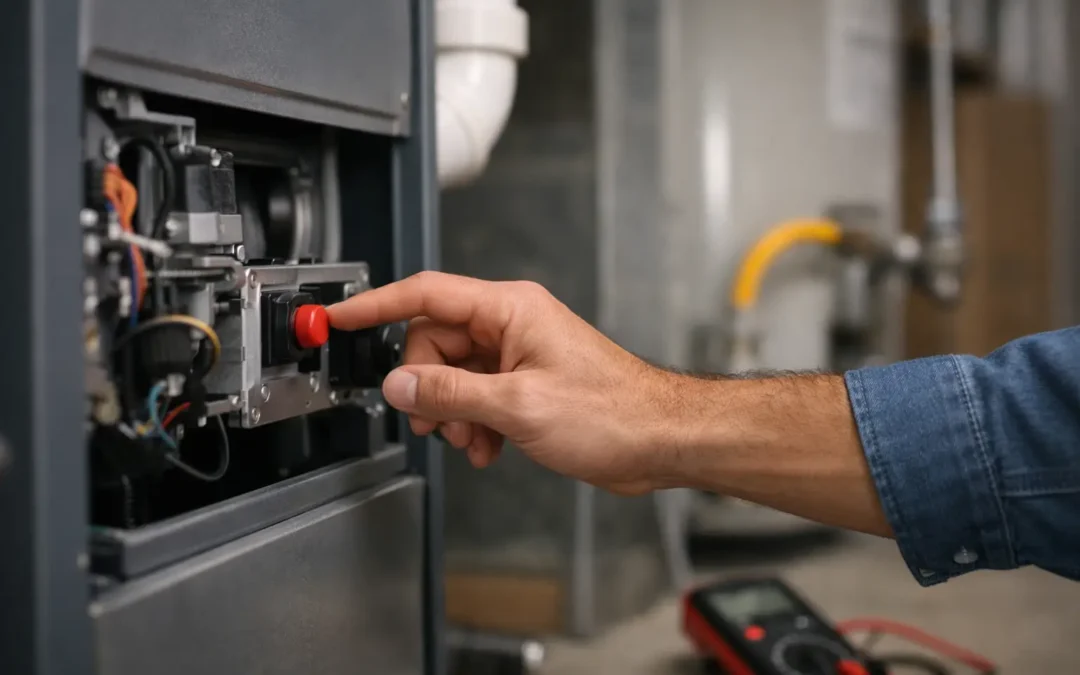
Some furnace components may have a reset button, but it is not a button to press whenever heat stops. Older systems and certain blower motors may include a small reset control, while other furnaces show a diagnostic code through a flashing light on the control board.
Avoid opening the furnace just to search for a reset button. Pressing a manual reset without identifying the cause can mask a safety issue or cause additional stress on the equipment. If your owner’s manual specifically identifies a reset procedure, follow that model-specific guidance. Otherwise, use the power-cycle method above and schedule service if the furnace does not return to normal operation.
A reset button on an oil furnace is especially different. Repeatedly pressing it can send excess fuel into the combustion chamber and create a dangerous condition. Press it no more than once, and contact a qualified technician if the unit does not restart.
Common Reasons a Furnace Will Not Restart
Many no-heat calls begin with a problem that is straightforward to correct. A dirty air filter is one of the most common examples. Restricted airflow can cause the furnace to overheat and trigger a high-limit safety switch. Replace a visibly clogged filter with the correct size and airflow rating, then allow the system to cool before attempting one reset.
A blocked intake or exhaust pipe can also shut down a high-efficiency furnace. Outside PVC vent pipes can become obstructed by leaves, snow, ice, or debris. Check only what is safely visible from the exterior, and clear loose obstructions without forcing objects into the pipe.
Other causes require professional testing. These include a dirty flame sensor, faulty igniter, failed pressure switch, condensate drainage issue, gas supply problem, blower failure, or control board fault. A furnace may attempt to ignite several times before locking itself out. That lockout is a protective response, not an invitation to keep resetting it.
What a Flashing Furnace Light Can Tell You
Many furnaces have a small sight glass on the front panel that displays a blinking LED diagnostic code. The pattern can help narrow down the issue, such as an ignition failure, pressure switch concern, or limit switch trip. The meaning of the flashes varies by manufacturer and model, so check the code chart on the furnace panel or in the owner’s manual.
You do not need to diagnose or repair the component yourself. Recording the blink pattern before scheduling service can help a technician arrive better prepared. If the furnace panel must be removed to see the light, turn off power first and replace the panel securely before operating the unit again.
When to Call for Furnace Service Instead
Call for professional heating service if the furnace will not start after one careful reset, if it repeatedly shuts down, or if the circuit breaker trips again. You should also schedule service when the system makes new loud noises, produces uneven heat, runs constantly without warming the home, or has a yellow burner flame instead of a steady blue flame.
For property managers and business owners, a recurring furnace lockout can affect tenants, staff, inventory, and operating hours. A quick reset may provide temporary heat, but repeated failures deserve prompt attention before a complete breakdown creates a larger disruption.
Annual maintenance reduces the likelihood of many reset-related problems. During a professional tune-up, a technician can inspect safety controls, clean key components, test ignition and airflow, evaluate the filter setup, and identify worn parts before they fail during peak heating season.
A furnace should not need frequent resets to keep your home comfortable. If yours does, treat that pattern as useful information: the system is asking for a proper diagnosis. Aircon HVAC Solutions provides responsive furnace service for homeowners and businesses throughout Northern Virginia, with clear recommendations focused on safe, dependable heat.
