

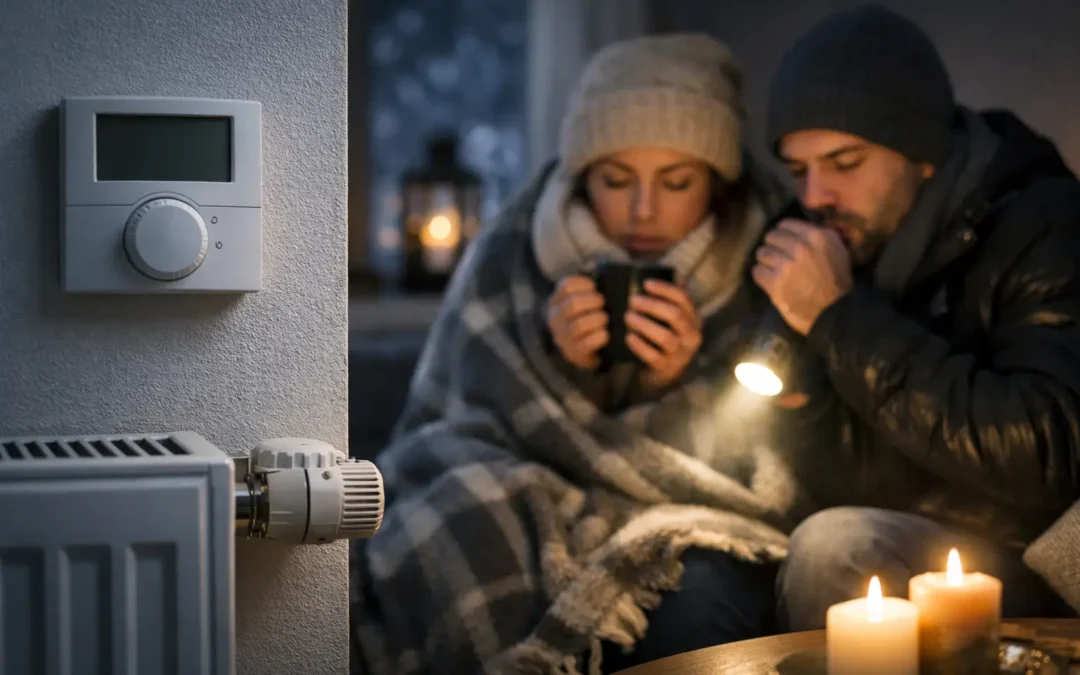
When the heat shuts off during a Northern Virginia cold snap, the problem can move from uncomfortable to urgent quickly. This emergency heating outage guide explains what to do in the first few minutes, how to keep people and property safe, and when a professional HVAC repair is the right next call.
A heating outage is not always a failed furnace or heat pump. It may be a thermostat setting, a tripped breaker, a blocked filter, a fuel-supply issue, or a safety shutdown. A few careful checks can save time, but safety comes first. If you smell gas, see smoke, notice sparking, or believe carbon monoxide may be present, leave the building immediately and contact emergency services and your gas utility from a safe location.
First Steps During a Heating Outage
Start by checking whether the issue affects the entire property or only one area. In a home with a zoned system, one thermostat or damper issue can leave part of the building cold while the rest remains comfortable. In a commercial space, a local electrical or control problem may affect a single suite or rooftop unit.
Confirm that the thermostat is set to Heat and that its temperature setting is at least several degrees above the current indoor temperature. If the thermostat screen is blank, replace the batteries if applicable. Then check the electrical panel for a tripped HVAC breaker. If it has tripped once, reset it one time. If it trips again, leave it off and schedule professional service. Repeated breaker trips can point to an electrical fault that should not be ignored.
Next, look at the air filter. A severely clogged filter can restrict airflow and cause some systems to overheat or shut down for protection. Replace a dirty filter with the correct size and rating, then give the system a few minutes to restart. Do not run the unit without a filter.
For a gas furnace, check that the furnace switch is on and that other gas appliances are working, if it is safe to do so. Do not attempt to relight a pilot light unless your equipment instructions specifically tell you how and you are comfortable doing it. Modern systems often use electronic ignition, and repeated restarts can make diagnosis harder.
What Not to Do While You Wait
The pressure to get warm can lead to unsafe shortcuts. Never use an oven, stove, grill, propane heater not rated for indoor use, or vehicle to heat an enclosed space. These can create a serious fire or carbon monoxide hazard. Keep carbon monoxide detectors active and never silence an alarm without first moving everyone to fresh air.
Portable electric space heaters can help with a small, occupied room, but use them carefully. Plug each heater directly into a wall outlet, keep it at least three feet from bedding, curtains, furniture, and paper, and place it on a level hard surface. Do not use extension cords or power strips. Turn the heater off when leaving the room or going to sleep.
Avoid repeatedly cycling the thermostat from heat to off and back again. If a system has locked out because of a safety issue, repeated resets may not restore heat and can delay a proper repair. Similarly, do not remove furnace panels, bypass safety switches, or work on gas lines or electrical connections.
Keep Your Home Warm and Protect Plumbing
Once you have confirmed the basic settings and called for help if needed, focus on preserving safe indoor temperatures. Close doors to unused rooms, shut curtains after dark, and use towels or draft stoppers at exterior-door gaps. Gather household members in one safe, well-ventilated room rather than trying to heat the entire house with portable equipment.
Dress in light layers, including socks and a hat, and use blankets for seated or sleeping comfort. Check on older adults, infants, and anyone with a medical condition that makes cold exposure more serious. Pets also need a warm, dry space away from drafts.
Frozen pipes are a major concern when indoor temperatures drop. Open cabinet doors under sinks on exterior walls so warmer room air can reach plumbing. Let cold-water faucets run at a slow drip if temperatures are approaching freezing and pipes are vulnerable. Know where the main water shutoff valve is located in case a pipe breaks.
If you leave the property because the building cannot be safely heated, do not simply turn off all utilities and hope for the best. A technician or property manager can help determine the right approach for your equipment and plumbing. For a vacant commercial property, monitoring indoor temperature and checking sprinkler or plumbing systems may be essential.
When a Heating Outage Needs Emergency Service
Some heating problems can wait for a standard appointment, especially when temperatures are mild and the building remains safe. Others deserve immediate attention. Call for emergency HVAC service when the loss of heat puts occupants, plumbing, or business operations at risk.
Situations that warrant a prompt professional response include:
- No heat during freezing or near-freezing weather
- A gas smell, burning odor, smoke, sparks, or a carbon monoxide alarm
- Water leaking around the furnace, boiler, air handler, or heat pump
- A breaker that trips again after one reset
- Loud banging, grinding, or electrical buzzing from HVAC equipment
- A home with vulnerable occupants or a business that cannot safely operate without heat
For commercial clients, a heating outage can affect employees, customers, inventory, and lease obligations. Restaurants, medical offices, retail locations, and multifamily properties may have additional safety or operational concerns. Document indoor temperatures, affected areas, and any error messages on thermostats or equipment displays. That information helps the technician arrive prepared and can support communication with tenants or staff.
Information That Helps an HVAC Technician Diagnose Faster
Before service arrives, write down when the outage began and what happened immediately before it. Did the system begin making a new sound? Did it stop after a power outage? Is the thermostat showing an error code? Has airflow been weak, or have energy bills increased over recent weeks?
If it is safe, note whether the outdoor heat pump is running, whether the indoor blower is moving air, and whether air from vents feels cool or simply is not moving. For gas furnaces, a blinking diagnostic light can be useful, but do not open sealed panels or touch internal components to find it.
Clear a safe path to the equipment and remove stored items from around the furnace, air handler, or utility closet. For an outdoor heat pump, avoid chipping ice from coils or pouring hot water on the unit. Ice buildup can have several causes, and forcing the issue may damage delicate components.
After Heat Is Restored, Prevent the Next Surprise
A successful repair solves the immediate problem, but it is also worth asking why the outage occurred. Some failures are sudden and unavoidable, such as a failed igniter, capacitor, control board, or motor. Others are more likely when filters are neglected, drain lines clog, electrical components wear unnoticed, or equipment is pushed through winter without maintenance.
Schedule routine heating maintenance before the coldest weather arrives, and replace filters on the schedule recommended for your system and household. Keep outdoor heat pump equipment clear of leaves, snow buildup, and landscaping. If your system is older, frequently repaired, or struggling to heat evenly, request a clear assessment of repair options versus replacement. The best decision depends on safety, repair cost, efficiency, equipment condition, and how long you expect to remain in the property.
For homeowners and property managers across Northern Virginia, Aircon HVAC Solutions can help restore safe, dependable heat and identify practical steps to reduce future outages. When the temperature drops, prompt action and careful choices protect more than comfort – they protect the people and property that depend on your building.
