

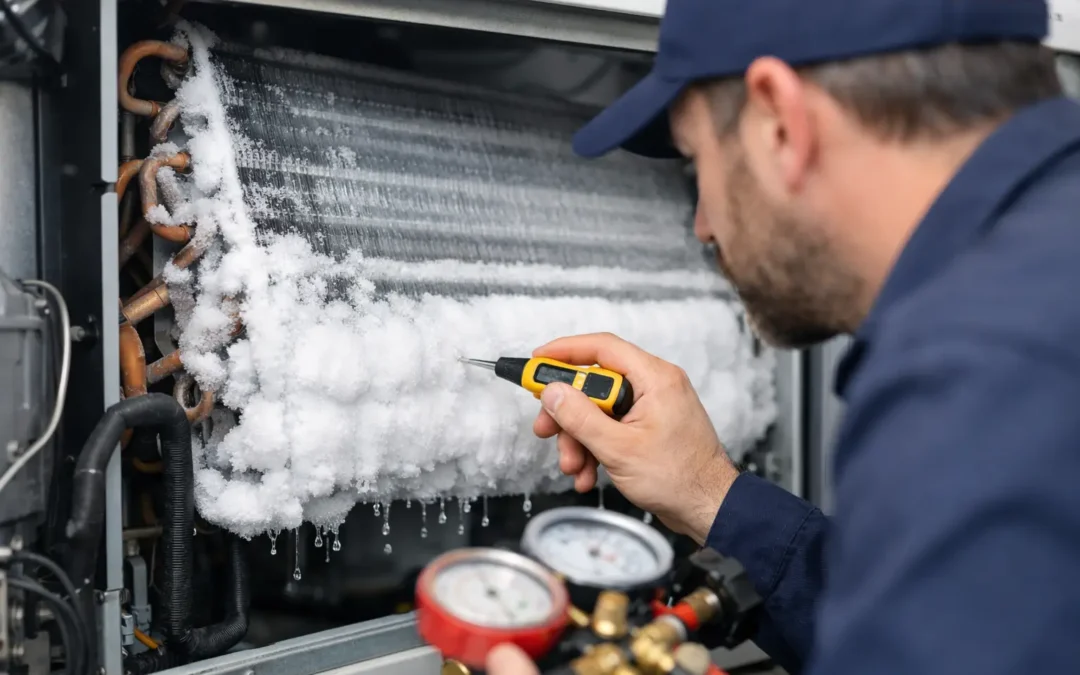
A frozen evaporator coil can turn a hot Northern Virginia afternoon into an uncomfortable wait. If you are searching for how to troubleshoot frozen evaporator problems, start with the right goal: protect the system, let the ice melt safely, and identify whether a simple airflow issue or a professional repair is needed. Running an air conditioner with a frozen coil can strain the compressor and lead to a more expensive breakdown.
What a frozen evaporator coil means
Your evaporator coil is the indoor part of the AC system, typically located above or near the furnace or air handler. It absorbs heat from indoor air as refrigerant moves through the coil. When the coil gets too cold, moisture in the air freezes on its surface. You may see ice on the refrigerant line near the indoor unit, water around the furnace or air handler after thawing, weak airflow from vents, or air that is no longer cool.
Ice is a symptom, not the root problem. Most frozen coils result from restricted airflow or a refrigerant issue, although dirty coils, blower problems, and operating the AC in unusually cool outdoor conditions can also contribute. The safest first response is the same regardless of the cause.
How to troubleshoot a frozen evaporator safely
Turn cooling off and allow the coil to thaw
Set the thermostat from Cool to Off. If your thermostat allows it, set the fan to On so room-temperature air can move across the coil and speed thawing. Do not use a hair dryer, heat gun, sharp tool, or screwdriver to remove ice. The coil fins and refrigerant lines are easy to damage, and forcing ice off can create a much larger repair.
A lightly frozen coil may thaw in a few hours. A heavily iced coil can take most of a day. Place towels near the indoor unit if needed, because melting ice can create considerable water. If you see water approaching electrical components, turn the system off completely and contact an HVAC technician.
Check the air filter and return airflow
Once the system is off, inspect the air filter. A filter packed with dust is one of the most common and most preventable causes of a frozen evaporator coil. Replace a dirty disposable filter with the correct size and type. If you use a reusable filter, clean it only according to the manufacturer’s instructions and allow it to dry completely before reinstalling it.
Also check that return grilles are not blocked by furniture, boxes, rugs, or closed doors. Return vents pull warm indoor air back to the system. When that airflow is restricted, the evaporator coil can become cold enough to freeze. Avoid closing multiple supply vents in unused rooms as a way to save energy. Your duct system was designed for a certain amount of airflow, and too many closed registers can create problems.
Look for visible drainage issues, not internal damage
After the ice melts, inspect the area around the air handler for standing water, an overflowing drain pan, or a clogged condensate drain. A drainage issue does not usually cause the coil to freeze by itself, but it can create water damage and may point to overdue maintenance.
Do not remove access panels, touch wiring, or attempt to clean the indoor coil with household chemicals. Coil cleaning, blower testing, and refrigerant diagnostics require the right equipment and training. Refrigerant is not something to top off without finding the reason it became low.
Restart once and watch what happens
After the coil has fully thawed and you have corrected an obvious airflow problem, restore the thermostat to Cool and use a normal temperature setting. Then pay attention for the next hour or two. Airflow should be steady, and the larger insulated refrigerant line should feel cool but not build ice.
If the system freezes again, stop cooling and schedule service. A repeat freeze tells you the problem is not resolved, even if the AC seemed to work briefly after thawing.
The most common reasons an evaporator freezes
Restricted airflow
A clogged filter is only one possible restriction. A dirty evaporator coil, a failing blower motor, a weak blower capacitor, damaged ductwork, or an incorrectly configured system can all reduce the warm air moving across the coil. In homes with pets, renovation dust, or heavy seasonal pollen, buildup can occur faster than expected.
Airflow problems are often repairable, but the correct fix depends on the source. Replacing filters more often will not solve a blower that is failing or a coil that needs professional cleaning. This is why repeated icing deserves a complete system check rather than guesswork.
Low refrigerant from a leak
An AC system does not consume refrigerant during normal operation. If the refrigerant level is low, there is usually a leak somewhere in the system. Low refrigerant lowers pressure in the evaporator coil, which can drop the coil temperature below freezing.
Adding refrigerant without locating and repairing the leak is a temporary measure at best. A qualified technician should check pressures, inspect for leaks, make the needed repair when practical, and charge the system to manufacturer specifications. The best repair decision may depend on the system’s age, refrigerant type, condition, and the size and location of the leak.
Dirty coil or mechanical failure
Dust and grime on the evaporator coil act like a blanket, limiting heat transfer and airflow. A technician may also find problems with the indoor blower, control board, thermostat settings, or a metering device that regulates refrigerant flow. These issues can look similar from the outside, which is why ice alone cannot identify the exact repair.
A coil can also freeze if the air conditioner runs when outdoor temperatures are too low. This is more common during mild spring or fall weather, or when cooling a server room or other space with a year-round cooling demand. Those applications may need specialized controls rather than a standard residential operating setup.
When to call for professional AC repair
Call for service promptly if the coil freezes again after you replace the filter and allow it to thaw. You should also request professional help if you hear unusual buzzing or grinding, notice a burning smell, find significant water leakage, have very weak airflow, or see ice extending along the refrigerant line toward the outdoor unit.
For property managers and business owners, do not wait for a recurring freeze to become a tenant comfort issue or an interruption to operations. A frozen coil can leave moisture in places it should not be, and repeated compressor strain can shorten equipment life. A timely diagnosis is usually less disruptive than an emergency replacement decision during peak summer heat.
Aircon HVAC Solutions provides responsive AC diagnostics and repair for homeowners and businesses across Northern Virginia. A trained technician can determine whether the issue is airflow, refrigerant, drainage, controls, or a combination of problems, then explain the repair options clearly before work begins.
Preventing another frozen evaporator coil
Regular maintenance is the most practical way to reduce the risk of a freeze-up. Check your filter monthly during heavy cooling season and replace it when dirty. Keep supply and return vents open and clear, and keep the area around the indoor unit accessible for service. If your home has rooms that are consistently too warm, too cold, or stuffy, mention that during maintenance because uneven comfort can reveal airflow or duct issues.
Annual AC service gives a technician the opportunity to inspect coil condition, blower performance, condensate drainage, electrical components, and refrigerant operation before a small problem becomes a no-cooling call. There is a trade-off with very high-efficiency filters as well: they can improve filtration, but an overly restrictive filter can reduce airflow if the system is not designed for it. Choose the filter rating recommended for your equipment and indoor air quality needs.
A frozen coil is your AC system asking for attention. Shut it down, let it thaw, correct simple airflow issues, and treat any repeat icing as a reason to bring in dependable professional care before the next hot day puts your comfort at risk.
